Reflections on Death and Dying: On the Importance of End-of-Life Conversations

End of life decision making is hard. End of life conversations are hard. They require, among other things, acknowledgement of the inevitability of death. In American culture, we are often not comfortable with that, even in the last precious moments.  I have had these conversations with my children since they were adolescents. They know if there is no hope I can be myself again, I don’t want any extraordinary measures taken. They know quality of life is more important to me than quantity of life. They know I wish to be an organ donor. They know I wish to be cremated. We have negotiated where my ashes will be spread when they’re ready to spread them. I hope that when the situation arises, this knowing will make things easier for them.

End of life is a personal matter for the person dying. It is also a community matter, a family matter, one that impacts and is influenced by loved ones who will be left behind. Dying happens in relationship, and the members of those relationships often have very different outlooks. In relationship, some are more or less ready to let go than others. Some are clearer on outcomes, more realistic about expectations. Some hope for miracles, that things are not as bad as they seem. Some hope that something can yet be done.  Some have strong beliefs and preferences. Health care providers are often less helpful than they could be about prognosis at these times, or, perhaps, loved ones hear, in providers’ words, what they have the ability to hear.

Death happens in relationship.

My father died over a decade ago. The memory of his last days is still as vivid today as it was then. For the last days of his life, all five of his children were by his side. My brother fixing things around the house, my sisters and I taking turns caring for Dad with in-home hospice support, all of us supporting Mom.

Because I could, it fell to me to have the end of life conversation with my Dad. Dad was already in hospice care, so extraordinary measures were no longer a question. What he wanted after death was. It was hard to make myself have this conversation. It felt final, like an acceptance of his inevitable passing. My heart hurt.  But I believed it was important. I believed that if he had desires, they should be honored if possible. I’m a crier at the best of times, and I didn’t want to cry when we had this talk. I finally decided that my crying didn’t matter and that I would do the best I could.

One afternoon, when he was having a good day, a particularly alert, pain-free moment, I climbed up on the bed next to him. “Dad, can I talk with you about something?”  I asked. “Sure, honey”, he said. “What would you like to have happen after?” I asked. He seemed surprised by the question. “After what?” he asked. “After you’re gone”, I replied, stroking his hair. “Would you like a funeral Mass? Would you like to be cremated or buried? Would you like to be buried here or in Westfield (Indiana, his birth home)?” “Do you think we need to talk about that now?” he asked. “We can… Or we can wait… Whatever you want…. I just wanted to offer you the chance to tell me if there’s anything particular you’d like.” “Well, I haven’t thought about it.” he said. I waited, quietly. “Well,… I asked Dick to be a pallbearer… So buried, I guess. I never thought about cremation… I don’t want to be far away from your Mom or Jennifer, so I think buried here is best… I’d like a 21 gun salute and the presentation of the flag at the cemetery. And I’d really like you to sing “Bridge Over Troubled Water” at the funeral. Aside from that, it’s up to you all.” “Dad, I don’t think there’s any way I’m going to be able to sing at your funeral.” I laughed. “I can be the lector at your Mass, though and do the readings. Would that be ok? I promise I’ll find someone to sing for you.” “Ok. I hope we don’t have to worry about this for a while yet”, he said. “Who do you want me to notify after you pass?” I asked. He listed family and friends, some old co-workers. “I think your Mom has all their numbers”, he answered. “Ok.” I said.

The first question was the hardest. As the conversation unfolded, each question got easier to ask. We got more comfortable talking with one another. We still held these issues in the realm of the future, even though it was clear that the future would not be long in coming. I snuggled into his side for a while longer. We were just quiet, together.

Later, I told my mother, sisters and brother what Dad had said. I asked if there was anything they wanted to have happen. I asked if anyone wanted to help me plan things. I made a list of who I needed to talk with and did some preliminary research on funeral homes. I talked with his parish priest and with people at the cemetery. We contacted the military to see what was needed in order to plan the 21 gun salute. We made a list of people we needed to call with phone numbers. I asked Mom who she wanted to call and who she wanted me to call.

When Dad passed, we moved quickly. This was not an easy time, but it was easier because we all knew Dad’s wishes and everyone had been able to have input into planning his funeral and burial. My task was simply to carry out my Dad and our family’s wishes to the best of my ability.

Having had this conversation in advance saved distress and disagreement after Dad’s death. Had we tried to make decisions then, without knowing his wishes, I am certain our heightened emotional state would have made things much more difficult. As it was, everything went smoothly and according to plan. I was lector for Dad’s funeral Mass and selected the readings myself. A young woman with a lovely voice sang “Bridge Over Troubled Water” as we left the church for the cemetery, where Dad received the requested 21 gun salute, and Mom was presented with the American flag.

Because death happens in relationship, end of life conversations are important. Not easy, but important. End of life conversations smooth the way for both the person passing and those left behind. Conversations that might not have happened otherwise can happen. Decisions that might be contentious later can be less so because the wishes of the person dying are known. I do not assume that all the conversations I have had with my children will prepare them for my death. I do not assume even that I will feel the same when the time comes that I do now. I do believe that we at least have a starting point for decisions, a roadmap should we never have the opportunity to revisit these topics.

In our culture end of life conversations are often awkward and uncomfortable. It helps if we can make them more routine. It makes it easier when we know a loved one’s wishes. End of life conversations protect the desires and preferences of the person dying and the feelings and relationships of those left behind.

Reflections: On my worst (and best) Thanksgiving ever

Let me say first I LOVE Thanksgiving! It is my favorite holiday of the year. I love to make a big dinner for my family. For us there are traditional “must have” foods: monkey bread in the morning, and for dinner, turkey, homemade stuffing, mashed potatoes and gravy, green bean casserole with fried onions on top, 7-up salad, homemade bread, cherry cheesecake and homemade pumpkin pie. Without these foods, it just isn’t Thanksgiving.

At least that was the case until two years ago on Thanksgiving. I had fallen the month before at my favorite academic conference. When I fell, I broke both my wrists. The weeks leading up to Thanksgiving were difficult ones in a variety of ways. I was learning how to be helpless. I was accepting with as much grace as possible that someone else had to do absolutely everything for me. I was dealing with incredible pain.

I was also dealing with the fact that my daughter, who had a job in retail, and who was a student at UNLV, a 19 hour drive away, was not going to be able to come home for Thanksgiving. I was trying to cajole, persuade, manipulate my son into accepting my plan that he and I should fly, or drive, to Las Vegas to be with his sister. I was desperate! Our going to Las Vegas was completely unrealistic on a lot of levels, not least of which was my physical incapacity, the exorbitant price of airfare just days before the holiday, and the fact that there was no way I was up to a 19 hour drive. But I just couldn’t handle the idea that we would not all be together for Thanksgiving.

This was a very emotional time during my healing process. The day before Thanksgiving my daughter messaged me and asked me for the recipe for 7-Up salad. As it turned out she was going to be able to have Thanksgiving dinner with some friends in Las Vegas after all. I did not respond well to this request. In fact, it made me cry. I no longer have the text messages that we sent back-and-forth. Stefan typing for me or me voice texting. But I know they went something like this. Me: “Wait! I thought you had to work all day on Thanksgiving! But I want you to come home and be with us! I miss you! :-(” Alyssa: “Mom, I just get to have dinner. I don’t have the whole day off. If I could come home I would. I can’t. You know that. So will you give me the recipe or not?” I gave her the recipe. “Stefan”, I began after Alyssa hung up the phone. “Mommy, we’re not going to Las Vegas”, he replied gently. I burst into tears. It’s hard to cry with both your wrists in splints when someone else has to wipe your tears and hold the Kleenex to help you blow your nose. I felt hopeless.

As it turned out, this was my best Thanksgivings ever!

I was moping around the house on Thanksgiving Eve when Stefan told me he had to run an errand. “Ok”, I replied without much enthusiasm. I don’t think I even offered to ride along. “It will take me a while. I have several stops to make”, he hollered from downstairs. “No problem”, I replied. “Be safe. I love you.” I curled up on my bed in the dark and waited for him to come back. I think I dozed off.

When Stefan got back he hollered up the stairs, “Hey Mom, I’m back. Can you come here a minute. I have something to show you.”. “Ok, I’m on my way”, I replied. As I turned the corner of the staircase I saw my beautiful daughter sitting on the couch. She jumped up, “Surprise”, she hooted. I burst into tears. She ran across the room and wrapped her arms around me. “I didn’t mean to make you cry; this was supposed to be a good surprise”, she said. “It’s a wonderful surprise”, I sniffled. “These are happy tears”. I rested my head on her shoulder as she wrapped her arms around me. Stefan wrapped his arms around both of us and we just stood there, happy to be together.

Alyssa had gotten the whole weekend off, purchased her plane ticket, and collaborated with her brother to surprise me. It was the best surprise I could have imagined.

That weekend, Alyssa took over my care, helping me shower, dress, brush my teeth and hair, manage the bathroom. She fed me with ease. I felt her love, care and compassion. I observed her learning, at her own rate, how to care for me, as I learned how to relax into her rhythm. I was still emotional at times, but incapacitation, pain medication, happiness, and holidays will do that to me.

We ended up having an amazing weekend. It quickly became clear that I had made no plans for Thanksgiving dinner and that I couldn’t cook anything. Alyssa said that was no problem as she and Stefan had decided we were just going to spend the weekend making our favorite foods and hanging out. She said, “You can tell us what to do, Mom, and we’ll do it!” We focused on comfort foods. I stood in the kitchen, or in the dining room looking over the counter, giving instructions. We made macaroni and cheese, 7-up salad, and monkey bread. Everything was delicious.

We snuggled in bed together and watched movies and all the episodes we could find of “Once Upon a Time”, Alyssa’s favorite show. I slept a lot. I would awaken to the sound of Alyssa and Stefan’s laughter or quiet talking. I would either smile and drift back to sleep, or wake to spend time with them. I was still on pretty heavy pain medication most of the time. But I was surrounded by the two people I love most in the world, my children. I thank my daughter for doing all she did to be with me, and her co-conspirator, my son, for giving me the best Thanksgiving ever.

The Florence Journals: On Leave Taking and Gratitude

This morning I sit at my window as a gentle mist wets the street below. The soprano in a nearby apartment is running her scales as the construction workers across the way toil to renovate the gutted 6 story building which I am told will house tourist apartments. This morning I’ve been sorting and organizing, preparing to pack. On one hand, it’s hard to believe that my 3 month sojourn is coming to an end, on the other, I miss my children and my friends. It will be nice to come home.

Sorting and organizing has led to reflection and recognition of so many things for which I am grateful. I am grateful to have a job that acknowledges and values the need to take some time to reflect, to plan, to learn, to write, tasks we often do in a rushed fashion as we negotiate the day to day, year to year realities of serving as university professors. I am grateful for the small gifts I brought with me, reminders of my friends back home, the lovely necklace and earrings my new friend Julie gifted me for my birthday the Sunday before I left, the cashmere scarf my friend Craig gifted me years ago from his trip to Peru that travels with me everywhere I go just in case, the gorgeous journals and fountain pen my friend Andrew gave me along with the mandala to help with meditation and reflection.

I am grateful for those carrying on the important “things” I left behind so that I could let them go. To Michelle and Brenda for carrying the hunger awareness torch and taking our hunger initiative to a whole new level. To Matt for his vision and constant support. I’m grateful to Stefan for taking care of my turtle, to Apple for inventing FaceTime which has allowed me to hang with Alyssa and Andrew. I’m grateful to T-Mobile for giving me a mostly reasonable phone plan so that I can hear Stefan’s voice when I’m missing him or just need to check in.

I am grateful to the family who rented me my dream apartment. It is more than what I hoped it would be. The brick floor and stone wall, the arched windows, the proximity to the Ponte Vecchio and the Uffizi Gallery are exactly what I wanted. The hike up the steep cobble-stone street, an added bonus that my lungs and thighs have greatly appreciated. This apartment is not perfect. If I sit on the bed wrong, it collapses. There are few lights, so the apartment is very dim at night. The air conditioners leak water on the floor. The construction workers across the street are incredibly loud from roughly 7:45 a.m. to 5:00 p.m. Monday through Friday. The intruder alarm on the construction site goes off when it rains at night. The shrill voiced foreman yells constantly and there is much more drilling and pounding on metal than one might expect. Even with all this, I love this place.

I love that someone nearby plays classical piano every so often. I love the sound of the soprano running scales and singing arias. I love that a merchant tunes her radio to play 70s, 80s, and 90s pop music seemingly on cue whenever I feel a bit homesick. I love that in the window across the way, a blue globe graces a table.

I love that in 3 months, local shopkeepers recognize me and wave and smile as I walk by, the man at the pizza shop, the man at the wine shop, everyone who works in the coffee shop, the staff at the cafes I frequent. They have all made me feel very welcome.

I love the simplicity of my life here. I love cooking from scratch with fresh ingredients purchased that day or the day before from merchants at street kiosks or the Mercato Centrale. I love that if I don’t feel like walking, I can shop at the Conad grocery store just down the hill from my apartment. I love that I have the time to troll the streets, to write, to draw, to read, to be.

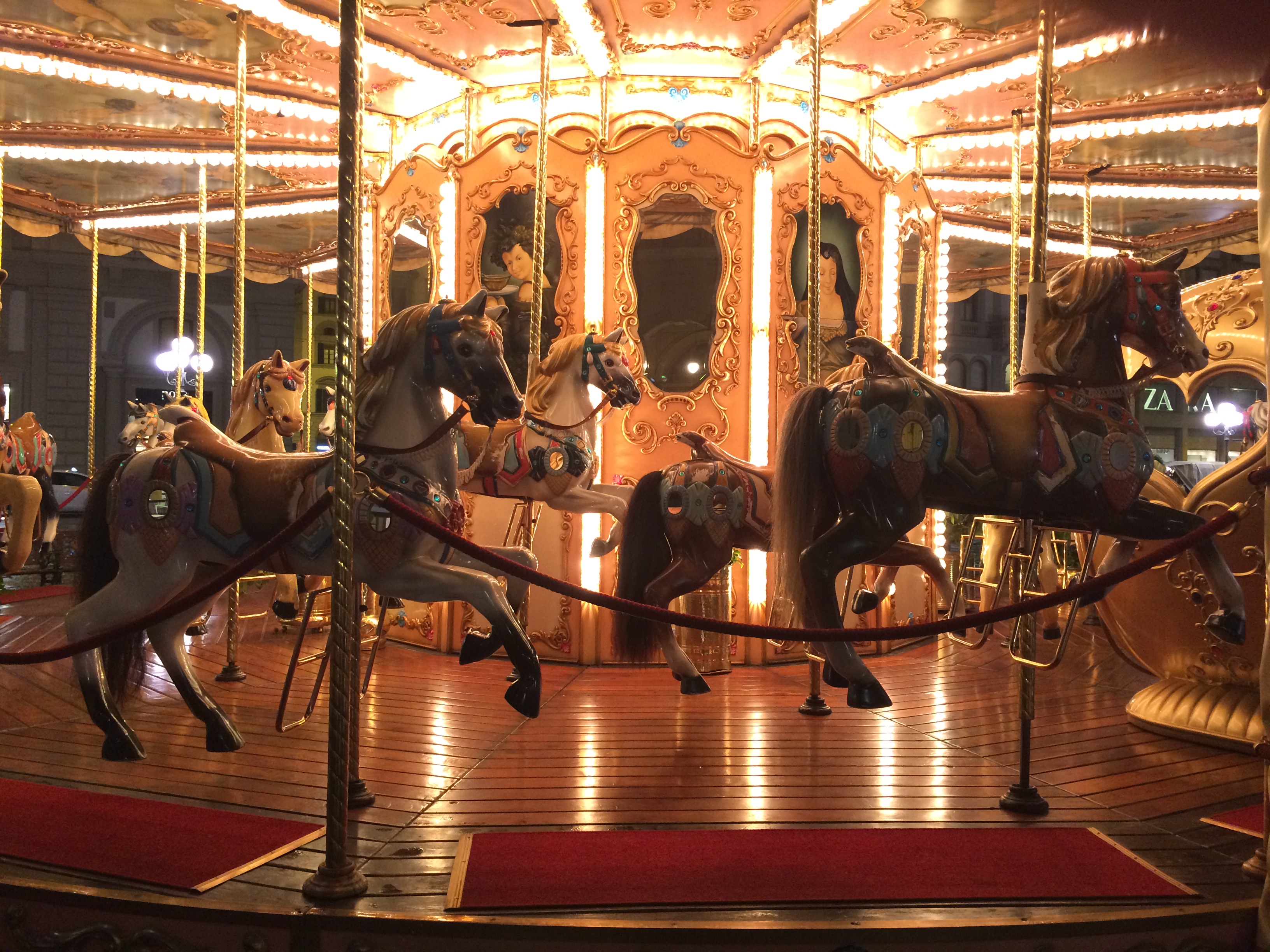
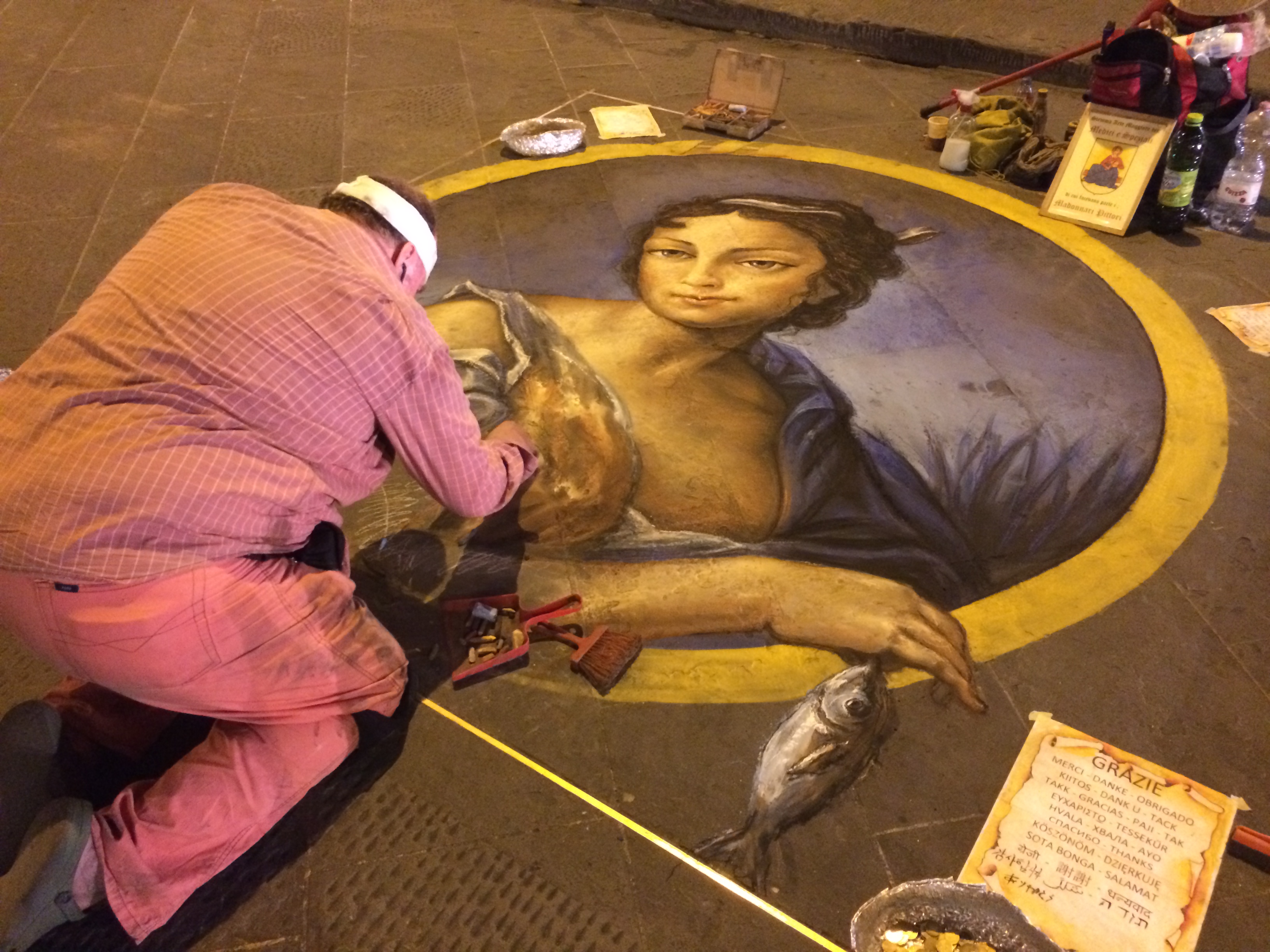
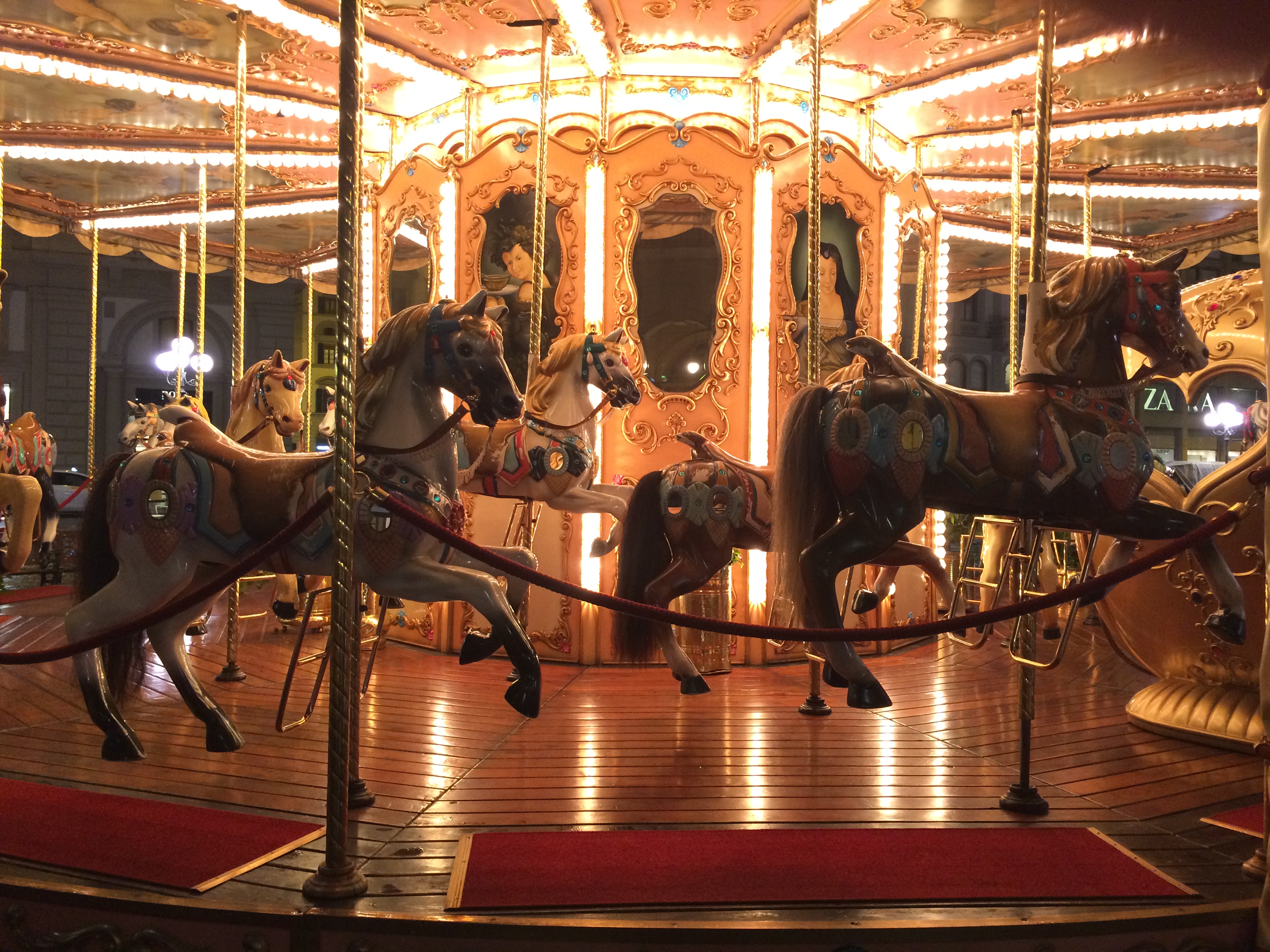
I love that I have walked this city for 3 months and not put a dent in all there is to see here. I have not yet taken pictures of the icons that adorn alcoves in many buildings. I have not begun to find all the shops, churches, museums, and gardens, or explored all the windows, doors, and gates that grace this city. I love the color in the kiosks in Il Porcellino square and outside the Mercato Centrale where shopkeepers sell souvenirs, leather goods, and gorgeous scarves. I love the aroma of the chestnut roaster. I love the beautiful marzipan fruit and pastries that beckon from the windows of patisseries. I love the beautiful fresh flowers available throughout the city at daily street markets. I love the smell of coffee roasting.  I love the carousel in the Piazza della Repubblica, the piazzas in front of the Duomo and Santa Croce and the Romanian gypsy string quartet that plays there sometimes. I love that when entering a piazza I might find a street festival going on. I love strolling the Ponte Vecchio in the evenings, listening to street musicians and observing the masterpieces of the chalk artists that will be washed away by midnight, only to be replaced by new works of art, generally copies of the masters, the next day.

I love cappuccino, fresh pasta, panna cotta, and the creamy sweetness of gelato. I love the bridges over the Arno River and how each has its own personality, its own unique vantage point on the city. I love the Piazza Michelangelo, the hike to which is one of the most grueling and rewarding walks I’ve taken, because the vistas at the top are breathtaking as the beauty of the city of Florence lies at your feet. I love the lushness of Boboli Gardens in the center of the city.

I love Emma and Iris who have welcomed this vagabond traveler, I am grateful to Marco, Jennifer, Katerina, Alex, Luca, and Marzia who have offered me a second home here and treated me like family.

There is so much that I am thankful for. I am thankful for you, dear readers who have read my blog posts, commented on or liked them, or my pictures and posts on Facebook, Twitter, or Instagram. You have made me feel connected to community even when I am 5272.5 miles from home. I will end this homage to gratitude now as a cappuccino at Iris’s coffee shop with Emma awaits. This has been such an amazing adventure. A presto!

The Florence Journals: Cooking a 4 Course Meal at In Tavola Cooking School

I love Italian food! That probably goes without saying. Italy is known for its food, so, it’s not surprising that one of the classic things to do in Florence is to take a cooking class. I’ve taken two at In Tavola at via dei Velluti 18/20r and I had a blast both times. Not only that, I will definitely try the recipes at home. There’s something about preparing a meal with a group of strangers in a test kitchen that inspires confidence, especially if the result is delicious. It also fosters a sense of camaraderie within the group which makes for a truly delightful time. There are many cooking schools in Florence to choose from. Some are extremely expensive. Others more modest. In Tavola was an excellent value for the money.

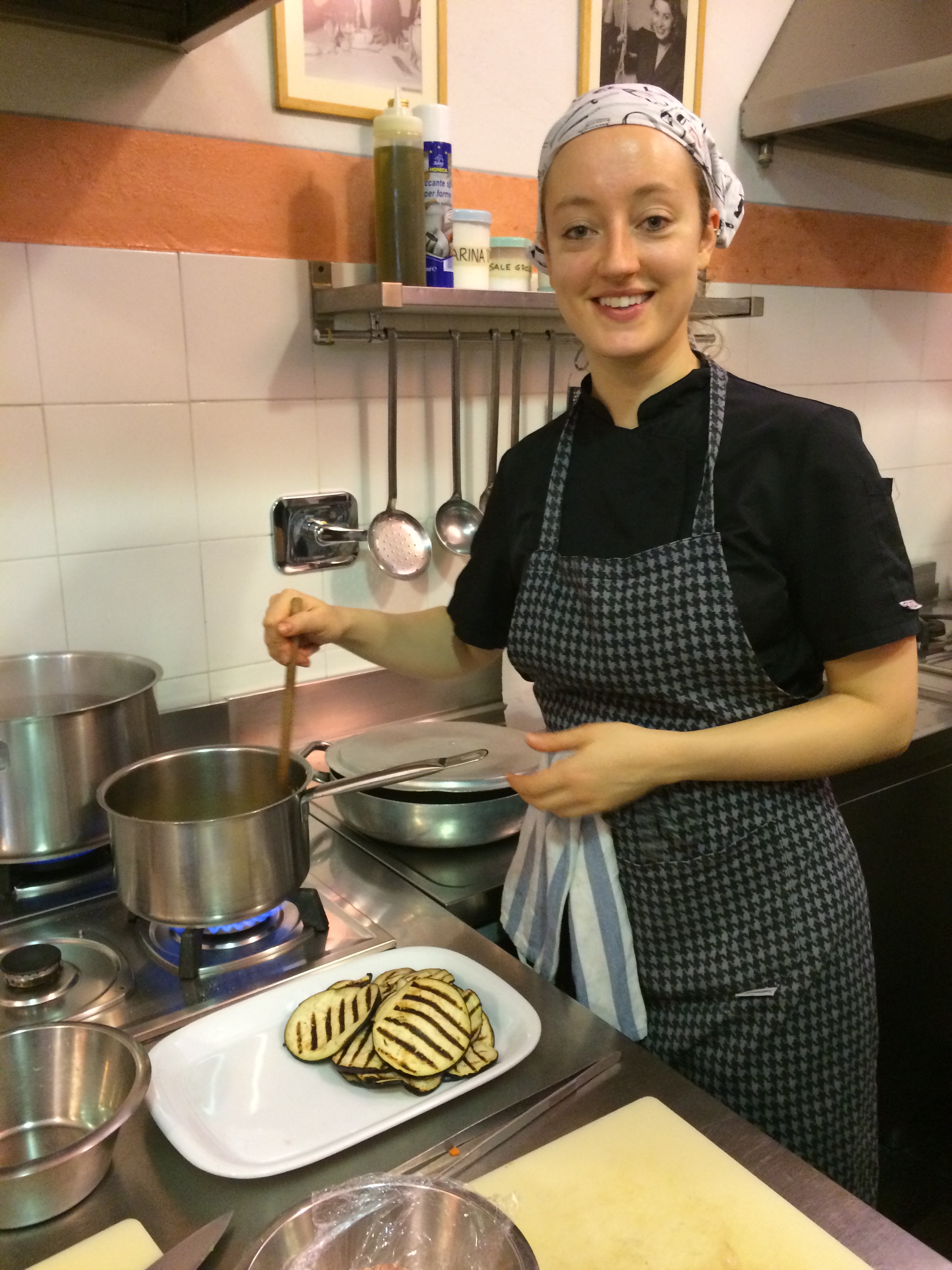
I decided to jump into the deep end first thing and try a 4 course dinner class. It cost me 65 Euro. Chef Helen was the guide and task leader for our multilingual group of 17 would be culinary experts. She taught us slicing tips, how to blanch tomatoes to remove the skins, and how to peel mushrooms. I learned that you never wash mushrooms. They are mostly water and washing them makes them mushy. You just peel off the outer layer of skin and have fresh, clean, mushroom underneath.  Who knew?! In general in this class, we peeled things I wouldn’t have and didn’t peel things I would have. It was very interesting.

Chef Helen

Chef Helen

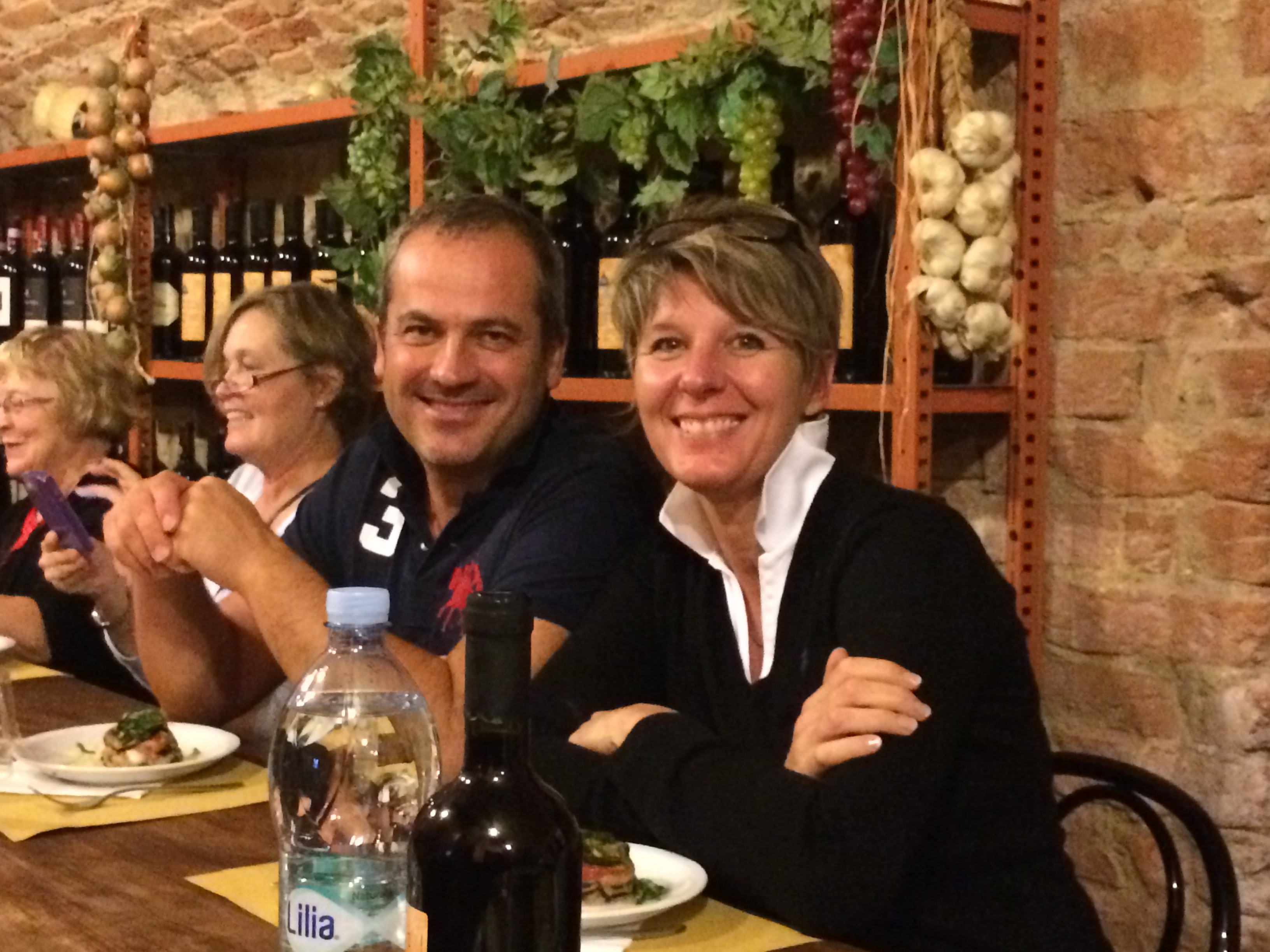
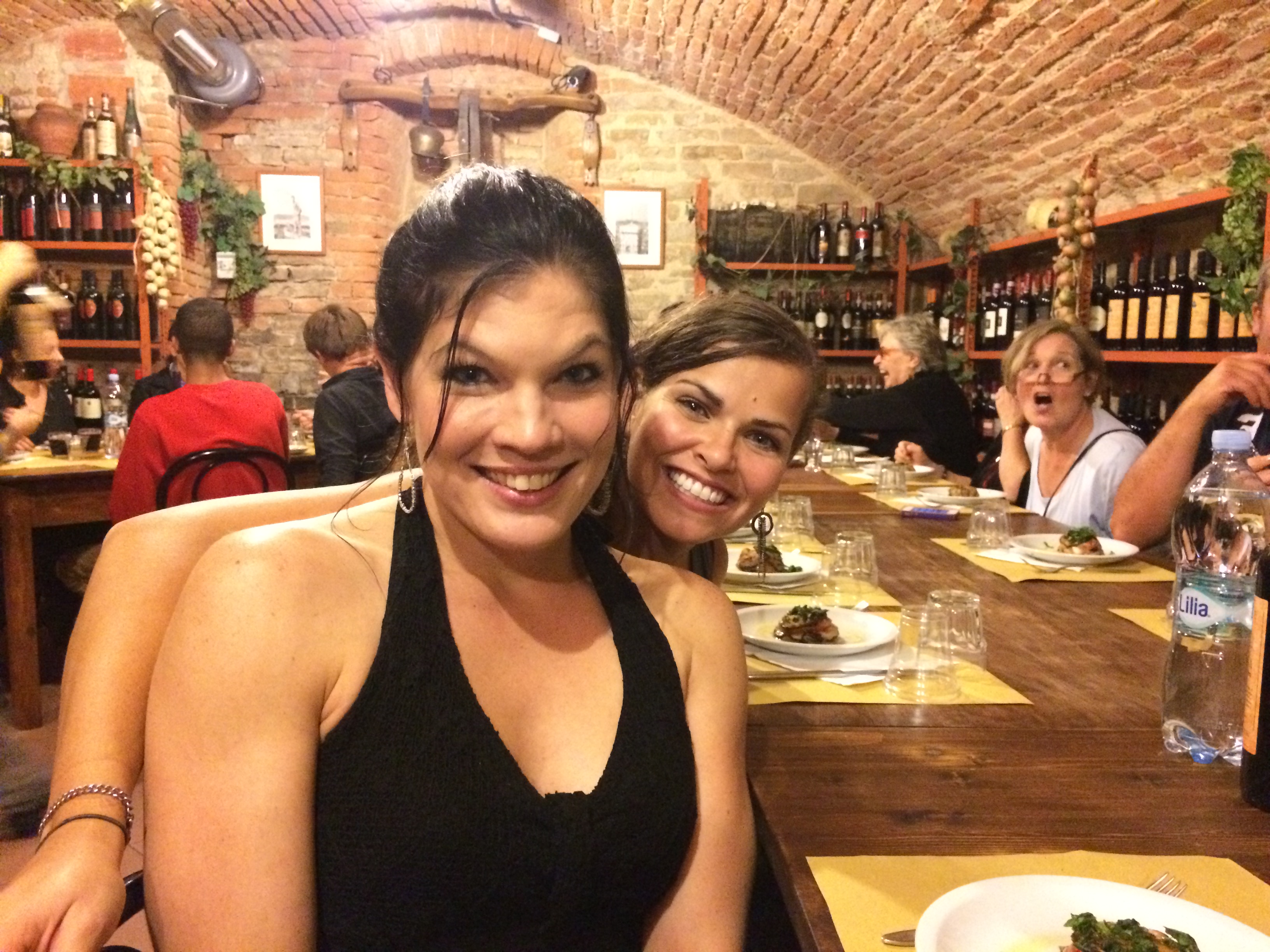
At my table were a French couple on a short holiday from Paris and two delightful, American woman on vacation exploring Italy. Our work station was a stainless steel table with drawers full of all the food preparation implements we would need and a four burner cooktop, At our table we also had all the ingredients for our meal.

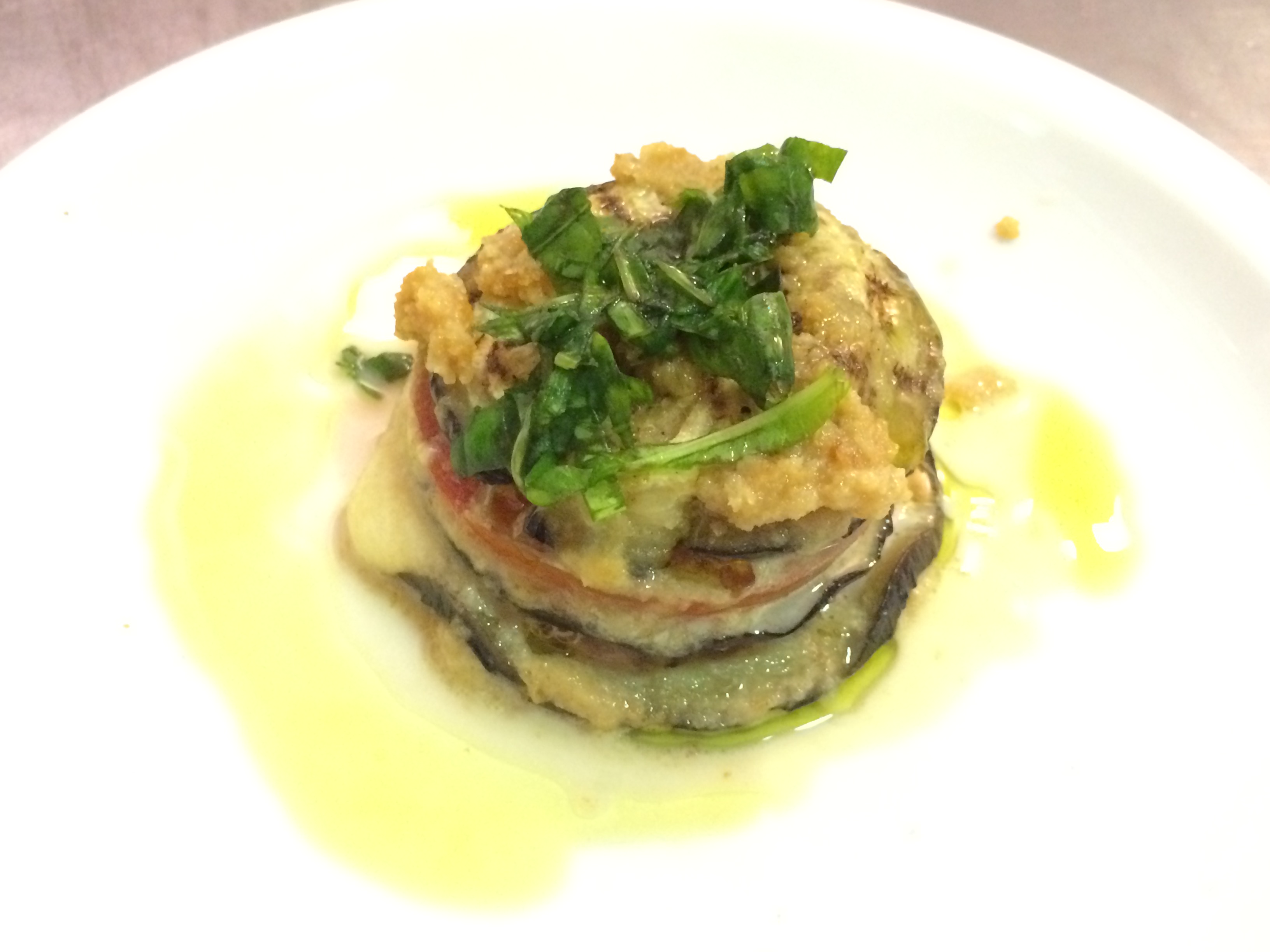
Our meal consisted of an appetizer, an eggplant caprese (griddle fried eggplant slices with just a touch of salt and pepper, tomato slices, buffalo mozzarella, fresh basil, breadcrumbs, salt and pepper and, of course, olive oil. Slices were assembled by layers, each layer topped with breadcrumbs, seasonings and a touch of olive oil, and then baked for 5 minutes.

Eggplant caprese

Eggplant caprese

Our first course was pasta. We prepared two types of gnocchi. Gnocchi are small potato dumplings. We prepared a classic potato gnocchi and a green potato gnocchi. I am a gnocchi fan from way back, so I was really excited for this course. While I’ve made gnocchi myself (once), I was looking forward to learning how to do it the Italian way. The only difference between the two types of gnocchi was that the green gnocchi had parsley. I found a new cooking toy I’ll need to get when I get home. It’s called a rice masher. We used it to shred the cooked potatoes. The recipes were very easy. You can either bake or boil the potatoes. If you use a rice masher, there’s no need to peel them, then blend with flour, cornstarch, egg, finely diced parsley and season with salt, pepper, and the secret ingredient, nutmeg. You then knead the dough quickly, roll it into a long string about ½ inch thick on a floured table and cut it into one inch pieces. Sprinkle it with flour to keep it from sticking together and then cook the gnocchi in rapidly boiling water for 2-3 minutes.

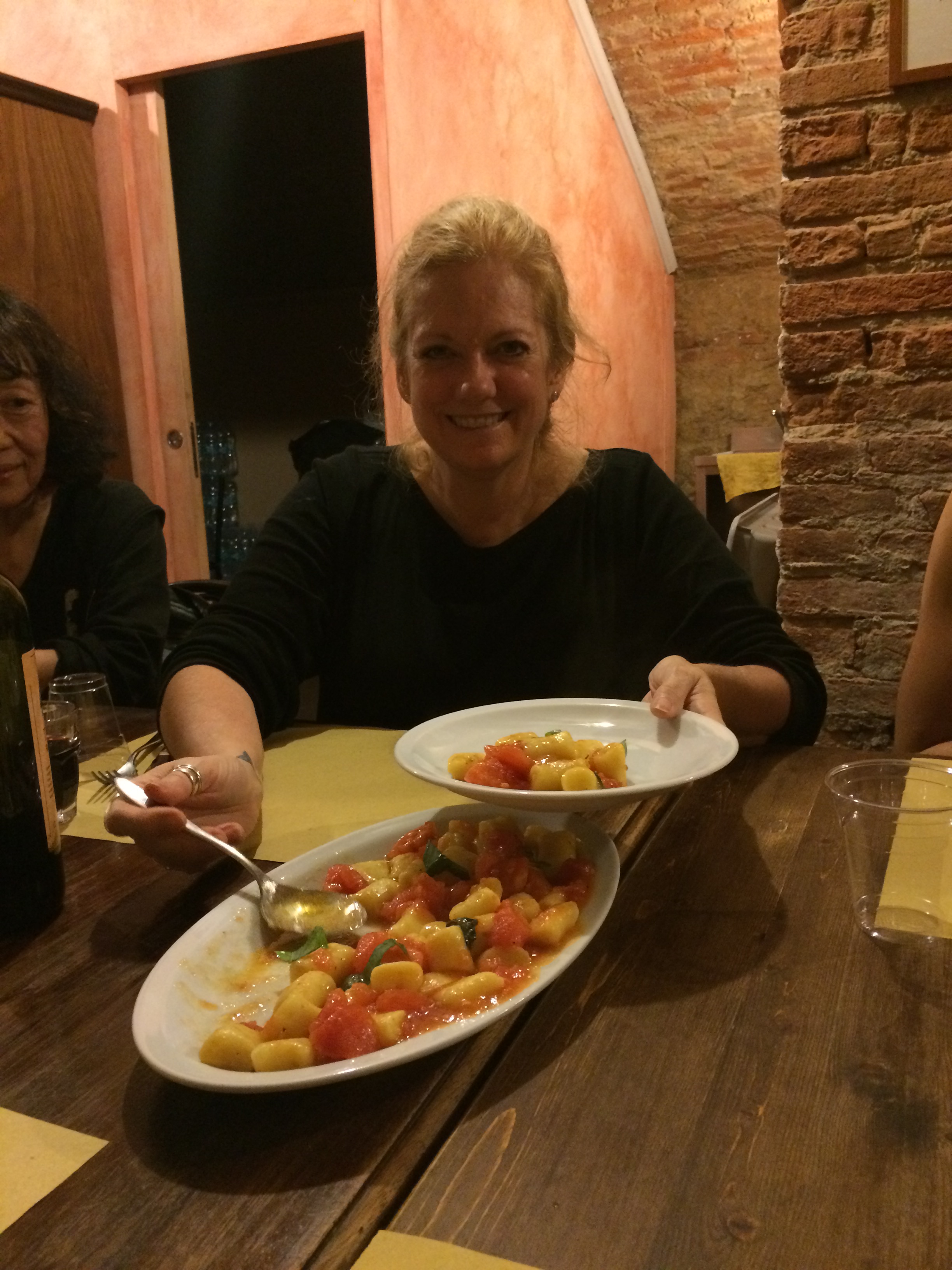
We topped the regular gnocchi with a tomato and garlic sauce. We quickly blanched the tomatoes in boiling water for 1 minute, then ran them under cold water to cool, and peeled them. We added two cloves of unpeeled garlic to the tomatoes in a pan with olive oil in the bottom, then seasoned with salt, pepper and pepperoncino (hot peppers) and sautéed for 10 minutes. Toward the end we added about 6 leaves of basil cut into strips. Chef Helen taught us to roll the leaves like a cigar and then cut thin slices. We added the basil at the end so as not to overcook it. We removed the garlic, added the pasta, tossed it all together (literally), and we were done.

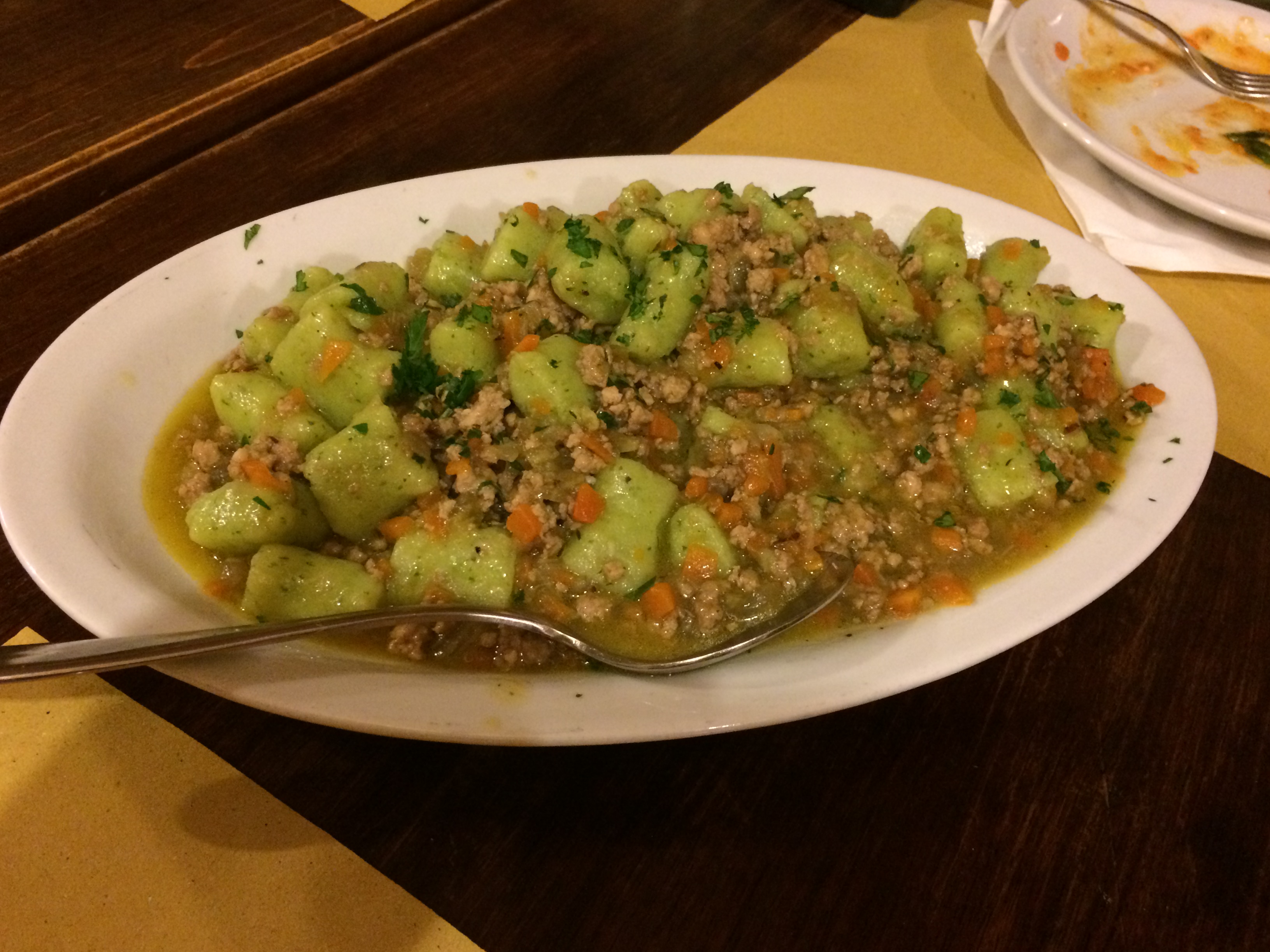
For the green gnocchi, we did a simple, yet delicious sauce that I never would have thought of as a pasta sauce. We sautéed diced carrots, onions and celery in olive oil, cooking them until the onions were translucent. Then we added ground turkey and cooked it over high heat until browned. We added brandy and cooked it off, then water, and thyme, and rosemary wrapped in sage leaves and tied off so the packet could be easily removed later, chopped parsley, salt, and pepper. Ideally this sauce would cook for a couple hours, but as our time was limited, we did the cheater version and added a bit of tomato paste and called it good.

green gnocchi with meat sauce

Green Gnocchi

Me serving gnocchi with tomato garlic sauce

Me serving the gnocchi with tomato and garlic sauce

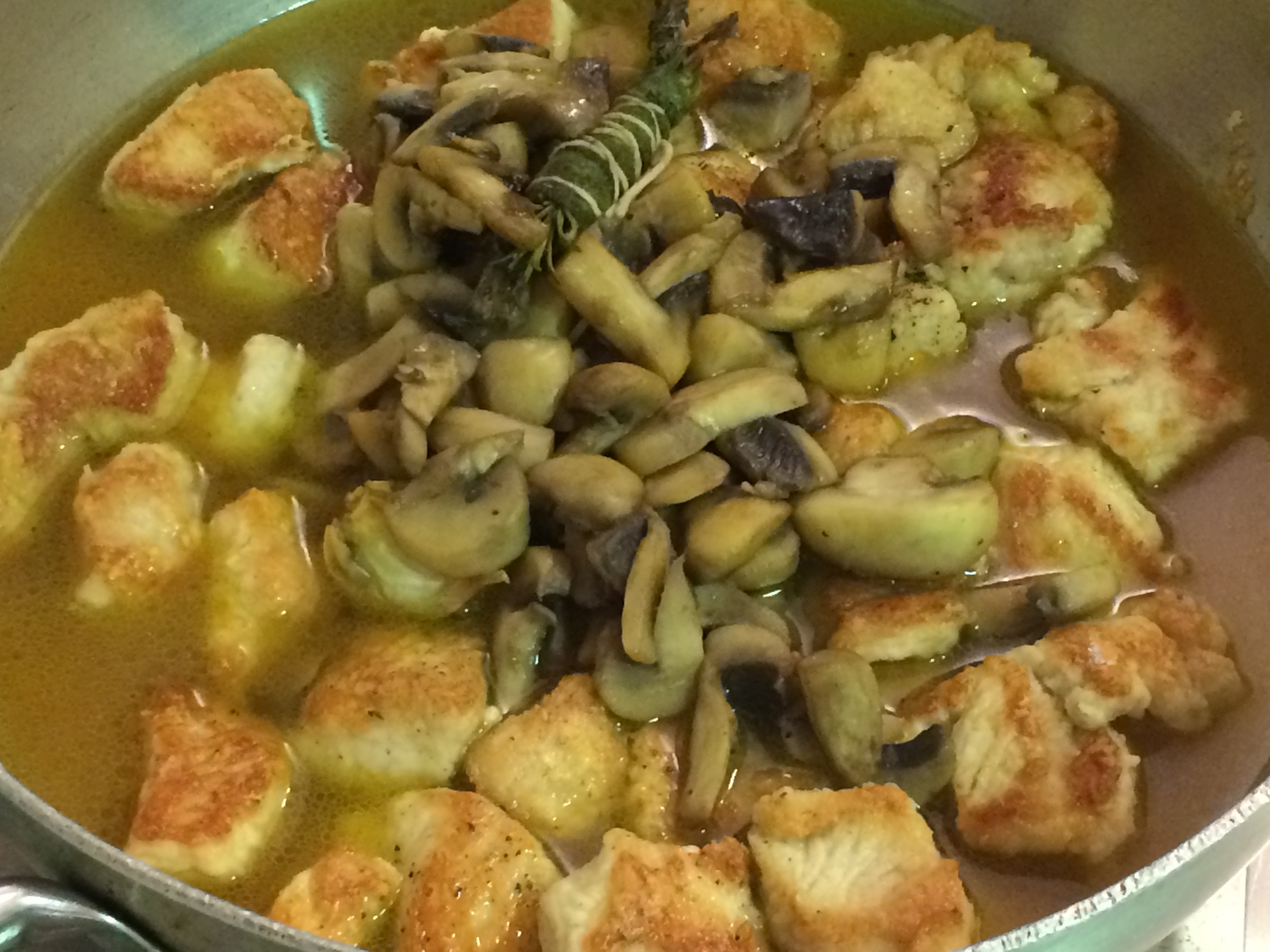
Our second course was turkey with herbs and saffron. First, we about ½ teaspoon if saffron into some vegetable stock to dissolve. Our  turkey was skinned, boned, and precut into two inch by two inch chunks for easy cooking. We coated them in flour, then pan friend them over medium heat in a skillet with olive oil and butter. In a separate pan, we sautéed the sliced mushrooms with olive oil and garlic. Once the turkey was browned nicely, we added the sautéed mushrooms and about a half cup of white wine which we let evaporate. Finally we added the stock with saffron and the herbs (bay leaves and rosemary), and a dash of salt and pepper. When everything was done, we garnished the dish with chopped parsley.

turkey and mushrooms

Turkey and mushrooms

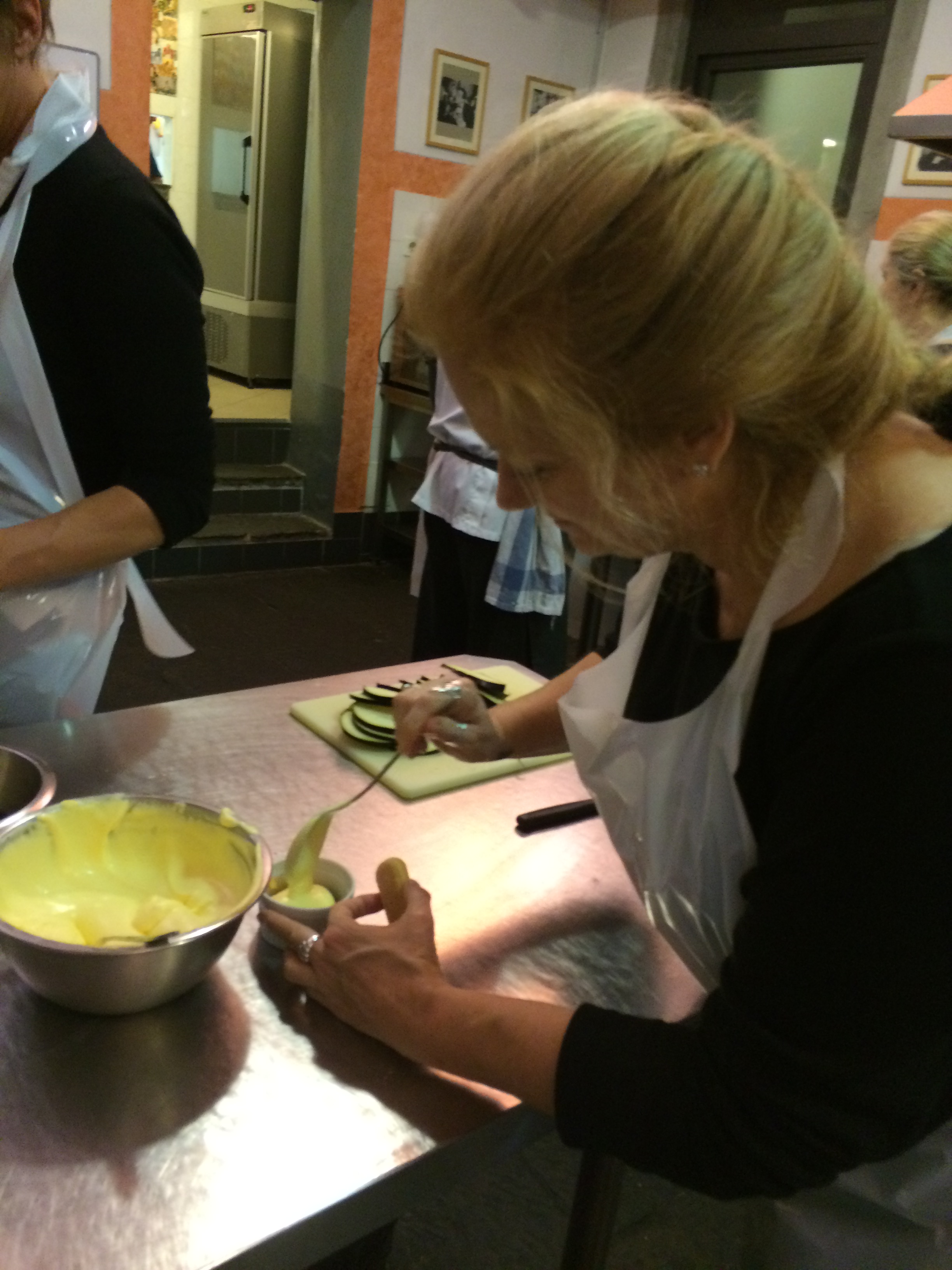
For dessert, we made tiramisu. To start with we mixed 3 egg whites with sugar and beat them until they were stiff and peaks formed. Then we gently stirred in mascarpone cheese and set it aside. We dipped lady fingers in a espresso/brandy mixture, then lined our dessert cups with them, topped with the mascarpone cheese mixture, repeated the steps and ended with cocoa powder sprinkled on the top layer of cheese. These we refrigerated an hour before eating.

me making tiramisu

Me making Tiramisu

The best part, after preparing our meal, we got to enjoy it together accompanied by a lovely In Tavola wine. It was an absolutely delightful time and the food was delicious, if I do say so myself. None of us were ready to leave when the meal was over. I think that is the sign of a successful experience. I strongly recommend it! Check out In Tavola at: http://www.intavola.org/

French friendsAmerican friends

French Friends                                                        American friends

Buon appetito!

The Florence Journals: Florence in the Rain

017

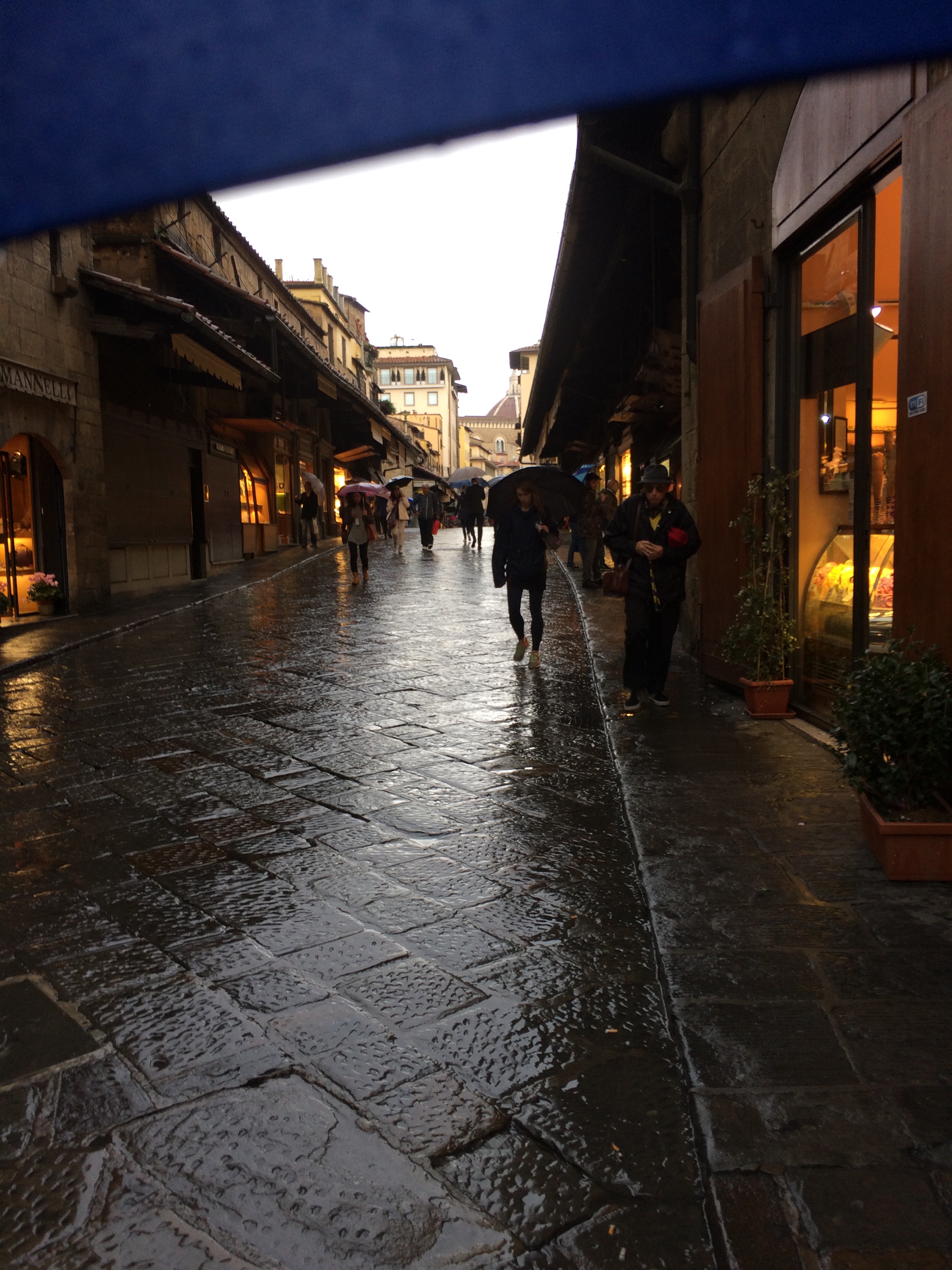
There is something magical about Florence during a warm autumn shower. I open my windows wide to listen to the sounds of the rain dancing on the cobblestones below. My apartment is 30 steps up from the street, on the first floor, in the Costa San Giorgio. Narrow and steep, the street is home to connected 3, 4 and 6 story buildings which magnify sound. The click clack of tourists’ footsteps echo in the closeness. Voices come to me quiet and muffled. I hear the muted strains of violin music from an apartment nearby.

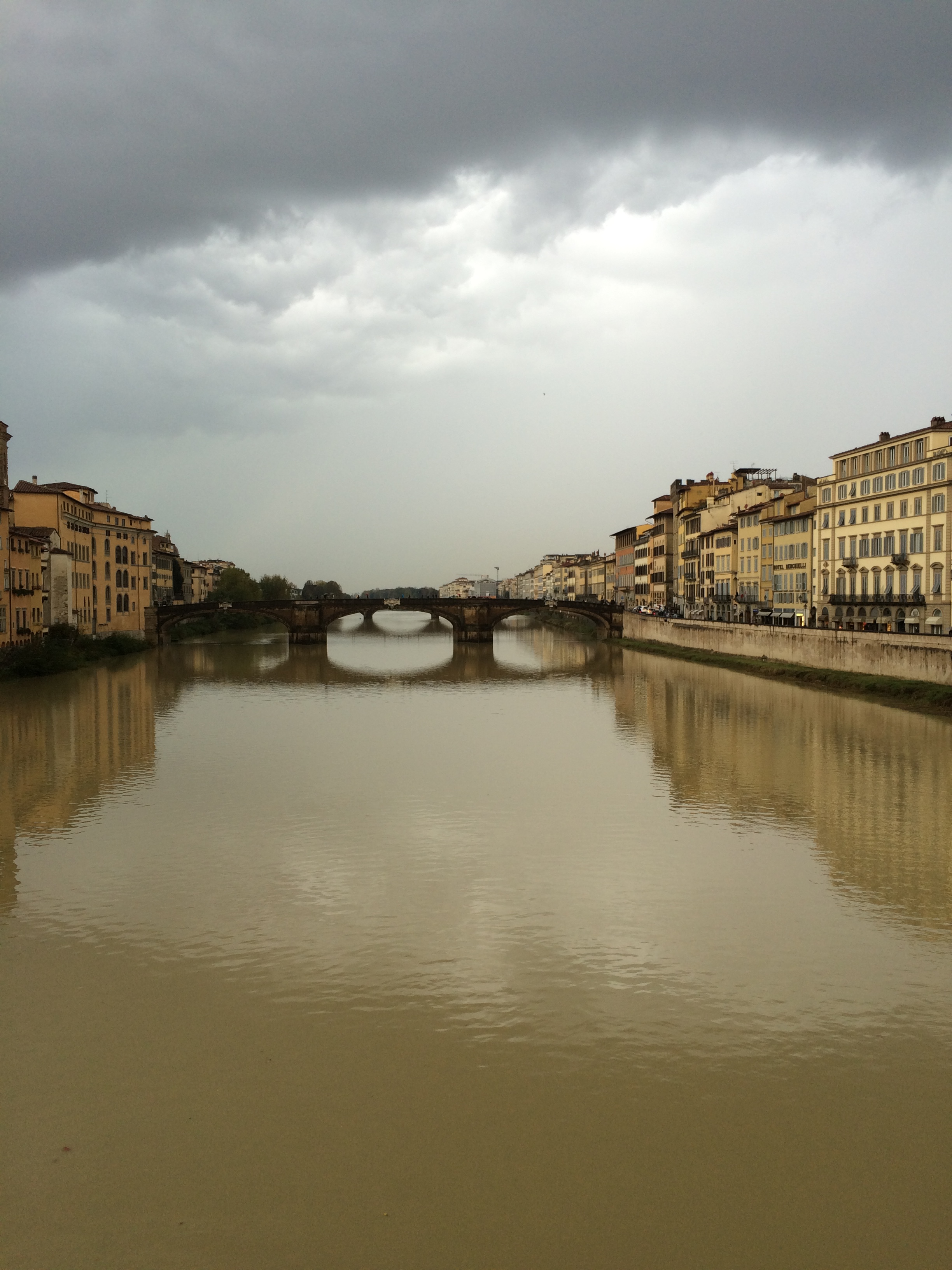
The streets call to me, at all times, but especially in the rain. I walk for hours, stopping to smell, to look, to touch, to taste, accompanied by the soft pitter patter of the rain on my umbrella. The warm, gentle breezes, far different from the harsh, driving winds of Kansas, ruffle my hair, my shawl, my rain jacket. In the rain, I am drawn to the River Arno, now a muddy brown, the richness of the riverbed disturbed by the wind and rain. I walk to the Ponte alle Grazie and look back toward the Ponte Vecchio which seems a brighter golden yellow in the subdued light.

022012 013

I walk the center, experiencing the colors on the Ponte Vecchio and the Via Tornabouni, where Monte Blanc pens, Tiffany jewelry, Gucci, Salvatore Ferragamo, and Roberto Cavalli clothing and accessories sport the season’s newest colors and styles. The brightly colored umbrellas of tourists a sharp contrast to the rich greys and browns of the streets. I walk into the Coin Department store where a young sales clerk invites me to a sink to try the newest shower gel and salt scrub. I visit the Swarovski crystal department and look at bracelets. I leave the store and head toward the carousel in the Piazza della Repubblica, still now, in the rain. I walk to the Red Bookstore where I decide to sit for a while to read.

029 033

090

After a brief stop, I’m reading the newest Bridget Jones book by Helen Fielding called Mad about the Boy and her writing makes me laugh out loud every few paragraphs, so I don’t feel I can stay in the bookshop long for fear of disturbing other readers, I again hit the streets.

I head toward Piazza Santa Croce, water running down the trough in the center of the rain soaked street. Bright, welcoming lights from shop windows beckon. I reach Santa Croce Piazza and stop at the Finisterrae Pasticceria to look at the lovely pastries. The last time I was in, I sampled a delicious, rich, dark, creamy sipping chocolate, offered by a barista whose eyes were the same chocolate color as the drink he handed me. I settle on a cappuccino and 4 bite-sized cream puffs, one chocolate, one hazelnut, one crème, and one pistachio. The same barista hands me a cappuccino with a lovely flower design and three sugars, in contrast to the usual one. He remembered how I drink my coffee. I like that. I sit at a table across from the pastry and gelato counters and page through an Italian newspaper. The pastry bites are light and flavorful. The cappuccino warm and bitter.

When I leave, it is dusk and the rain has stopped. Everything is wet, shining, and washed clean. The soles of my shoes squeak on the wet stone streets as I head to Caffé Giacosa for aperitivo. I may have a wine spritzer tonight, but my real draw is the luscious, buttery olives, the spicy corn nuts, the tapenades, and the carrot sticks. I have been away from my apartment for 5 hours. Time flies as I troll this city spontaneously deciding minute by minute where to wander next.

096 094

I walk home, up the steep street to my apartment. Tomorrow it’s supposed to rain again. Maybe I’ll walk to Piazza Michelangelo to get a panoramic view of the city and then to La Carraia on the Ultroarno side of the Arno River near the Ponte alla Carraia for the best gelato I’ve found yet. Who knows where my feet will take me.

Sidelined by Broken Wrists – Part 4 OR Why I <3 Dr. Jason Mettling, DPT

Some context: After the dancing accident, when it was clear I was hurt, my friends took me to an emergency room in Tacoma, Washington. When the x-rays came back, I learned that I had a triple fracture in my right wrist and a double fracture in my left. Miraculously, the fractures in both wrists were clean and there was no bone displacement. The physician in the ER put my arms, from elbow to finger tips, in cloth wrapped, plaster-based splints that went up the underside of each arm to the center of my palm. I curled my fingers forward over the lip of the plaster and once it hardened, the doctor wrapped gauze, then elastic wraps around my arms to my fingertips. He then put me in slings that crossed my arms over my chest, hands facing upward, and held them in place. The goal was to keep anything from moving until I could be assessed by an orthopedic surgeon. The ER doc said he hoped that nothing would move and that I would be able to avoid surgery and metal plates in my wrists.

When I got home to Wichita, my family physician took more x-rays thinking he’d just put me in casts. When he saw the extent of the damage and the fact that everything was still in place, he sent me to an orthopedic surgeon. My ortho doctor took more x-rays and as nothing had moved, decided to leave the splints on for several more weeks so that my wrists could start to heal. He said that if nothing moved in several weeks, we might move on to casting. If anything moved or was misaligned, he said, I would need surgery. After several more weeks, nothing had moved and my ortho doctor decided to keep me in splints a bit longer. He did think it was time to get my fingers moving again, so he cut the splints and the wraps to the base of my fingers so that I could move them. My fingers had been structurally paralyzed since my fall and it felt like there were fiery needles running through them when I tried to move them. The pain was excruciating.

That afternoon, I met my partner in healing, my physical therapist, Dr. Jason Mettling, DPT. To say that Jason played a pivotal role in my healing and recovery would be an understatement. He was critical to my mindset as I slowly regained capacity. He was kind, compassionate, always encouraging, always pushing (literally!!! and figuratively). He was funny; he was supportive. He was exactly the kind of engaging, involved partner I needed in physical therapy. Our personalities, our goals, my fears, my independence, my need for support, his firm direction, his clarity of purpose, his willingness to listen, to explain, and to explore, made us a perfect partnership for this stage of my healing adventure.

I was apprehensive about physical therapy. I was afraid of the pain and I was terrified that I would not be able to get full function back in my hands. Dr. Mettling built my trust from the beginning. I assumed that when the splints were cut I would be back to normal. I was wrong. I could barely move my fingers. I couldn’t touch my fingertips to my thumb. I couldn’t curl my fingers or make a fist. I had to learn to use my fingers, and later my hands, wrists, and arms all over again. This was going to be an uphill battle. When I first met Jason, he asked me if I trusted him. I replied, “I don’t know you.” He looked me straight in the eye and said “I can get you back where you were, but you have to trust me. It’s going to hurt, sometimes a lot, but there is a reason for everything we do.” His words helped counter my fear and gave me hope for a full recovery.

During our time working together, there were many ups and downs. My level of pain surprised both of us at some points. During one session I almost passed out due to the intensity of the pain. We strategized when I would take pain medication so that I would be able to work hard and endure during each session. As I reflect on Jason’s approach, I see him as a gentle torturer. He pushed me for the progress he wanted, both literally, as he applied pressure on my wrists to help increase my flexibility, and figuratively, encouraging me to do my homework.

During this process, I developed a serious dislike for wooden clothespins. Once I could get my fingertips near one another again, my next task was to regain finger flexibility and strength. My least favorite exercise involved holding a wooden clothespin between my thumb and a finger and opening and closing it. To begin with, I couldn’t open them at all. Later, I could open them a bit. Today, I can open and close a clothespin multiple times with each finger / thumb combination on both hands. I enjoyed playing in 3 pounds of raw rice more. This exercise had two main purposes. One was to get me used to resistance and to build flexibility. The second, in some ways more important purpose, was to reduce the hypersensitivity my hands and skin had developed after the accident. Any touch was painful. At first I had to put the rice in warm water and swish gently. As I overcame a bit of the sensitivity, I could play in the dry rice, moving my fingers through it, making fists around it, burying my hands in it.  I loved the tactile nature of this exercise and the progress I could see myself making.

One of the things Jason did especially well was see the advances I made and celebrate my progress. He was always encouraging. At times, this was what kept me going. I’ll never forget how hopeless I felt when I went to see my orthopedic surgeon (how telling is it that I can’t remember his name, but Jason’s comes easily to mind) and he wanted me to put my arms straight down in front of me, backs of my hands together, and then raise my arms along my body until my lower arms were parallel to the floor, all the while keeping the backs of my hands together. When he demonstrated it, I thought, “I don’t think anyone can do that! How did he DO that?” To do that, you need to bend at the wrists and elbows and keep your shoulders down. It is hard! Really! Try it! I couldn’t do it. I was only a little better at the next behavior he demonstrated. He wanted me to put my palms together in front of my face, fingertips up, and lower my arms along my body, again bending my wrists and elbows until my hands were in the Namaste position and my lower arms were parallel to the floor. While I could at least understand how this movement was possible, I couldn’t get anywhere near it. I can now do the latter one. I’m still not even close on the former. I challenge you to try both to see what I mean about how hard they are. I went home from that appointment depressed. I wasn’t making progress. I was FAR from making progress. I should be able to DO these things.

The next morning I had PT with Jason. I was still bummed when I arrived. “What did the doctor say”, he asked. I paused, “Basically, he wants me to be able to do things I’m nowhere near being able to do and I’m really frustrated”, I replied. “I thought I was doing so well.” Jason reminded me that I had been incapacitated through splints, casts, and was only now beginning to get out of my braces for short periods of time, that this would take time. He reassured me that I was doing great and that I would get there. The most important thing he told me was to remember that with the kind of injury I had, incapacitating me was the best option. We avoided surgery that way, which often leads to less satisfactory long-term outcomes. And while my short-term outcomes were more painful and more frustrating, in the long run, I would be better off. He said he understood my frustration, but that I needed to remember that my muscles had been unable to move through the splint and cast phases and that I was rebuilding my muscles and retraining my nerves. I just needed to be patient. Patience had never been one of my strong suits. I’m a “get ‘er done” kind of person. Breaking my wrists changed that, slowly, but surely.

Several times during my therapy, I hit a plateau. When this happened, it was frustrating and fear inducing. Was this the best I was going to be able to do? Had I reached my limit? During one particularly frustrating plateau, Jason came up with the idea of having me come in 15 minutes early for my appointments and put moist heat in the form of large pads around my wrists to help them loosen up and get ready for our work. That helped me get beyond that plateau.

When Jason told me we were coming to the end of my need for PT, I was scared. We had come so far, but I felt I had so far yet to go to get “back to normal”. I learned through this adventure that there are three stages in recovering from a temporary, incapacitating injury. The first and second stages overlap a bit. The first stage is simple healing. For me, this lasted 3 months as my wrists were first in slings, then in casts, then in braces. The second stage began when my orthopedic surgeon cut the tops off my slings so I could learn to move my fingers again. The pain of reactivating muscles and nerves, dormant for months, was almost worse than the pain of breaking my wrists in the first place. Then I got casts, which allowed me to do more finger work. After the casts finally came off, I went into braces which I could remove for physical therapy and to do my “homework” and which allowed me to learn to use and rebuild strength in my wrists and arms again.  I wasn’t prepared for the pain involved in this second stage or how slow the process of healing and regaining capacity would be.

When PT ended, I was ready for the third stage in recovery, refining skills and building strength over time. Slowly, I regained more and more capacity. I remember the first time I brushed my teeth. It felt amazing! I remember the first time I fed myself. My son took me out to a restaurant and I got a BLT which he cut into pieces so I could pick them up and feed myself. I remember the first time I put mascara on. I remember the first time I cut up vegetables to make a soup. Each first was hard. Many of them hurt. But, one by one, I learned to do things for myself again! The last three milestones were successfully brushing my long hair and pulling it back in a band, scrubbing my back in the shower, and hooking my bra. Life’s simple pleasures. I still might need help with a particularly difficult lid once in a while. Squishy water bottles are the worst. While I still fear hot yoga (particularly sun salutations – the downward dog to plank to chaturanga, back to downward dog part gives me heart palpitations), overall, today, little more than 2 years after I fell, I can do anything I desire. Maybe after my Florence adventures, I’ll head back to hot yoga. I thank Dr. Jason Mettling for being my inspiration, my cheerleader, my taskmaster through physical therapy. I thank him for being such an important partner in my healing adventure!

The Florence Journals: On Writing, Rhythm, & Street Art

So today, after an incredibly productive day of taking insightful workshops (about 5 hours worth), I decided to head out and “troll” the city. There was so much going through my head and I just wanted an energy shift, time to just “be” in this lovely city. I trolled the city for 3 hours. When I troll, I walk wherever my feet take me with no plan and see whatever presents itself to me.

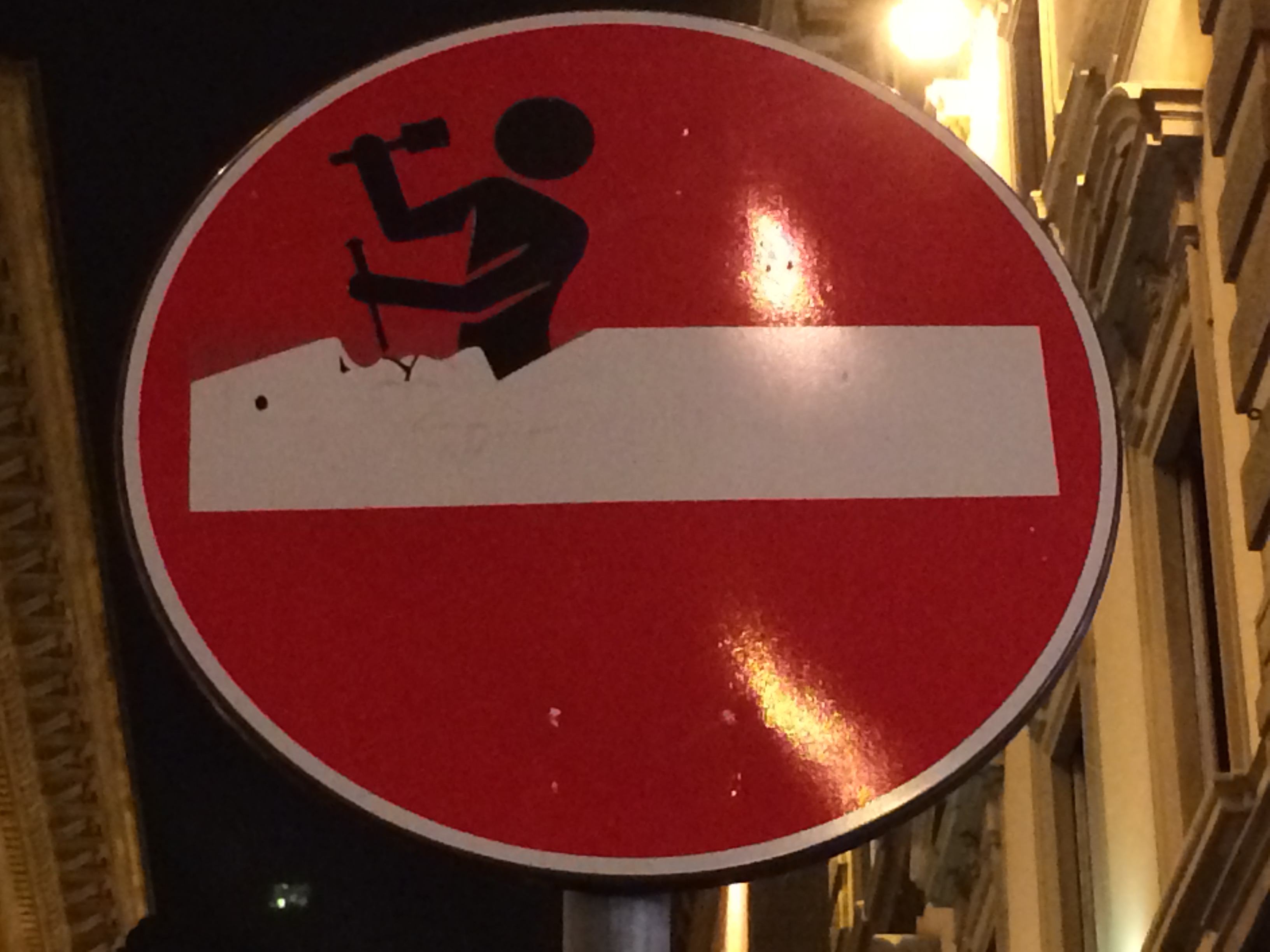
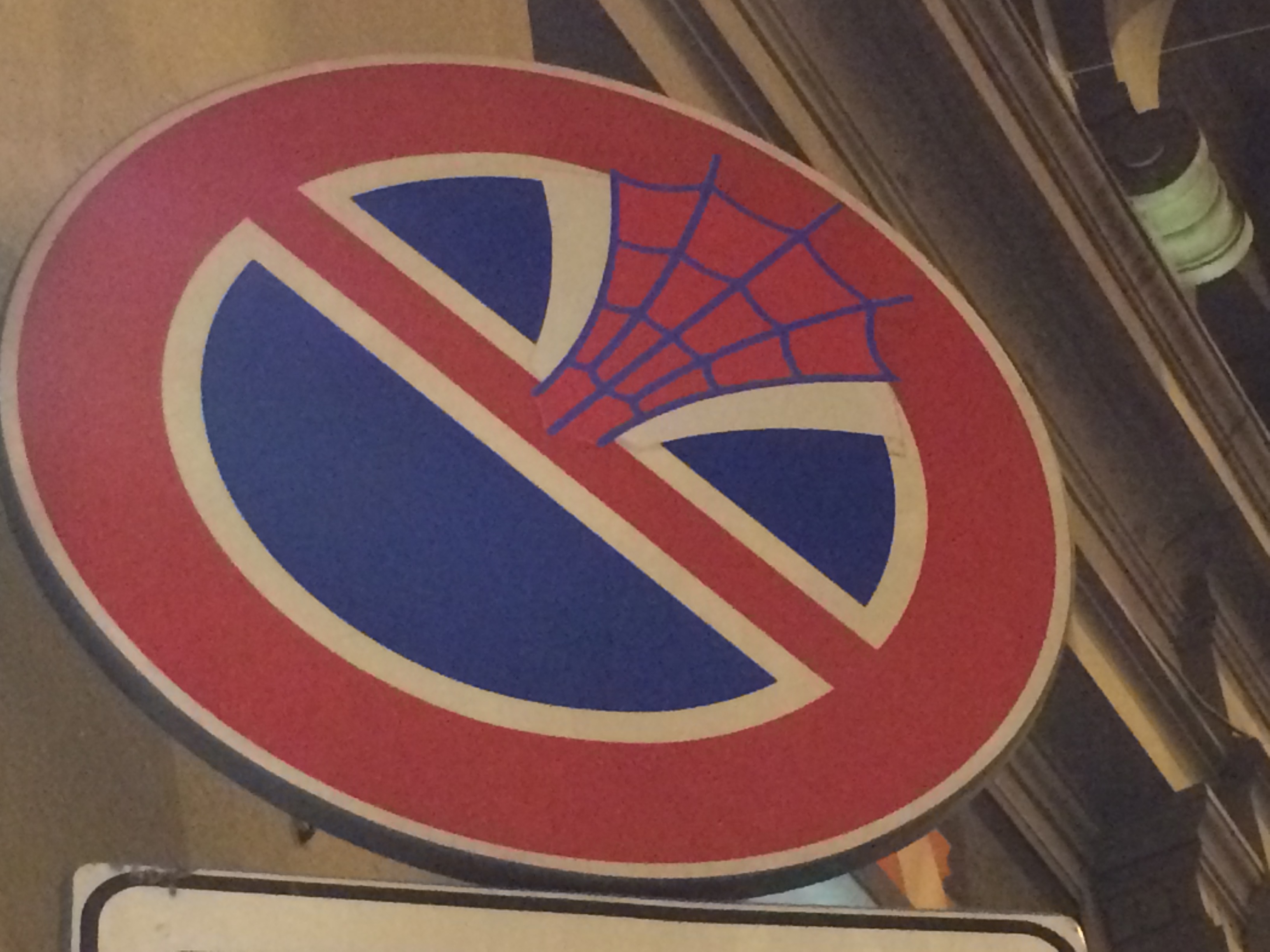
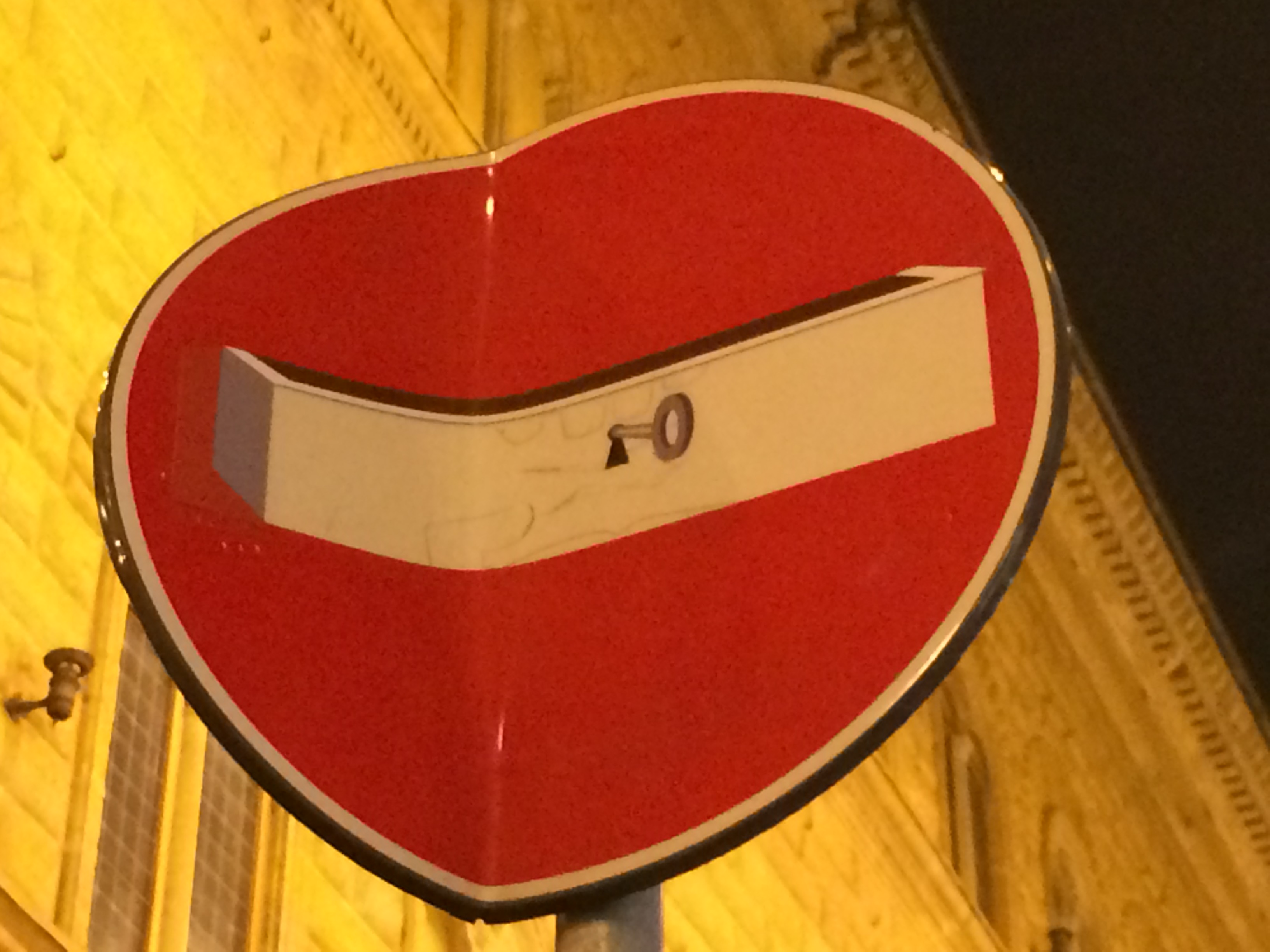
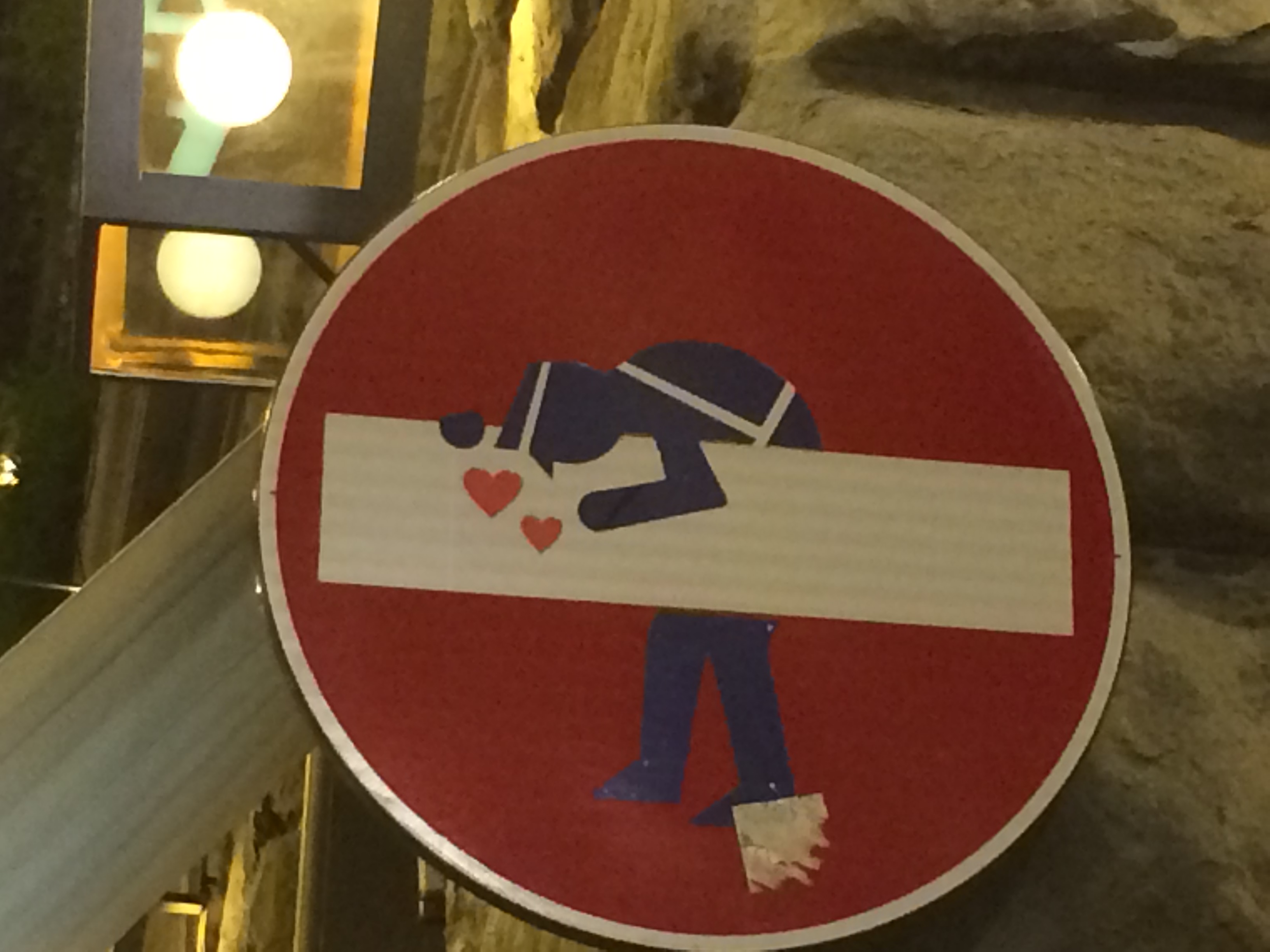
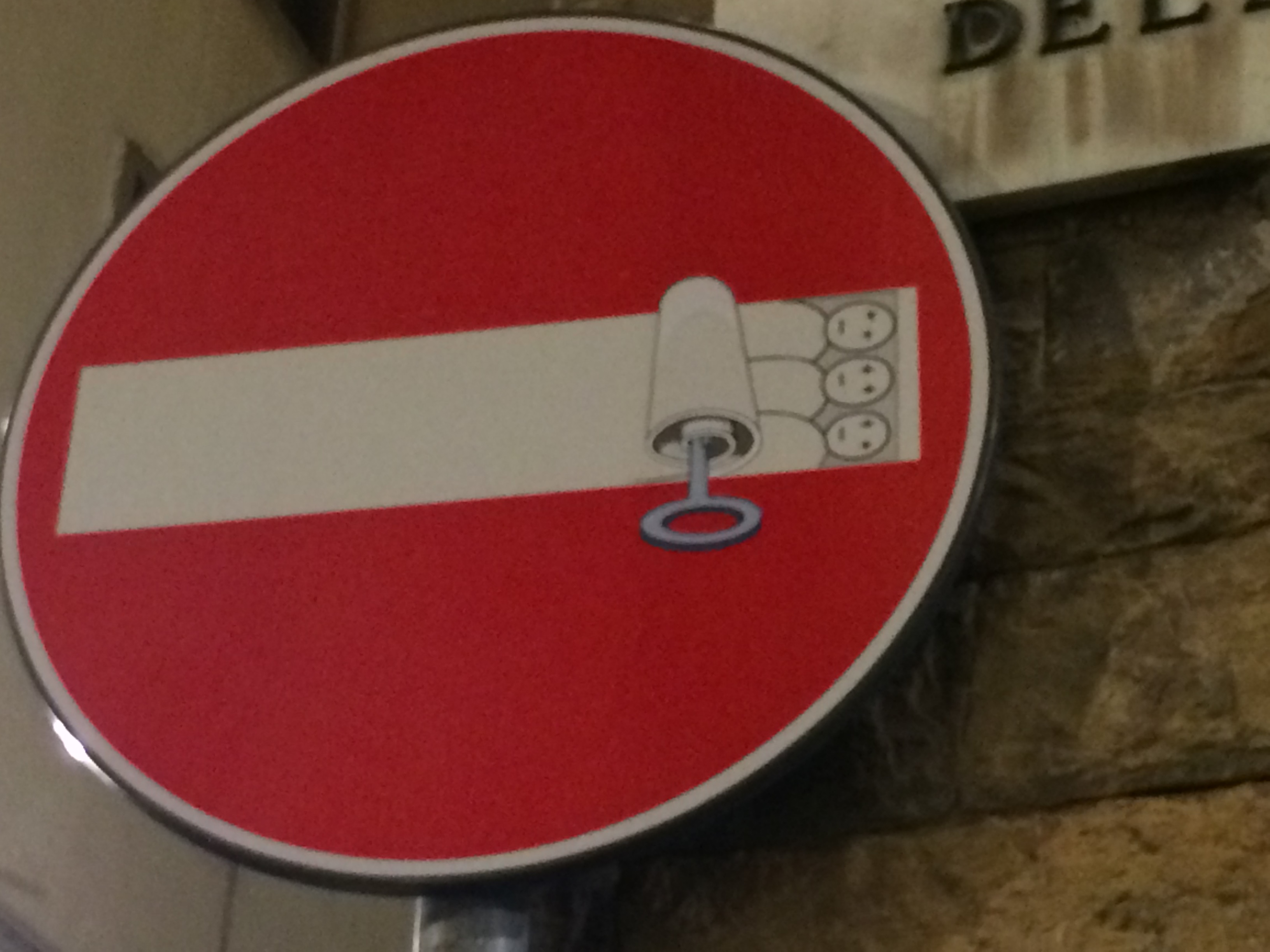
It rained again today, so the stone streets were wet tonight. I walked, looking in shop windows, stopping to listen to street musicians, saying hello to friendly shopkeepers. I stopped to watch several hundred people run by me who were participating in the Florence Run (an 18K run – or about 11.25 miles). I trolled looking for sign art, a transient production by a group of artists who decorate street signs that are cleared off almost immediately.

084

083

080

081

076

075

092

These are such an amazing complement to the pastel street art that occurs every day (if it’s not raining).

841

860

861

And there is music everywhere. I trolled the carousel in the Piazza della Repubblica, one of my favorite spots. A young man handed me a tissue so I could wipe off a bench and sit for a while.

090

One of my hopes when I came here without knowing the language and without knowing anyone was that I would learn to slow down, to reflect more, to get better at just “being” and not “doing”, to harness my extroverted side, to give expression to my introverted side. In my “real” life, I move quickly and get a lot done. I seldom reflect on what I’ve done before careening into the next thing (or the next 10 things). I have come to realize that for me this is a learned pattern. I have always striven to be productive, to be the best I can be. Often in my life, this has translated into doing as much as I can as quickly as possible. I am also a perfectionist. Getting “it” done isn’t adequate. I have to do “it” as well as I possibly can, whatever “it” is. My drive is one of the reasons I’ve been so successful in my life.

I have found a different rhythm in this city than I have at home. I walk slower. I look around all the time. I soak in the city. I am delighted to have had the chance to share some of this beauty with you, dear reader. For myself, my photos and writings will fuel my memories and be reminders of this time when I am back home. I hope they will also be reminders to maintain the calmer, more relaxed pace I’ve found here. I’ve found, among other things, that when I slow down I am almost as productive as when I’m moving at the speed of light back home.

Is it any wonder that I am inspired to write by all the beauty, art, and wonder in this city?  I walked home tonight, more slowly than I would at home, up the steep, street to my apartment.

094

095

096

I am so blessed to have this time.

A presto (until next time)!

Mindful Eating: Taking part in my friend Lori’s 5 Day Sugar Coma Detox

Ok, the holidays are coming and I have a huge sweet tooth. I love See’s California brittle (yes, this is on my Christmas wish list for those of you looking for gift ideas). I make fudge and delicious buckeyes (peanut butter balls dunked in chocolate – my family prefers them frozen and with super chunk peanut butter, but that’s a story for a later date). I love cookies, and pumpkin pie (I make this from scratch), and cheesecake, and 7-up salad (another family favorite). For me, holidays are a lot about the desserts, well, the sweets, well, the food really, but the sweets in particular.

In preparation for mindful eating over the holidays (note, I WILL mindfully eat all of the above during the holidays), today I’m starting a 5 Day Sugar Coma Detox facilitated by my friend Lori Vaughn who is a Beachbody.com consultant (you can find her on Facebook). I do have a sweet tooth, but don’t really eat a lot of sweets. Well, I don’t eat a lot of sweets ALL the time. Hmmm… getting mindful already. I do regularly eat dark chocolate (because it’s good for my heart…) ((and because it’s yummy)). I have been eating very mindfully since I’ve been in Italy, but I have fallen into a bit of a morning habit recently of enjoying a cappuccino (with 3 sugars). Cappuccino is bitter and if it’s really strong, I need 3 sugars to compliment the bitterness – if it’s a bit more mild, I only need 2 sugars. Ok, maybe I do have a bit of a sugar issue, even here.

So, because I’m a researcher, once I made this decision, I hopped on the internet to,… well,… research. Specifically I was interested in how much sugar there is in, as it turns out, everything. I consulted my girl Siri (yes, I know she and I fight all the time, but sometimes she is helpful) and this is what I learned.

It is impossible to eliminate all sugars from your diet, well, unless you eat only salmon,… all the time… Almost everything we put in our mouths will contain at least some natural, if not artificial or processed, sugar. Sometimes only very small amounts, but sugar nonetheless.

I knew that I didn’t want to substitute natural sugars with artificial sweeteners. Most contain neuro-toxins and are simply not healthy. My next decision was to eliminate all processed and added sugars from my diet. In Italy, I eat very healthy anyway, no processed food, fresh vegetables, fresh fruits, fresh pastas, so I think I have that one.

Ok, I’m getting there.

Then I wondered if it was possible to eliminate natural sugars as well. As I noted above, I learned that there are naturally occurring sugars in everything. There are sugars in fruits: A serving of grapes can have 24 grams of sugar; an apple can have 18.68 grams; a serving of cherries, 16.4 grams; a serving of blueberries, 14.7 grams; a banana, 14.4 grams; a peach, 12.6 grams. Double digit fruits seem like something I will want to avoid in these next 5 days.

As I continued to research, I learned that some berries have a much smaller amount of sugar per serving. A serving of strawberries, for example, has 6.85 grams of sugar, while a serving of raspberries has 6.9 grams.

I had this nagging feeling that vegetables also contain natural sugars. Here’s what I found. They do. A tomato has an average of 3.88 grams of sugar; a green pepper has 2.86 grams. An avocado has 2.41 grams of sugar while a serving of broccoli or zucchini has 1.45 grams. A serving of cucumber has 1.3 grams of sugar. Even a serving of head lettuce has .981 milligrams of sugar.

I decided to look at starches just for fun, knowing that even if they didn’t have sugar, our bodies transform starches into sugars. A sweet potato has 10.3 grams of sugar, about what I expected. I was surprised by other starches. Corn has only 3.22 grams of sugar per serving. A potato has 1.9 grams per serving. A serving of squash has 1.87 grams of sugar, while a serving of pumpkin has 1.84 grams.

Now Siri and I were on a roll and I wondered if there is sugar in protein. There is!!!! Well, at least in meats. Not much, but still sugar. A chicken egg has (253 milligrams), a serving of pork (376 milligrams), a serving of beef (26.9 milligrams).

Then I found it, the one natural food group with no sugar, fish (and shellfish). I should note now that I am not really a fan of fish. I can eat it once in a while, if it’s salmon or swordfish and it doesn’t taste, well, fishy. After a particularly bad meal I had here in Italy, I may never be able to look at a shrimp again. (Don’t ask!) and no one can eat a lot of lobster. A serving of salmon, swordfish, shrimp, or lobster have 0 grams of sugar. A serving of trout, .02 grams. Ooops! Tilapia has 4 grams of sugar per serving! (Sometimes I like tilapia.)

So, what about nuts and seeds? Sugar there as well – but not much.

Cashews contain about 1.56 grams of sugar per serving; Almonds have 1.37 grams per serving, Seeds are better with sunflower seeds containing around 876 milligrams of sugar per serving.

Ok, my research has led me to realize that almost everything has at least some natural sugars present. So, my decision is to cut out refined and processed sugars for the next 5 days. I will also eliminate anything from the list above with double digit grams of sugar.

I’ll let you know how it goes. I’m going to go make a big pot of veggie soup and grab some berries at the shop. Wish me luck! Caio for now!

On the Importance of Support for Health Care Surrogates: The Middle of the End of SOB (Sweet Old Bill)

One day, each of us will die. I have come to believe that Dylan Thomas had it wrong when he argued that we should “Not go gentle into that good night”, that we should “Rage, rage against the dying of the light”. I now believe that going gentle into that good night is sometimes the definition of a good death. So many factors go into a good death, particularly in a culture as death averse as ours. I cannot say whether or not my uncle had a good death. I can say that he met death on his own terms. That, however, is a topic for another day. Today I want to talk about the people who made the role I played as his health care surrogate easier, because being a surrogate in the U.S. still often means dealing with a medical establishment bent on raging, on defeating death. As I helped my uncle navigate the end of his life, I was fortunate to have three strong advocates supporting me.

My maternal aunt (my uncle’s sister), a nurse, helped me stay clear when I doubted myself or my choices. She reinforced the importance of my role as my uncle’s health care surrogate, and commiserated with all the craziness I faced when dealing with insurance companies, medical providers, long-term care and rehabilitation facilities, our family, and my uncle’s friends. She let me rant. She let me cry. She listened and advised. To my aunt, I say “Thank you for your compassion, your calmness, your willingness to troubleshoot with me, your clarity, your unwavering confidence in me, and your kindness. Doing this without you would have been so much harder.”

My second support person was my friend Andrew who was there for me because he loved me. He asked the hard questions and supported me in making the tough decisions. He helped me stay clear, encouraging me to write things down, so that I would have my own words to help me sort through issues as they arose, so that when my decisions or motives were questioned, I would have clarity for myself. I wrote. Reading what I wrote at various points helped me to remain strong in supporting my uncle’s wishes. To Andrew I say, “Thank you for your insight, your  intelligence, your compassion. Thank you for holding me as I cried, for driving me to the airport, for picking my up from the airport, for bringing me flowers, for loving me through this difficult time. You are a treasure.”

My third support person was the case oversight doctor at the rehabilitation hospital. He became my lifeline. He reinforced my uncle’s right to decide, made me aware of what I would face as I advocated for my uncle in the rehabilitation hospital, and helped me negotiate the care decisions we faced. To this physician, I say, “Thank you  for helping me reach and maintain clarity, for helping me understand the mindset and motives of health care providers, for preparing me for all the challenges I would face, and for fortifying my commitment to “stay the course”, even when making a different choice would have been easier.”

As I’ve said, I’m a health communication scholar. My academic and personal work prepared me to serve as my uncle’s health care surrogate as he negotiated the end of his life. I had over two decades of my own research. I had my experiences with colleagues and friends from the Nevada Center for Ethics and Health Policy. I had tools others may not have as they take on this role. These resources didn’t change the fact that I continually and painfully second guessed myself throughout this process. They didn’t prepare me for who I was as a person, a niece, helping someone I loved in the process of dying. They didn’t prepare me to negotiate this process with health care providers, family, and friends. My second guessing came mostly from the reactions of my family, my uncle’s friends, and medical providers who disagreed with my uncle’s decisions or questioned my motives. I’m a conscientious person. If people question me or my motives, it kicks me into a process of self-reflection, looking for chinks in my commitment, in my motives. My support people made this process and all the decisions associated with it bearable.

I’m going to spend the rest of this entry talking about the case physician in the rehabilitation hospital. He and I never met in person. Through several phone calls, he understood that my uncle did not want to do anything to prolong his life: no medications, no surgeries, no hospitalizations, no invasive treatments. He also understood my uncle’s desire to be as healthy as he could for the time he had left. The doctor agreed that continuing to regain or at least maintain his strength and physical capacity through physical therapy and occupational therapy were appropriate. He also recommended speech therapy to assess whether there were any swallowing or food management issues that could be improved. He helped me stay logical and pragmatic in the face of significant resistance from health care providers.

I remember at the end of one conversation he told me that this was not going to be easy. He told me I would have to stay strong in the face of well-meaning health care providers who thought my uncle’s decisions were wrong. He told me that well-meaning health care providers would try to “gaslight” me. I asked what he meant. He said, “They will identify crises that will require more extensive medical procedures and hospitalizations. They will want to call ambulances and administer emergency treatments to save or prolong your uncle’s life. They will call you at all hours of the day and night with emergencies you need to make decisions about right then. They will not want you to take time to think”. He concluded, “No matter how they gaslight you and how urgent the emergency they present you with, you need to go down your decision tree. Given his decision and your commitment to advocating for it, except for keeping your uncle comfortable and pain free, you aren’t going to do anything else. Right?”. “No”, I answered, “Good”, he said. “You’re clear. Stay that way. Call me any time you if you need me. I’ll call you when I need you”.

He was right. Nurses called me at all hours of the day and night. The preferred time seemed to be 3 a.m. and each emergency required my approval of immediate hospitalization. Sometimes they called 911 in direct contradiction to the “no 911” directive. Twice they called to inform me that ambulances were on the way. In both cases, I refused them. The first time the nurse said, “That’s what your uncle said. We hoped you’d have more sense.” His advance directive paperwork was misplaced multiple times. The post-it notes the case physican left to reinforce the directives in his chart were either removed from the chart or the workstation, or accidentally covered up, leading to the ordering of multiple tests and procedures I had to then refuse. Late one night they called to tell me my uncle was having mini-seizures. They wanted to hospitalize him for tests. On another occasion, they thought he was throwing blood clots and that the circulation in his right leg had been cut off. On both occasions, I was lucky that the case physician was available to talk me through the crisis. He asked if I would allow surgery. He asked if I would allow any treatment beyond pain medication. My answer was “No”. The physician concluded, that it didn’t matter then if my uncle had had a stroke. Observation would confirm that diagnosis or not. It didn’t matter if he was throwing blood clots or if the circulation in his leg had been compromised. Again, observation would eventually confirm whether or not this was the case. Since we weren’t going to accept any kind of treatment, the diagnosis didn’t matter. Helping me work through the decision path, it became clear that to support my uncle’s wishes, all treatments had to be refused. He helped me understand that the health care providers in the rehabilitation hospital were only doing what they believed best, trying to prolong my uncle’s life.

These situations led me to repeatedly question my uncle’s desire to “let nature take its course” and my desire to support him in that decision. Was this the time? Could he still live a high quality life – if only we did this or that intervention? My experience as a health communication scholar and the support of my advocates allowed me to stay the course in each case, as did my uncle’s unwavering commitment to the path he’d chosen. As loved ones of those who are dying, our hope often leads us to accept medical intervention that will not prolong a quality of life and often only minimally lengthen the duration of life. Being a health care surrogate at end of life is not easy. It is, however, critically important in a culture that is death averse and within the context of a medical establishment that views death as a failure. Sometimes it is appropriate to rage against the dying of the light. At other times, it is a gift to allow a loved one to go gentle into that good night.

In Search of the Best (& Fastest) Cappuccino in Florence, Italy: The Case for the Caffe’ Maioli at the Ponte Vecchio

082

So, dear reader, as you know, I have been on a quest for the best cappuccino in Florence, Italy. I have a candidate in the Caffe’ Maioli with their baristas Maurizio and Iris. First, the Caffe’ Maioli has the perfect location. It is just across the Ponte Vecchio Bridge on the Oltrarno side, straight across and directly in front of you as you leave the pedestrian walk. When I first got to Florence, I was a bit startled by the Italian tradition of slamming a quick espresso while standing at a coffee bar. I soon learned that doing so it fast and the cost of the coffee or any food eaten standing at the counter is a fraction, sometimes a third, or half the cost of what it would be if I sat down. I have started to really enjoy this tradition. It allows me to chat briefly with the barista, enjoy my cappuccino and crescent, and then go on about my day.

074071072

I have to admit, I have a bit of a crush on the Maurizio, Andreus, and Iris. All three are friendly, welcoming and incredibly efficient. Maurizio and Andreus are an amazing tag team behind the coffee counter. While Maurizio whips up the perfect blend of bitter coffee with milky, frothy deliciousness, Andreus heats your pastry to the perfect temperature. Both coming together in front of you within seconds of your order. I have never seen someone move as quickly, efficiently, and seemingly effortless making coffees, cappuccinos, espressos, lattes, Americano coffees, or fresh squeezed orange juice as Maurizio.

068

Maurizio

075

Andreus

My friend Mary and I highly recommend the crescents. They are large, flaky and the hint of honey on the top adds a delightful touch of sweetness. I am also a fan of the chocolate crescents and the apple pockets. The chocolate crescents are large, flaky, filled with chocolate, and topped with a hard shell of chocolate across the top. Really, the words chocolate crescent speak for themselves. The apple pockets are a bit crunchy, a bit soft, and full of tasty apple deliciousness, perfect with cappuccino. Caffe’ Maioli has much more to offer with gelato, sandwiches, salads, and liquors, wines and candies.

080

078
Iris often runs the upstairs part of the restaurant which overlooks the Ponte Vecchio pedestrian walk and, from some tables, offers either an open air dining experience, or a view of the Duomo. Food comes from below through a dumbwaiter. There are evening specials at a very reasonable price, wine, bread and salad for 9 Euro in a lovely setting. On Tuesday, and Thursday through Sunday, you will be serenaded by live music from the Ponte Vecchio Bridge, a perfect Florence experience.

For service, food quality, coffee deliciousness, convenience, and ambiance, I recommend the Caffe’ Maioli. A cappuccino and crescent are 2.80 Euro if you stand at the coffee counter. Expect to pay at least twice as much if you choose to sit. This is standard in Florentine restaurants. Ciao!