Reflections on Death & Dying – The Beginning of the End of SOB (Sweet Old Bill) – Part 2

In July and August 2013, I supported my uncle, William Leo Pence, as he died. It was my chance to be there for a family member I loved. It was also an opportunity to put into practice my beliefs about human dignity, choice, and the power to make our own decisions and have them respected at the end of life.  It was one of the most grueling things I’ve ever done.

Born November 19, 1928, my uncle was a veteran of the Korean War. He stood 6’6” tall and his personality matched his height. Eight years before his death, he’d had a kidney transplant, but aside from that, and low level medications for slightly elevated cholesterol and blood pressure, he was very healthy. He was bright, independent and active. And, as Frank Sinatra would say, he liked to do things his way.

Once he took himself off all his medications, including the anti-rejection drugs for his kidney, he thought he would die quickly and peacefully. He put his affairs in order and went home to wait. (If you are reading this blog for the first time, the introductory post to this story can be found here: https://dballardreisch.wordpress.com/2014/10/14/the-florence-journals-reflections-on-death-and-dying-the-beginning-of-the-end-sobs-story-sweet-old-bill/) Unfortunately, will is not always the same as outcome, and what my uncle thought would take days, took more than a month. During that time, he gave me his durable power of attorney and I became his health care surrogate. Technically, he shouldn’t have needed a health care surrogate. He had spelled everything out very clearly. His advanced directives were in order: No invasive measures. No lifesaving interventions or life extending treatments. He wanted to live as fully as possible for as long as he had. He just didn’t want anything to make that longer than it needed to be. He did want to continue speech, physical, and occupational therapy so that he could be independent as long as possible. He wanted to live the highest quality of life he could.

During this process, my uncle made a mistake that almost took choice out of his hands. It had been a long, trying day. He was tired. He was uncomfortable. He was bored. He was fed up. Taking himself off medications had not led to the quick, painless decline he had anticipated. He wanted to talk with someone he thought would understand what he was feeling, but who wasn’t personally invested in his situation. He called 911. He wanted to tell someone that would understand that he was ready to die.

My uncle lived in Florida and his admission to a health care professional that he was ready to die led to his emergency admission into the hospital under the Florida Mental Health Act of 1971, the Baker Act. The ambulance came to my uncle’s house, took him to the hospital, and kept him for the full 72 hours allowed by law. He was furious! Unbeknownst to him, in Florida, it is considered against the interests of the state for an individual to be ready to die. The powers that be see it as a small step from being “ready” to die to committing suicide. The Baker Act required that he be assessed by a psychiatrist to determine if he was potentially dangerous to himself, someone else, or whether he had a mental illness. The key question was whether he was a suicide risk. Had they seen him as suicidal, the doctors told me that would have overridden his advanced directives even if he had been considered sane when he made them.

At the hospital, he rallied and convinced the psychiatric staff that he was not suicidal. However, without consulting us, they put him on medications to stabilize his mood and treat what they saw as depression. Now that they were convinced that he was stable emotionally, the question became what to do with him. After the 72 hours, they had to commit him or release him. He could no longer walk unaided and had very little strength. His insurance didn’t cover 24 hour nursing care. His friends, who were in their 80s, couldn’t care for him now that he was largely immobile. I lived 1300 miles away. He couldn’t go home. The doctors told us that they could not send him to a rehabilitation hospital unless he showed them that he wanted to get better. Because his test results were still so good, they didn’t think his decline was steep enough to warrant hospice care. The idea that he wanted to be as healthy and capable as he could as long as he lived, yet refused to take medication was confusing for medical staff. After much discussion, his doctors decided to give him a physical therapy consultation which would determine whether or not he could be placed in a rehabilitation hospital. My uncle used every bit of strength he had and cooperated fully with the PT assessment. They found him compliant, cooperative, and committed to building his strength. They decided to send him to a rehabilitation facility. Now if was my job to find one.

The Florence Journals: Random Musings on My Birth Story, Grandparents, Literature & Identity

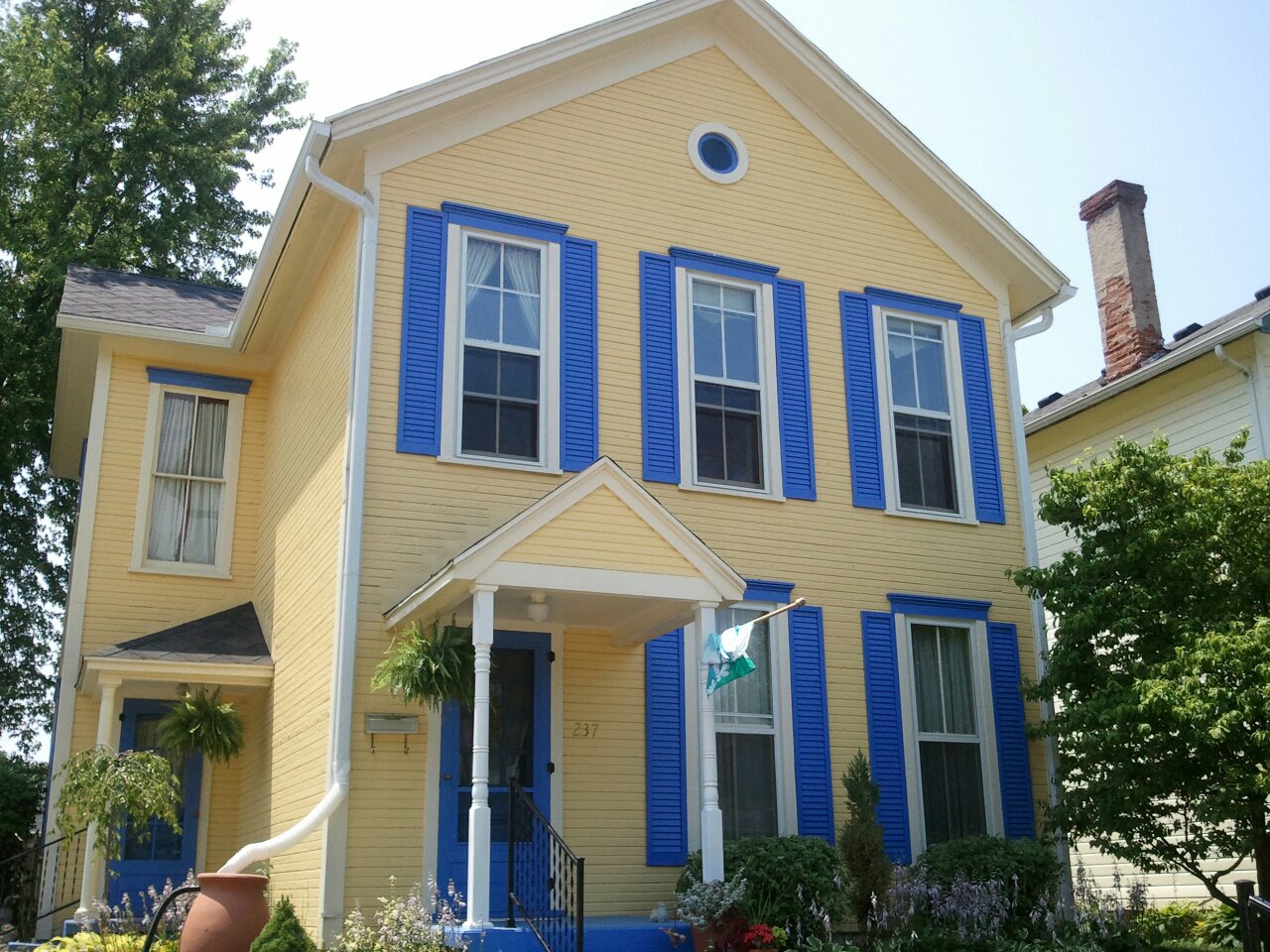
I was born two months premature in the front bedroom of my grandparent’s house on Lafayette Ave in Urbana, Ohio.

Urbana house

The house where I was born

My mother, who had turned 19 years old two weeks before, was alone during her labor and my delivery;  her parents were “out west” on vacation. When she realized what was happening she called a friend, who called a doctor, who came to the house. After my birth, I was rushed to the hospital where I stayed for the first month of my life. Weighing 3 pounds at birth, I had to reach the 5 pounds that would allow me to go home. From what I am told, I was lively, feisty, and alert from the first. I charmed everyone.

As a child, I was well loved, especially by my maternal grandparents, particularly my Poppa. He was the “unconditional love” person in my life. Poppa and I had the kind of connection I share with my son, effortless. We simply understood one another. Poppa died in 1974 when I was 16. He and my grandmother had started wintering in Florida several years before. Grandma had severe arthritis and the damp, winter cold of Ohio was too hard on her. We didn’t know that Poppa was ill before they left, but there was something between us as we said our goodbyes and hugged for the last time. I think both Poppa and I knew we wouldn’t see each other again. As my mother and her brothers made plans to bring him home, I knew that he would not make it. I sat down and poured out my heart and my love in a 14 page letter. Only after his death did I realize he hadn’t received my letter. The hospital returned it to my grandmother and she gave it back to me, unopened. I burned it as a goodbye to my Poppa, again precious words lost to the ashes. I wish I knew what I’d written, but that letter was a gift to my Poppa, not to me.

For months, I would laugh at a story or see something interesting and think “I have to tell Poppa”, only to realize that he was gone and that we wouldn’t get the chance to laugh together over whatever silly thing had happened or interesting fact I’d learned. As I understand it, my first words were “bite butter” and my Poppa gave me a bite of butter, the first of many. Poppa stayed with my sisters, my brother and me during the summer months while my mother worked. He sat for hours, day after day on the deck at Meadow Lake in Ohio watching my siblings and me swim and hang out with friends. I have trouble understanding that kind of commitment, that kind of comfort in just being someplace.

As a child, I loved bedtime stories, particularly those my Mother and my Poppa told me. Once they told me a story, I remembered it word for word and if they changed it even slightly the next time I asked for that story, I corrected them. As a mother who told my own children stories (and was corrected by them if I changed plot lines or wording, I know how difficult it is to tell the same story the same way each time, especially if you are making it up on the spot). I must have been quite a handful. I wonder if this is why they started reading me books. For me, books were magical. From those letters on the page pictures and movies emerged. I could see what they read. I could not wait to read. I wanted to be able to make those pictures and movies happen too.

I got my love of reading from my Grandma, as well as my love of culture and history. My Grandma told me I could read by the time I was 3. She helped me learn by teaching me to pick words out of newspaper articles. She gave me a red pencil and I would circle the ones I knew. I could pour over a newspaper for hours at the table in her dining room. Then, when I was ready, she would point to each word, ask me to read it, ask me what it meant, and ask me how to spell it. She also taught me to try to understand the meaning of other words through the context of what I could read. Later, she gave me abridged versions of classic novels. They came in a series and I loved getting the next one. Through this series, I read the books that would have the greatest impact on my early years, Wuthering Heights, Pride and Prejudice, The Hunchback of Notre Dame, Little Women, Great Expectations, The Count of Monte Cristo. I loved entering the world of a book. I still do. These books also taught me an appreciation of the complexities of the world, from unrequited love and oppression, to unfairness and hypocrisy. They taught me to treasure fairness, justice, love, compassion, a strong work ethic, and care for others.

When I was 14 years old, my grandmother took me to see the movie Nicholas and Alexandra about the last Czar and Empress of Russia. I have no idea why she picked this movie, but when it was over she said, “I have never been able to travel outside the America. You will. Someday you will go to Russia.” I think my love of travel was born in that moment. Later, I would live in Russia for a year, on a Fulbright Fellowship teaching at Kazan State University in Kazan, Tatarstan, Russia.

From my Grandmother, I also learned that I have an almost photographic memory. This skill runs in my family. Once I learned a word, I never forgot it. When I would try to remember things I’d read my grandmother would say, “Picture the page in your head. Can you see it? Ok, read it”, and I would. I had no idea this was unique. I thought that if I could do it, everyone could. This later made memorizing speeches during forensics in high school and college very easy. To this day, I can picture pages in my mind and read them to myself. I’m lazier with it now. This is one gift I haven’t refined. Perhaps because I read so much I don’t want to picture or remember everything.  I just want to know where I can find it again later if need be.

When I was little, after my bedtime story, and before I went to sleep, I loved to have my back rubbed, and my Poppa or my Mom would rub my back as I fell asleep. This is likely why I love massages so much today.  This is likely the foundation of my tendency to show physical affection easily and liberally. I’m a hugger, a toucher. I know how important touch is to health.

Because of my birth story, because of the gifts I received from my grandparents, because of many other factors that had formed my life trajectory, I have believed and still believe that my life is a gift and that much is expected of me. I believe I was born to make a difference in the world. This is not conceit. I don’t believe I am destined to change the world in any history making way. I don’t believe I am destined to have a big, splashy impact. I simply believe that those whose lives I touch should benefit, their lives be enriched, from our interaction, as my life was enriched through contact with my grandparents, as it is now enriched by those I know and meet. This is why I became a teacher. This contributes to my multi-tasking tendencies. This is why I’m not always good at just ”being”. At times, I do not know who I am unless I am doing something and what I am doing defines me. I’m working to both understand and moderate these tendencies. (Yes, I see the irony in my wording here. 🙂 )

On why I LOVE Daylight Saving Time!

Ok, so while I’m in Italy this year on a writing retreat and not teaching, “Fall Back Day” will not impact me as it usually does. However, I’m still happy that the European Union, like the U.S., and a total of 70 countries worldwide, practice Daylight Saving Time! Like many of you, I often feel like there are simply not enough hours in the day to do everything I need to do. So often I wish for just one… more… hour… Once a year, I get that hour and I “feel” as if I have more TIME. I wake up earlier. I am productive longer. I feel like there is TIME to get things done. I even feel as if there is TIME left over at the end of the day to relax! That is why “Fall Back Day”, the glow of it which carries me for about 7-10 days beyond the actual day, is my favorite day of the year.

So, why Daylight Saving Time?

Did you know that Benjamin Franklin, the U.S. inventor and politician, first proposed Daylight Saving Time in 1784 and that Germany was the first country to implement it in 1916? It took a while to catch on. Also, Daylight Saving Time hasn’t always been an hour. Sometimes it’s been ½ hour or 2 hours http://www.timeanddate.com/time/dst/.

The original idea was to maximize the daylight hours and, among other things, reduce energy expenditures. Conserving energy in times of war has been the most common reason for the implementation of DST over the years. The general consensus in study findings seems to be that even though we get up in the dark in the fall, the extra energy used then is more than offset by the energy saved by having an extra hour of daylight in the evening. I can only speak to having more energy myself for 7-10 days and getting more done.

History of DST

On April 30, 1916, Germany and Austria became the first counties to use Daylight Saving Time to conserve fuel needed for electricity production. They advanced the clock one hour until the following October. Other countries including Belgium, Denmark, France, Italy, Luxembourg, Netherlands, Norway, Portugal, Sweden, Turkey, and Tasmania adopted the same policy. Great Britain, Manitoba, and Nova Scotia  followed later in 1916. In 1917, Australia and Newfoundland began saving daylight. The U.S. didn’t hop on the bandwagon until March 19, 1918 when “An Act to Preserve Daylight and Provide Standard Time for the United States” was enacted. http://www.webexhibits.org/daylightsaving/index.html.

That first pass at DST lasted 7 months until Congress overroad President Woodrow Wilson’s veto to end it. During WWII, Daylight Saving Time reappeared, again as an energy conservation measure and it lasted in the U.S. from February 9, 1942 until September 30, 1945. From 1945-1966, U.S. states got to decide if they wanted to observe DST or not. On April 12, 1966, President Lyndon Johnson supported, and Congress approved, the “Uniform Time Act”. The only way around Daylight Saving Time then was for a state legislature to determine that an entire state would stay on Standard Time. In 1972, Congress allowed states with more than one time zone to decide independently for each time zone whether or not to follow DST or stay on Standard Time.

On January 4, 1974, during the Vietnam War, President Richard Nixon signed into law the “Emergency Daylight Saving Time Energy Conservation Act of 1973”. Congress amended the Act, and Standard Time returned on October 27, 1974. Daylight Saving Time resumed on February 23, 1975 and ended on October 26, 1975. In 1986, Congress decided that DST would begin at 2:00 a.m. on the first Sunday of April and end at 2:00 a.m. on the last Sunday of October.

Some areas in the U.S. don’t observe DST, specifically, Arizona, Hawaii, American Samoa, the Commonwealth of Northern Mariana Islands, Guam, Puerto Rico, and the Virgin Islands.

The “Energy Policy Act of 2005” extended Daylight Saving Time in the U.S. beginning in 2007. Since 2007, DST begins at 2:00 a.m. on the second Sunday of March and ends at 2:00 a.m. on the first Sunday of November.

In conclusion:

In the EU, DST begins at 1:00 a.m. Greenwich Mean Time on the last Sunday of March and ends at 1:00 a.m. GMT on the last Sunday of October. That means that in Italy, I get my extra hour a week before you get yours in the U.S. I’m not totally clear on the implications of tha, but I’m hoping to figure out a way to get both “fall back” hours.

Anyway, that’s the scoop on Daylight Saving Time. The rumor that a bunch of Congressmen getting drunk in a bar decided to dupe the American public has no merit. Check back with me next spring. I’m likely to be a bit less exuberant then, when I have to give my hour back, than I am now when I get one for free. Ciao and enjoy that extra hour of sleep!

The Florence Journals: A Palestinian & Sao Tome’ and Principe Feast, My Introduction to the Slow Food Movement

Slow food enthusiasts from around the world will be gathering in Torino, Italy October 23 – 27, 2014, for the Salone del Gusto, Terra Madre Festival. This is especially fitting this year as the United Nations declared 2014 as the International Year of Family Farming.  (Full information, including a program of the festival can be found here: http://www.salonedelgusto.com/en/). The Terra Madre (Mother Earth) Festival is a celebration of food biodiversity emphasizing species diversity, cultural diversity in the production and consumption of food, and traditional production and food preparation methods.

The festival is the biennial celebration of the global slow food movement started by Carlo Petrini in 1989. On their website, Terra Madre explains their mission. “Terra Madre brings together those players in the food chain who together support sustainable agriculture, fishing, and breeding with the goal of preserving taste and biodiversity” (http://www.terramadre.info/en/ ).  In contrast to often highly processed fast foods, which many of us ingest on a regular basis, and that travels long distances to be consumed, the slow food movement encourages people to spend the time preparing food in traditional ways, from scratch, with locally available ingredients. Not surprisingly, they are concerned not only with species protection and how food is grown, hunted, fished, and trapped, but also with the quality of air, water, and soil that support food production. Their interests also expand to fair trade and respect for traditional growing processes.

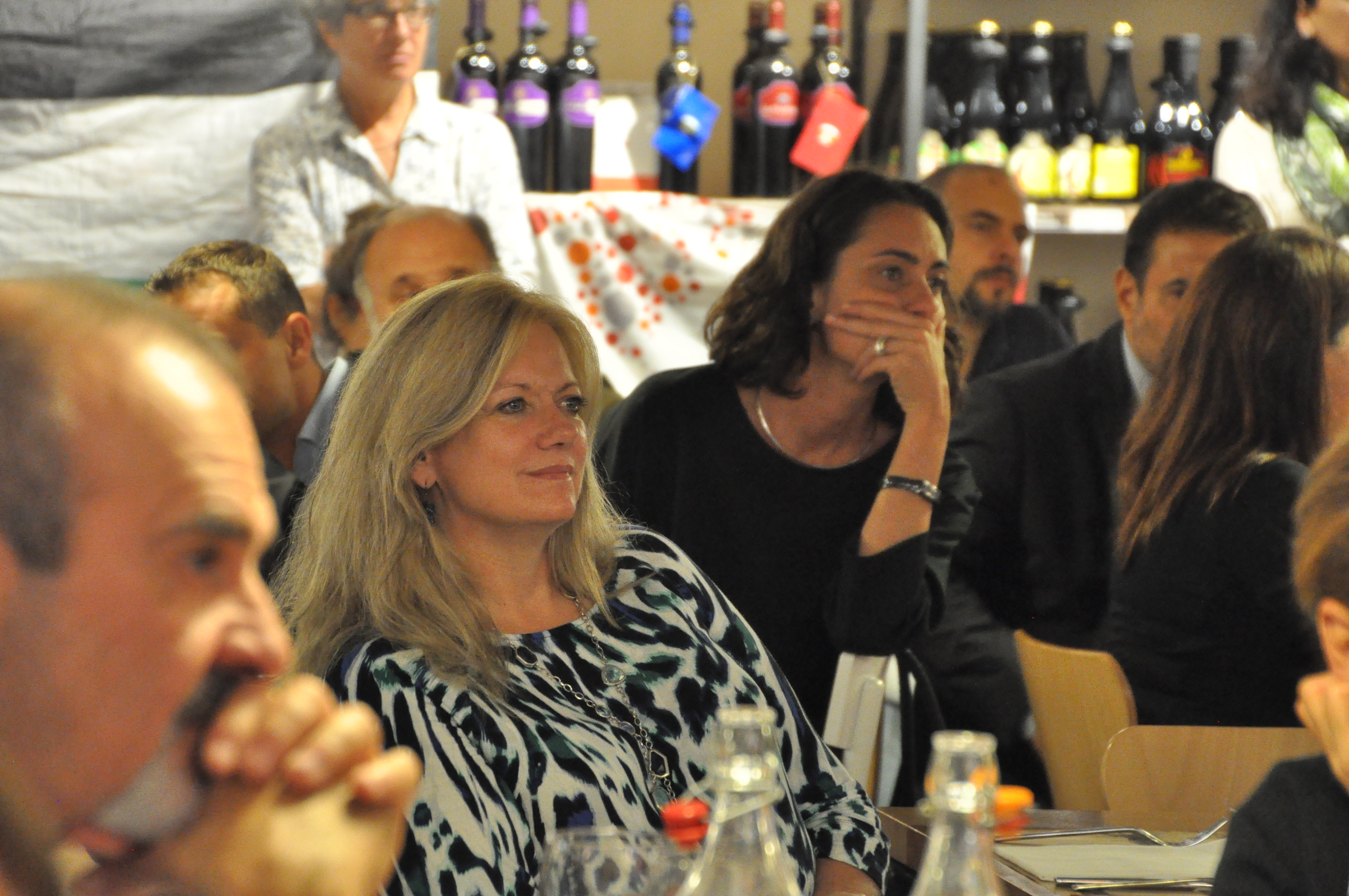
I had the opportunity to take part in my first slow food dinner as a serendipitous coincidence put me in the Red (Read, Eat, Dream) bookstore in Florence on Piazza della Repubblica just prior to a special event on October 20. The Palestinian and Sao Tome’ delegations traveling to the upcoming festival were the guests of the Florentine delegation. In appreciation, the Palestinian and Sao Tome’ delegations taught local chefs how to make traditional dishes. Slow food chapters from throughout Italy are hosting international delegations this week in preparation for the festival that begins tomorrow.

CENA_TERRA_MADRE_RED_20OTTOBRE14 (49) me 1

I had the opportunity to eat a 5 course meal that included 4 traditional Palestinian courses and 1 Italian course in honor of the Palestinian guests.

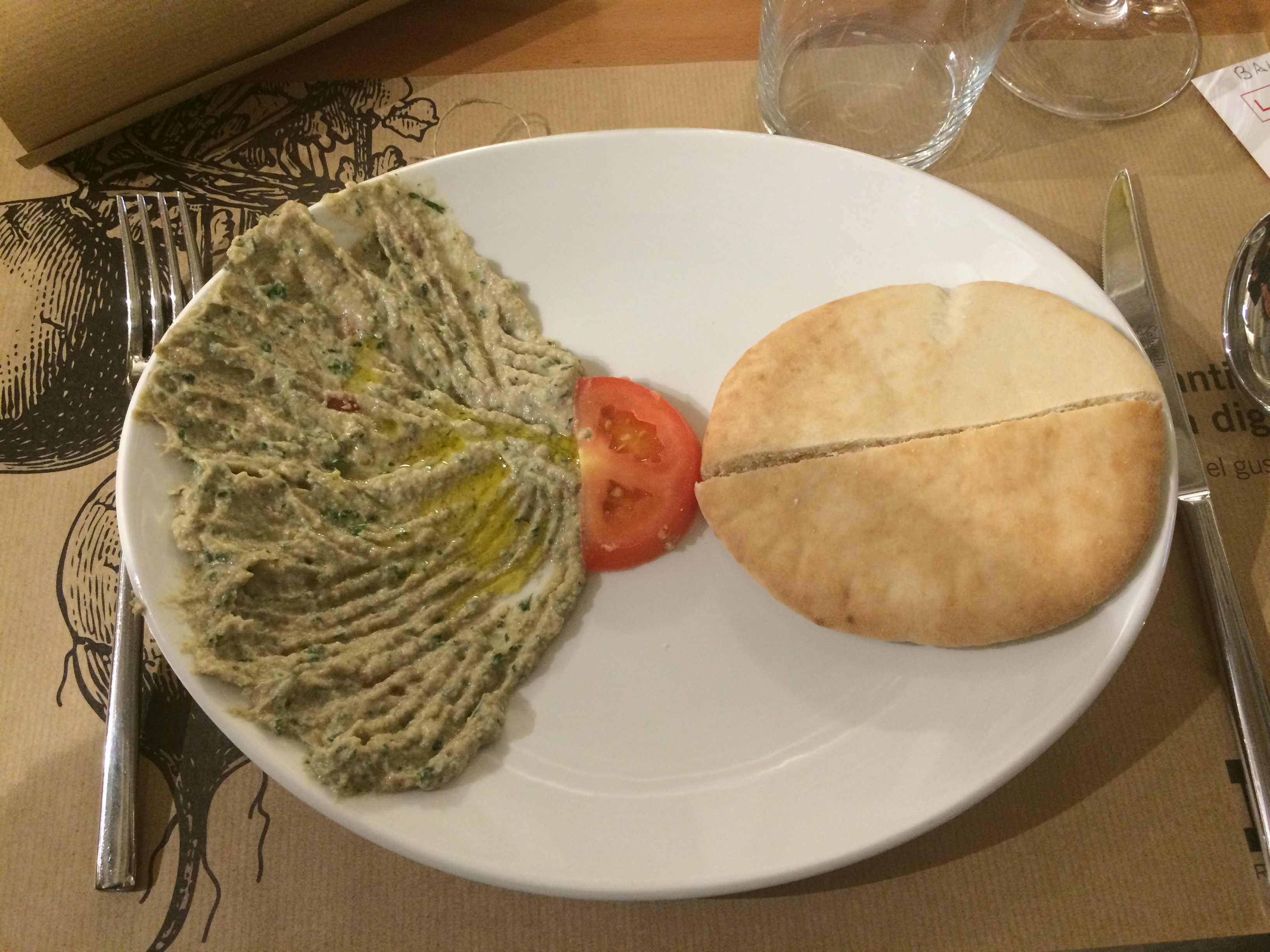
Course #1 – Mutallal (baba ganoush – eggplant) with pita

048

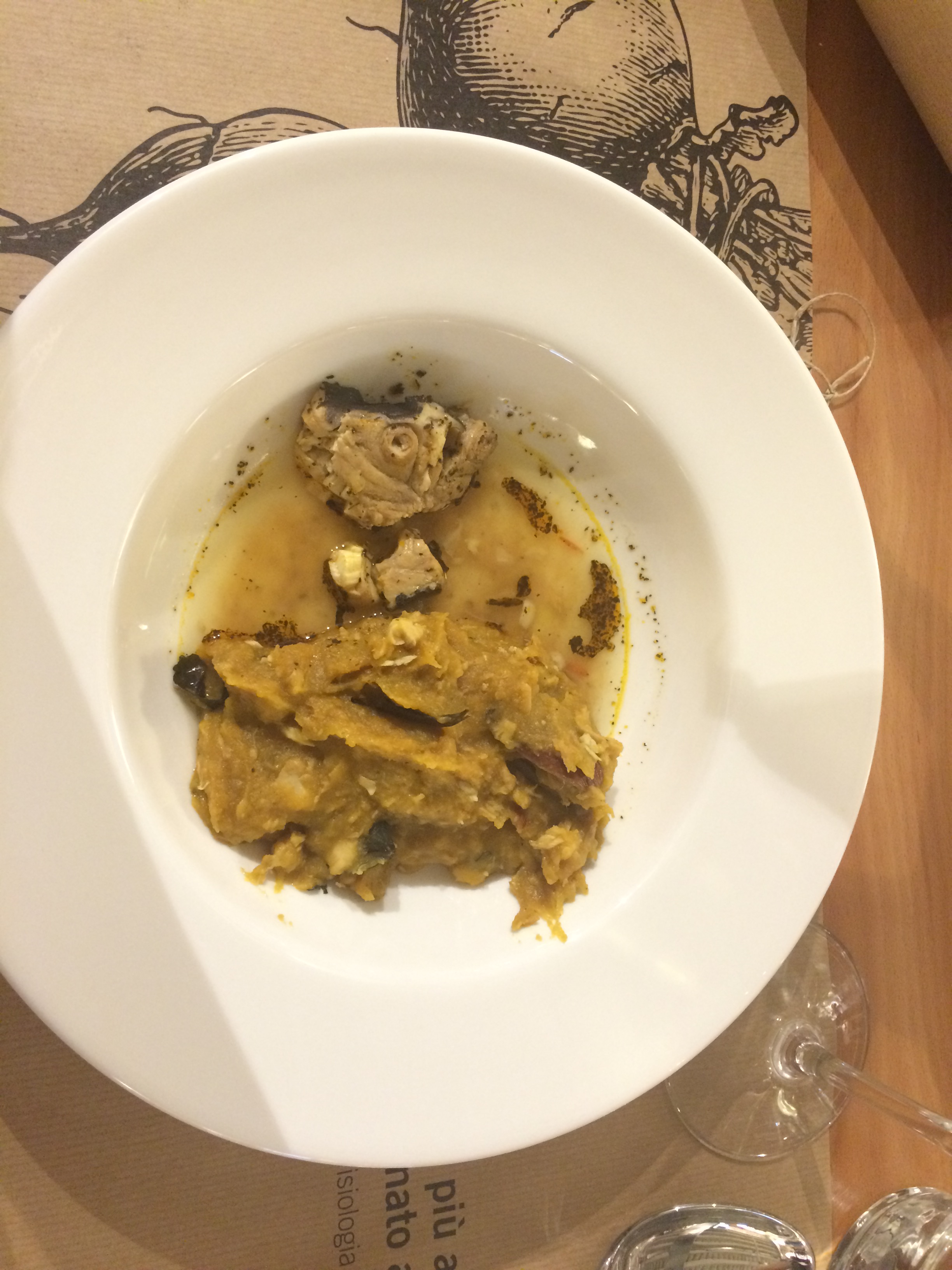
Course #2 – PiRa’o, a spicy cream of mashed cassava with swordfish, a specialty from the island of Sao Tome’ and Principe

049

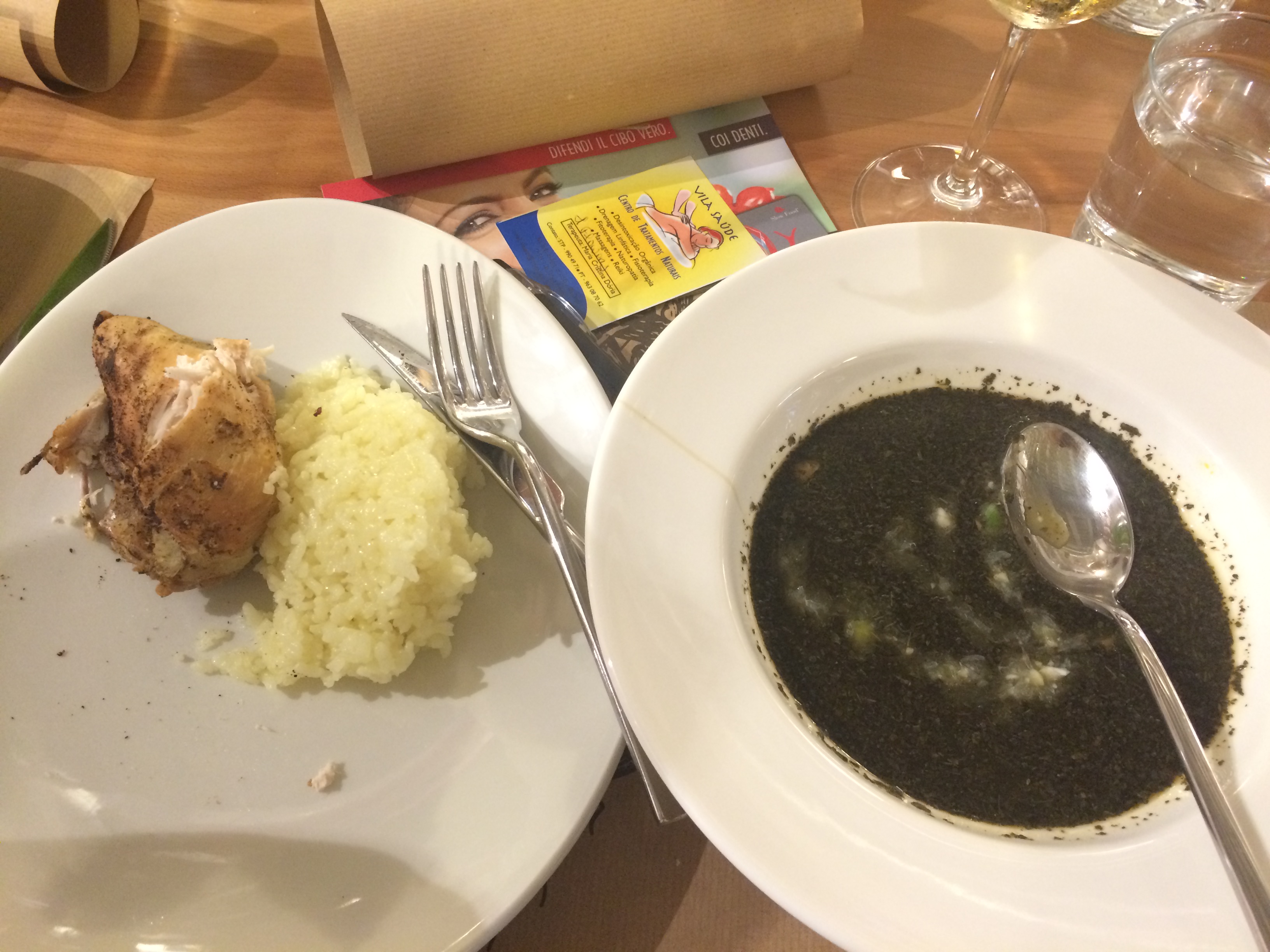
Course #3 – Miokhiyeh (a traditional soup) – Our third dish was the most traditional, according to the English speaking guides at my table. It was made of an extremely strong green (think strong spinach), spiced with garlic and lemon, and accompanied by chicken and white rice

050

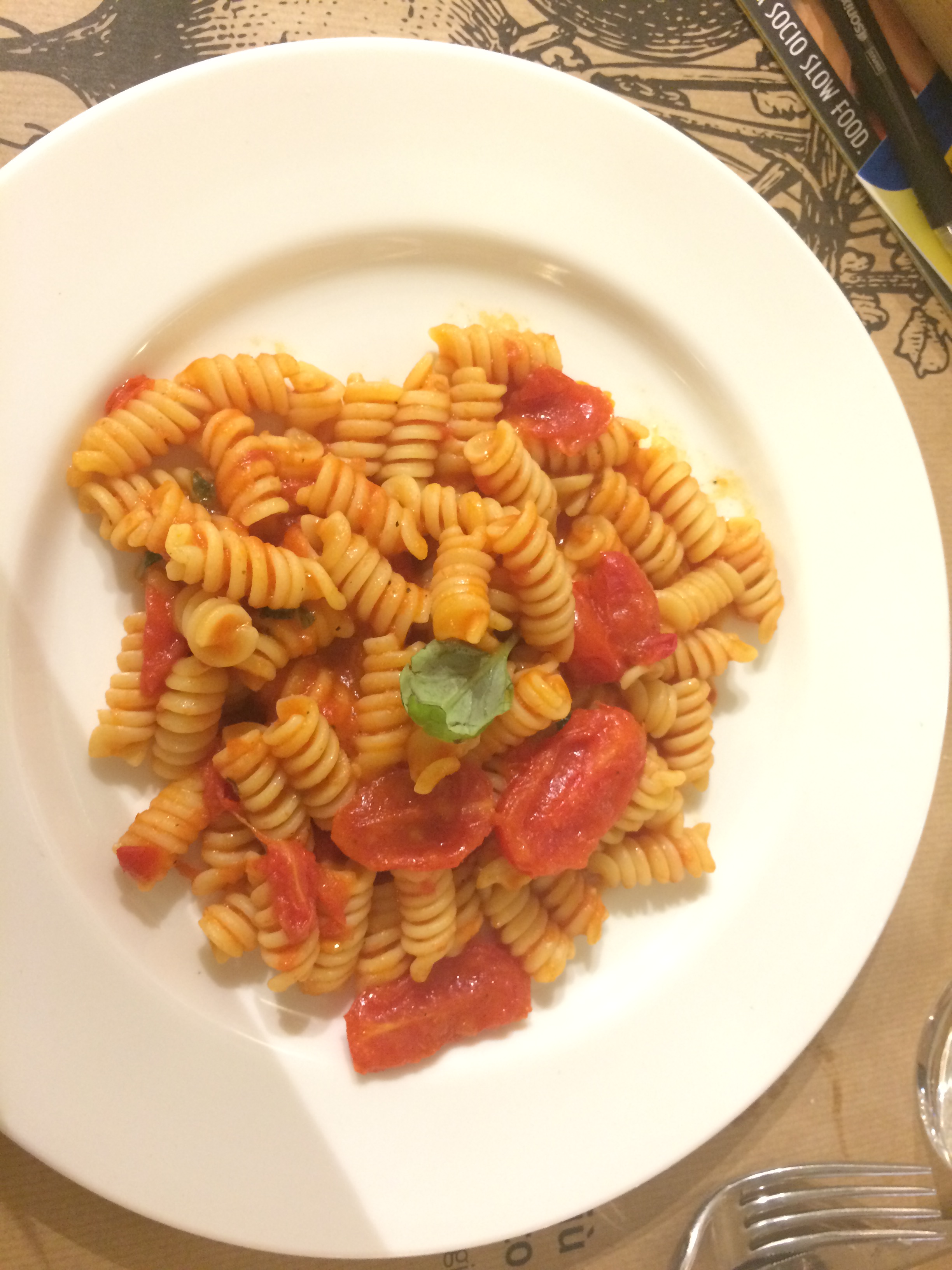
Course #4 – Italian penne pasta with basil and tomato sauce. The fourth dish was a tribute to the Palestinian guests and prepared by the Italian chefs.

064

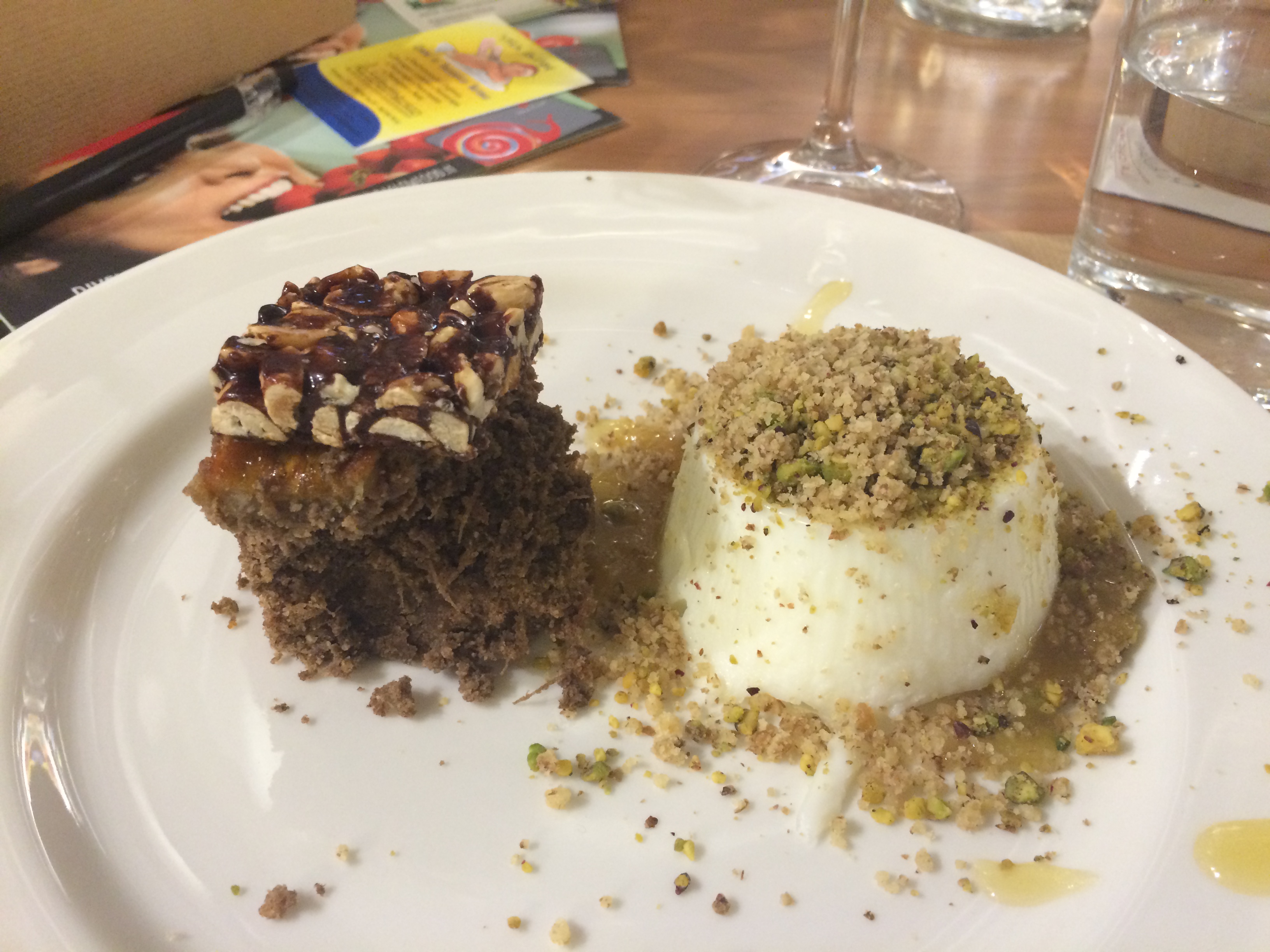
Course #5 – Dessert – The final dishes were two desserts. The first was called Bolo, a favorite from Sao Tome’, a light as air, gluten free, banana cake made from the pureed skins and flesh of bananas. The second dessert, a Palestinian specialty, Muhallabiyeh was a pudding made of milk, rice and flour.

065

The delegation from Palestine represents a women’s center in Old City Nablus called the Old City Charity Society Women Centre Bait al Karama. This women’s center also runs a cooking school. Their website states: “Bait al KARAMA is the first Women’s Centre in the heart of the Old City of Nablus, and aspires to combine a culinary social enterprise with activities of art and culture, run entirely by women. Bait al KARAMA is the first Slow Food Convivium in Nablus.” It is the hope of this delegation that their sustainable food practices might become a hub of agri-tourism in the Middle East. To find out more about their efforts, visit their website: www.baitalkarama.org.

As always, my Italian hosts and hostesses were incredibly gracious. I was seated at the central table with AnnaLisa Nardi, an Italian teacher who specializes in teaching English speaking natives, primarily college students, to speak Italian. AnnaLisa volunteered to be my translator for the evening. Two other guests at the table, members of the local slow food group, Francesco and Salvio were also extremely helpful throughout the evening.

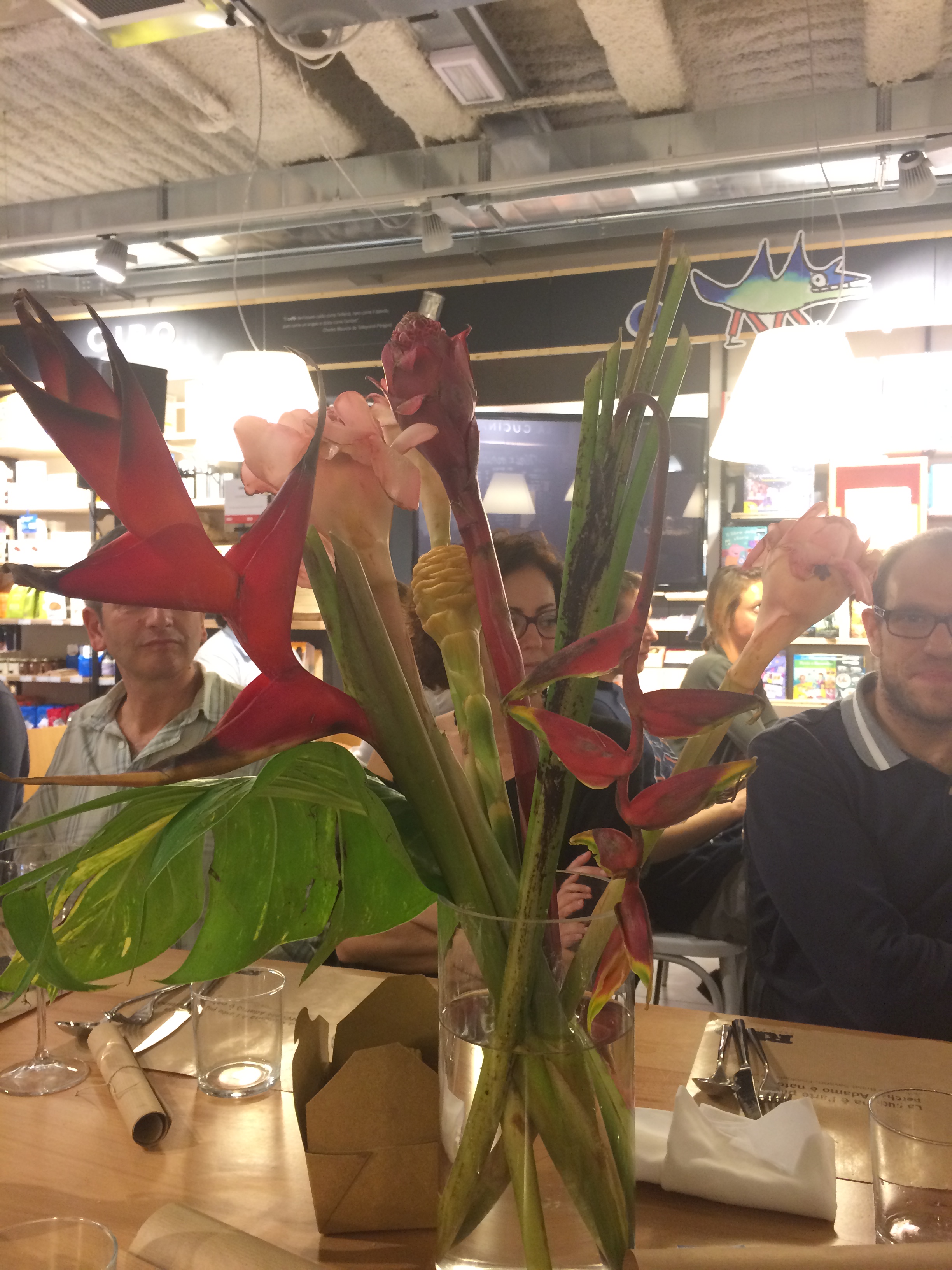
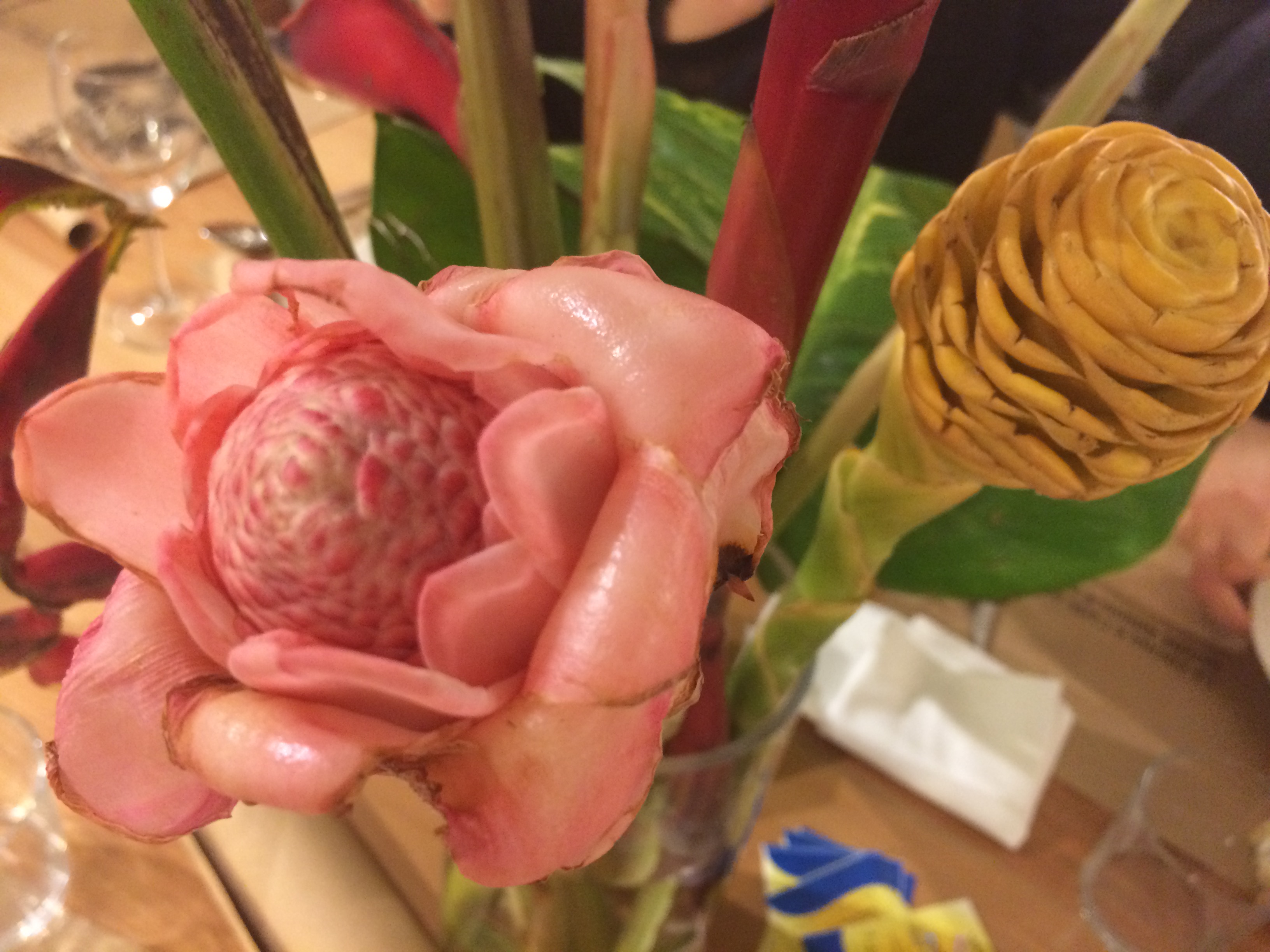
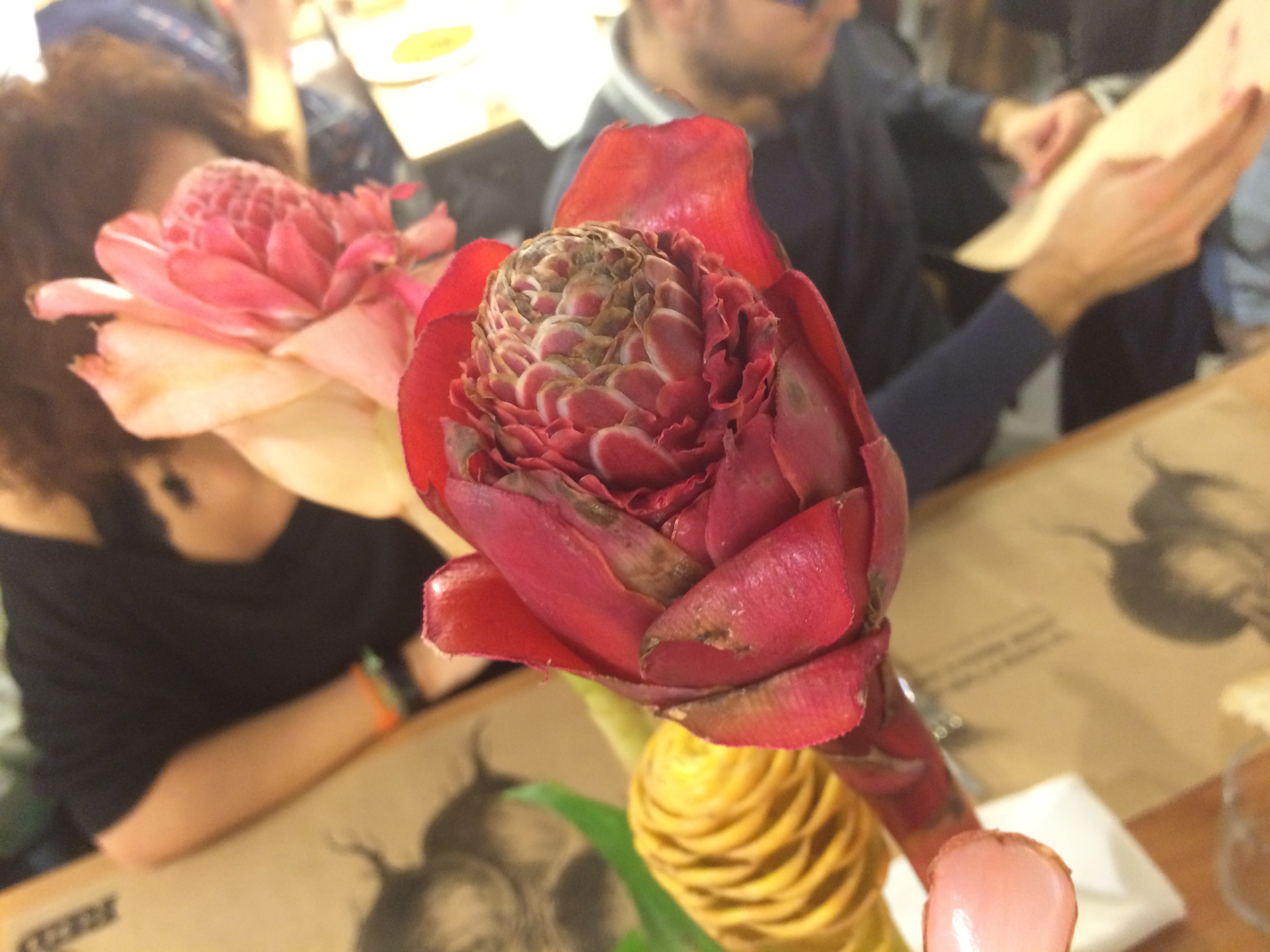
Finally, I must make note of the amazing flowers. One of chefs from the island of Sao Tome’ and Principe hand carried the flowers from her garden for this event. I’d not seen anything like them.

051063056

Terra Madre and the slow food movement boast over 100,000 members worldwide. An anticipated 3000 will be in Torino this week for the Salone del Gusto. I wish I was able to be one of them! Ciao!

The Florence Journals: Aperitivo at the Caffè Giacosa

I was window shopping one evening through the high fashion district of Florence. I paused at the Monte Blanc pen shop to gaze at a photo of Hugh Jackman in the window (sigh), entered a lovely blanket shop to check the price on what I thought was a gorgeous shawl. I learned first that it was a cashmere picnic blanket (who knew they made such things?!) and that this delightful 4 by 4  foot blanket cost 4830 euro (over $6500 at today’s exchange rate). I caressed it for a moment and handed it back to the salesman telling him I would continue looking. I passed the Tiffany jewelry store, a high end spa, and continued down the Via Tornabuoni.

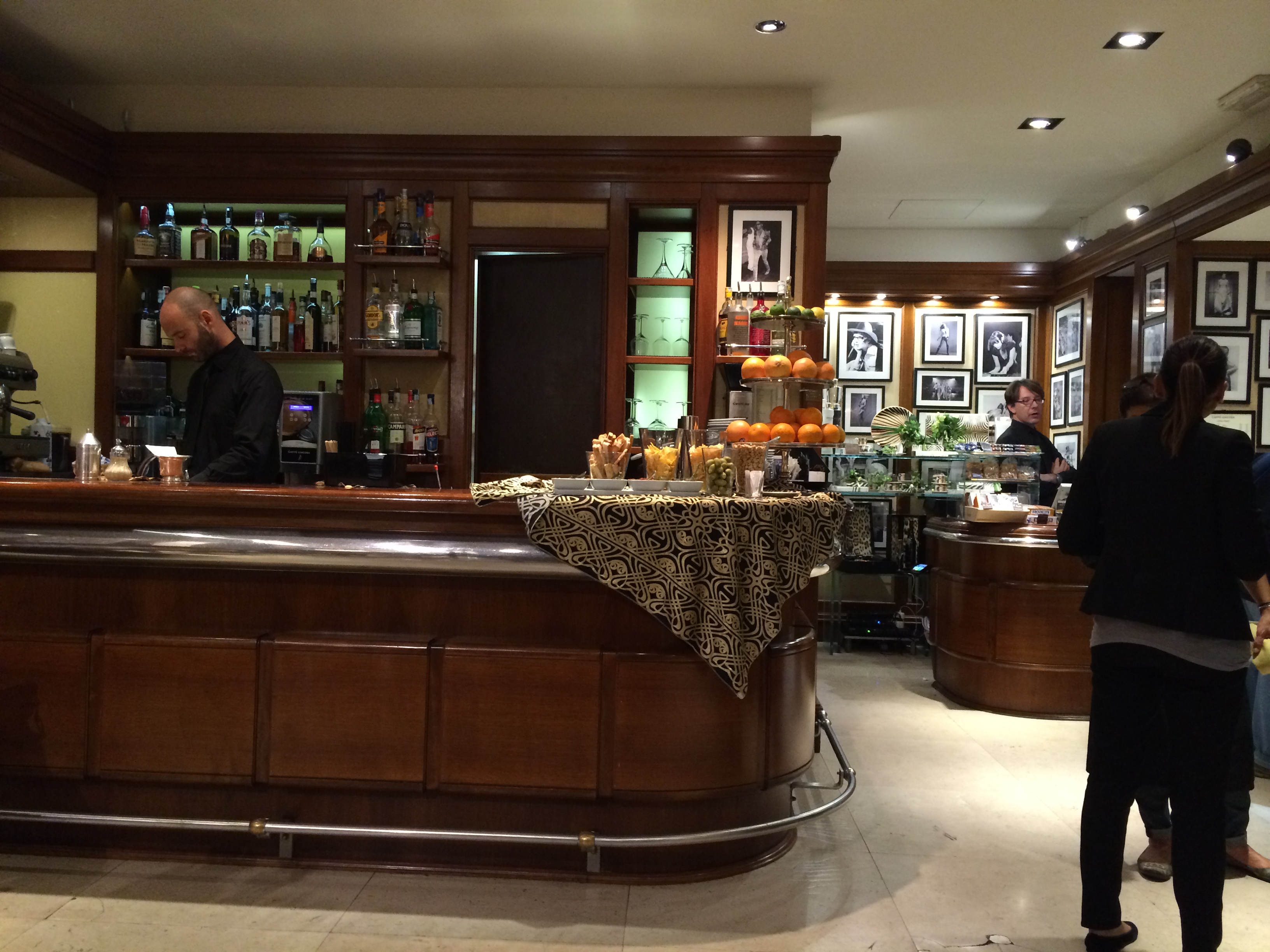
I walked toward what was to become one of my favorite hangouts in Florence. As I approached the café on that first evening, Frank Sinatra crooned to me from the welcoming entrance. Laughing couples and small groups of friends sipped pretty cocktails in shades of orange over ice, and enjoyed colorful appetizers served in stacked glasses, on the covered patio on the street outside.

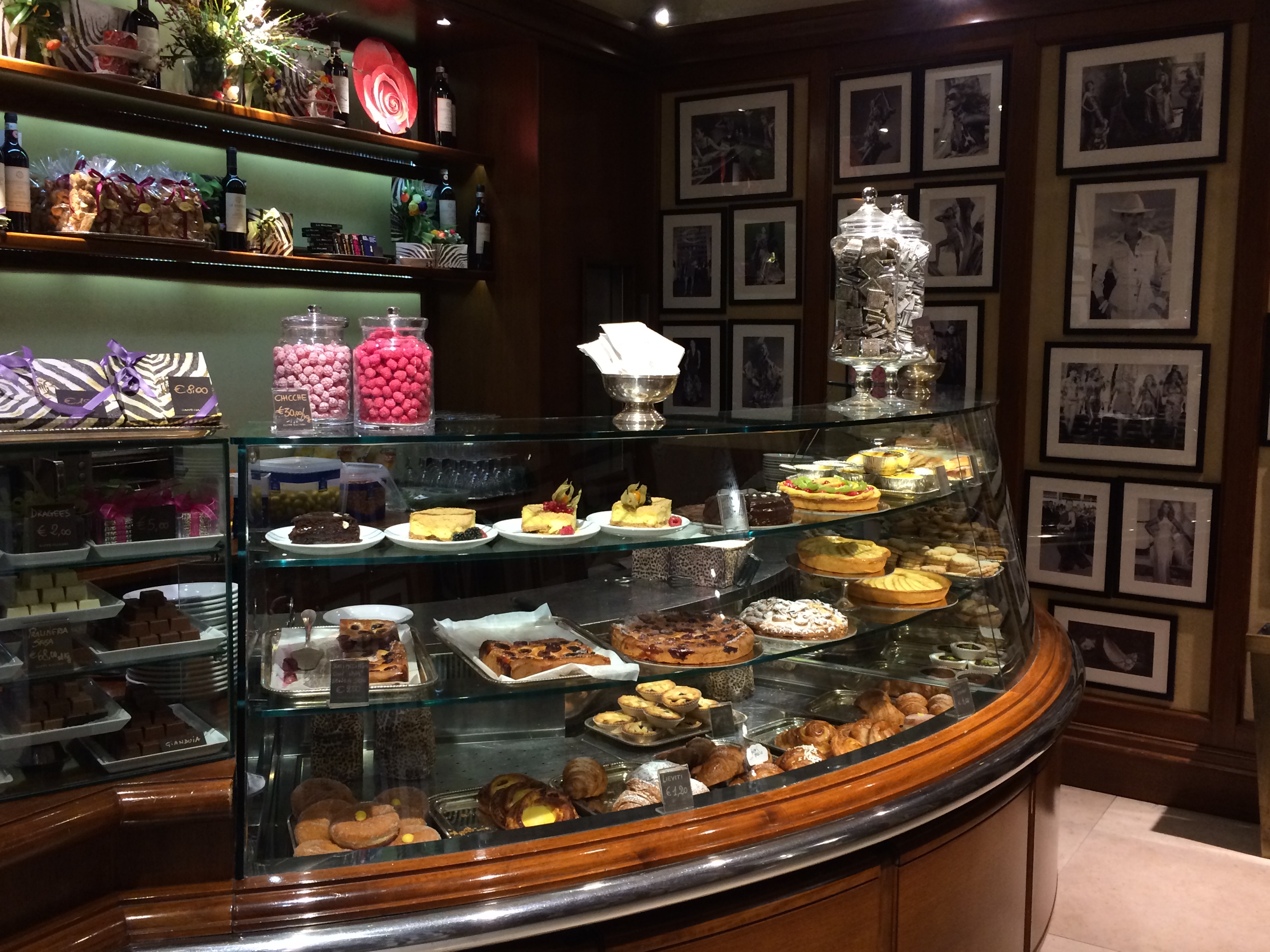
I entered and looked around. The beautiful wooden bar caught my attention followed by the delightful selection of tapenades lining the counter with breads and chips in column shaped glass bowls behind them. I watched the bartender free pour from four bottles at once into a row of ice filled glasses, the colors of the liquor splashing together, red, orange, pale yellow, clear. He was making beautiful art in a glass. I wanted to taste it. I asked what the drink was called. “A Negroni,” the waiter responded. I decided to stay.

1115

The story goes that the Negroni cocktail was invented on the spot where the Caffè Giacosa now stands. Prior to its renovation by famed Florentine fashion designer Roberto Cavalli, this location used to house the Casoni Bar. Sometime between 1919 and 1920 (according to the café’s menu), a bartender named Fosco Scarselli created the Negroni, which is “a particular kind of Americano cocktail, adding some gin”, for the Conte Cammillo Negroni. The Conte liked the drink and it was named after him. The rest is history as the Negroni is one of the most famous drinks in Florence. Many variations of the Negroni have emerged over the years including one called the Negrunge which is a specialty of the current bar (ingredients lists below).

I moved from the bar to the table service section, where a long curving leather sofa is fronted by small round tables. There is also a self-service section with tall standing tables. Generally speaking, I tend to move pretty quickly and part of this trip has been about slowing down and taking time, so standing at a table to have a drink, a common tradition for both espresso and aperitivo in Florence, doesn’t really work for me. Plus, I’m on my own, so table service allows for interaction with wait staff.

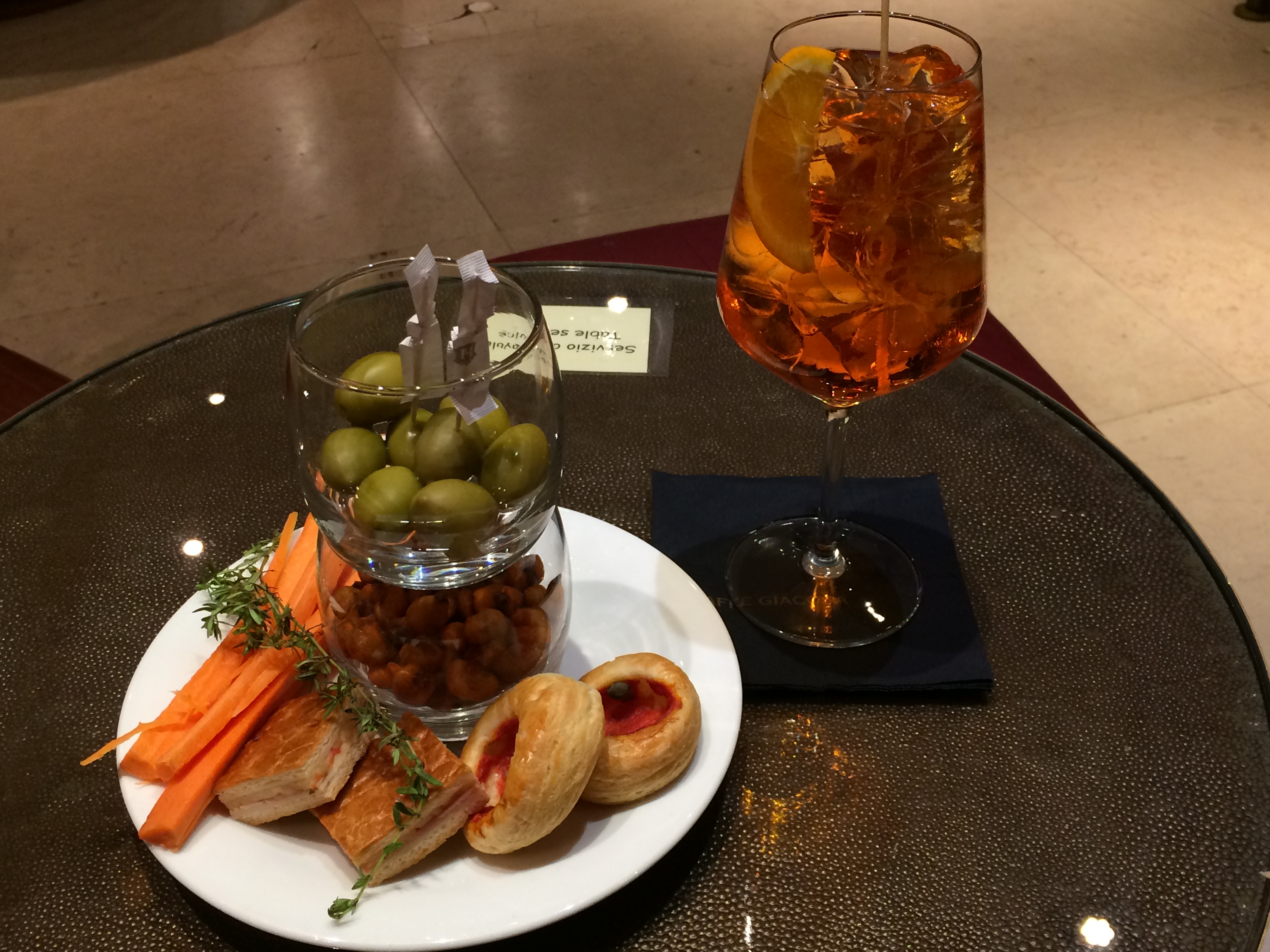
I looked at the menu, sought out the Negroni, and saw there were a number of them, all containing gin, bitter Campari, and vermouth. Remembering my friends’ glee at the faces I make while drinking bitter (beer) or strong alcohol (any straight alcohol except wine) back home, I thought I might need to ease into this more slowly. So, I sought out their spritzes instead. On this first night, I chose a Spritz royale which is made of aperol, raspberry vodka, prosecco, and soda water. It came in a wine glass and was a lovely rose color. It was tasty and refreshing.

Not long after I received my drink, a smiling woman brought me a lovely plate of appetizers. I had no idea that table service meant I got my own appetizers in addition to the lovely spread available to everyone. It contained two savory pastries, olives, carrots, and spicy corn nuts. I should admit here that I am NOT a fan of olives. Let me clarify I WAS not a fan of olives. The olives here are green, large, buttery and slightly salty. I LOVE them!!! Occasionally, I now get a craving for them and have to go out in search of olives. I must figure out how to bring some home.

1114

I nursed my drink and enjoyed my appetizers, complementing them with samples of the olive tapenades from the bar. For Florentines, the idea of aperitivo is that an early drink and appetizers (from 6:30-8:30 pm) prime the stomach for dinner later, around 10. For me, it normally IS dinner. That first night, I ended my evening with a cappuccino served with a small biscotti.

On my second visit, I tried an old style Negroni. It was made with gin, bitter Campari, red vermouth and soda water. This time the savory pastries were replaced with potato chips in the appetizers. And I fell further in love with the olives. The drink was, for me, incredibly strong. I nursed it as the ice melted and then asked for an ice refill. While it was strong for me, it was also smooth and flavorful. I don’t think I made much of a “bitter drink face”.

On my third visit, I tried the Negrunge, the special Negroni served in this café. It was made of gin, bitter Campari, mandarin liqueur, white vermouth, and angostura bitters. For me, the fruitiness of the mandarin liqueur made this drink much smoother and easier to drink. I still nursed it as I enjoyed my appetizers, though, and again, the OLIVES!!!!!

The café offers not only aperitivo, but also breakfast and lunch. Their pastry chef makes all their sweet and savory pastries. Their sandwiches and desserts look delicious. I haven’t tried those yet, but will update if I do.

1116

The Caffé Giacosa is located near the arch at the Piazza della Repubblica on Via Tornabuoni in Florence, Italy. To learn more, check out their website: http://caffegiacosa.it/index.php?file=history

One final note. I am so enamored of their olives that I asked where they came from. I’m hoping to be able to bring some home to the states. My waiter told me they receive them in bulk from a local supplier. I explained that I wanted some to take home with me and asked if they would tell me the name of the supplier. Misunderstanding me, the chef brought me a container of olives in a brown paper bag to take home with me, indicating there was no charge for them. I LOVE Florence and Caffè Giacosa!

The Florence Journals: My morning at the Mercato Centrale (Central Market Square)

This cool, crisp autumn morning is fresh and clean following yesterday’s rain. Colors seem more vivid in the sunlight and I am in the mood for a walk. It’s supposed to rain again this afternoon. I head to the central market past the Duomo. There are stands selling leather goods and souvenirs outside. I walk through them to calls of “bella biondi” (beautiful blonde) from the salesmen trying to hawk their wares. I am too easily enthralled by the beautiful scarves, the smell of the leather handbags, the Firenze Universita’ sweatshirts, the woven bracelets, the masks. Tourist shopping will have to wait for another day. Today I want to shop at the fresh food market.

765

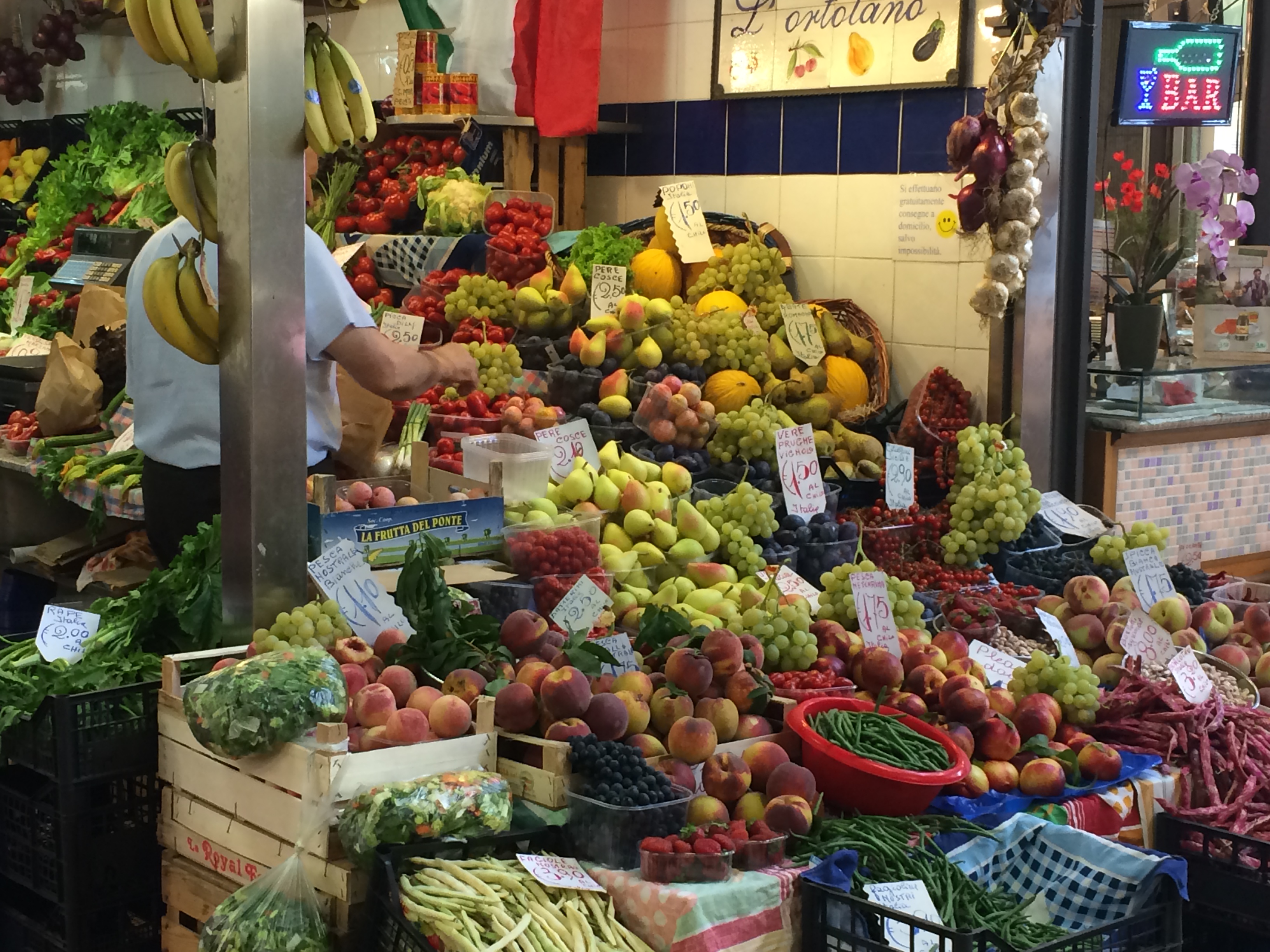
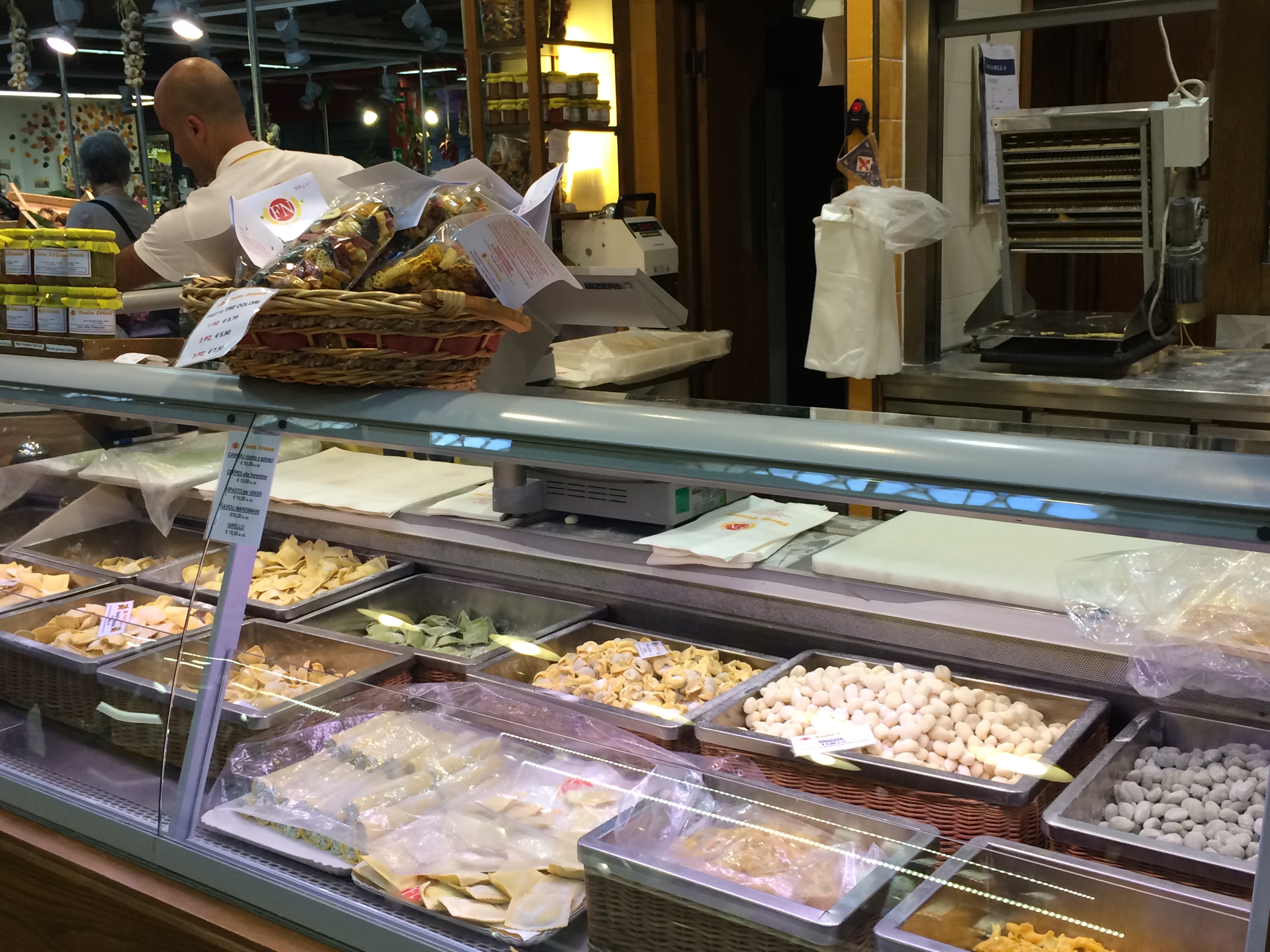
I am told that here the food is organic. That those who run the stands are selling produce from their personal farms or from collaboratives. I am told that they have made the pasta and baked the bread themselves. I love the notion of purchasing fresh food from those who grow and cultivate it. I walk the entire ground floor first taking in the sights. The room is a huge, open warehouse. Some merchants have very well appointed and designed stands. Others have rough hewn tables laid out with food in a seemingly haphazard fashion. There are stands which sell bottled fresh olive oils and balsamic vinegars who entice me with invitations to taste. There is a fresh pasta stand where in a glassed in area behind the display counter, workers in aprons, hair nets, and gloves, make pasta from scratch.

769

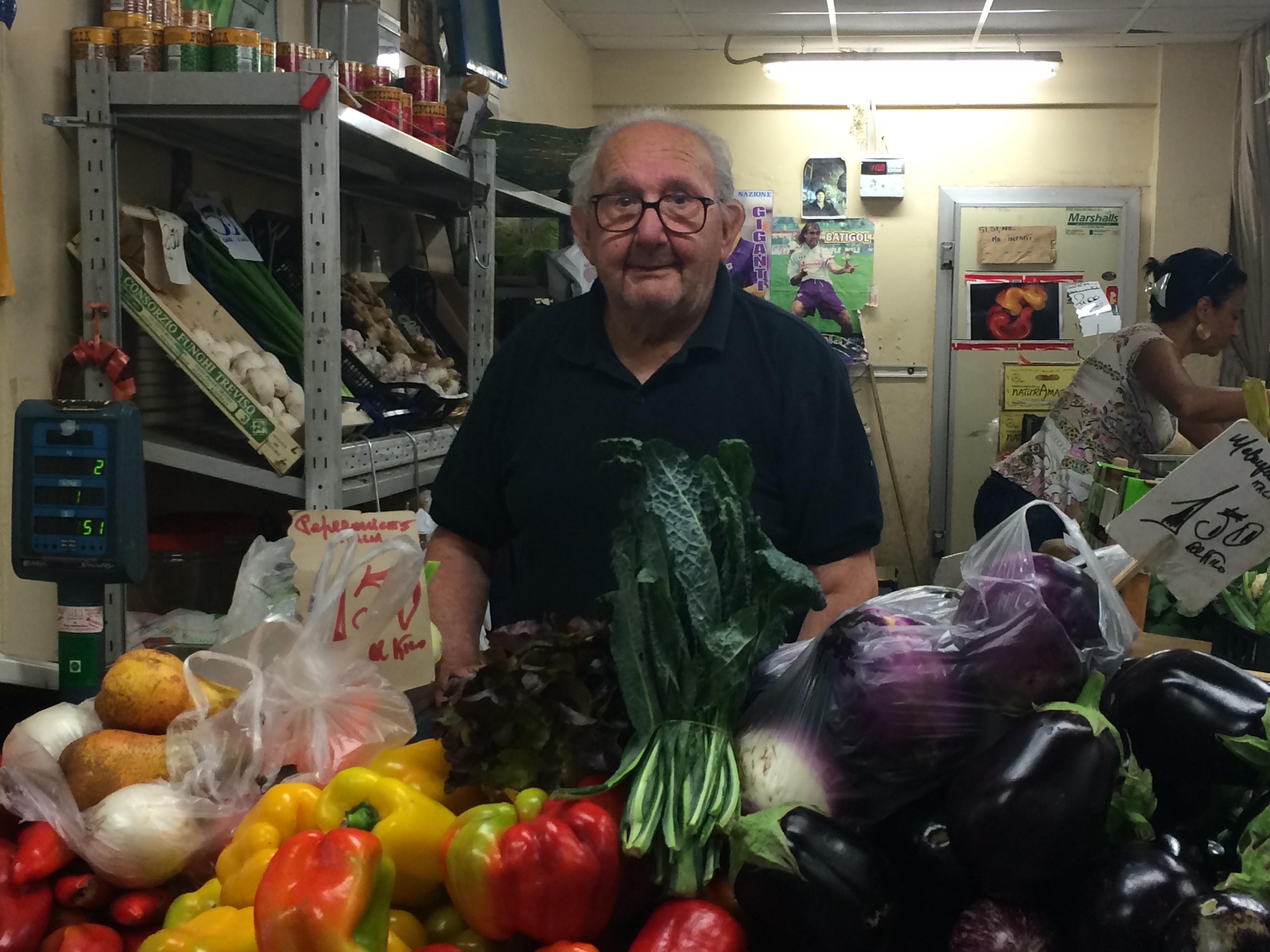
There are fresh fruit and vegetables vendors, some run by well dressed women and men, others by those who look like they came straight from the fields. There are prepackaged items. There are butchers who both display their prized cuts of meat or cut something for the client’s desired specifications. Each merchant has her or his own approach to displaying their goods; each stand has its own personality.  The way customers are greeted varies as well. Some merchants are effusive and friendly, inviting me in. Others talk with friends and family and during a break in conversation, take care of customers. Still others are hard to reach, hard to purchase from. I feel as if I am interrupting them by trying to buy their products. This market also seems to be a social venue for the merchants. I am delighted to shop here. It reminds me of shopping at the markets in Kazan, Tatarstan, Russia.

After walking the full market, I walk again, deciding what I want to purchase and from whom. I purchase tagliatelli from the fresh pasta stand. The woman behind the counter taking off her gloves to fill a small bag with pasta for me using her bare hand. I purchase cherry tomatoes from a friendly grocer and lemons from an old man with smiling eyes.

768

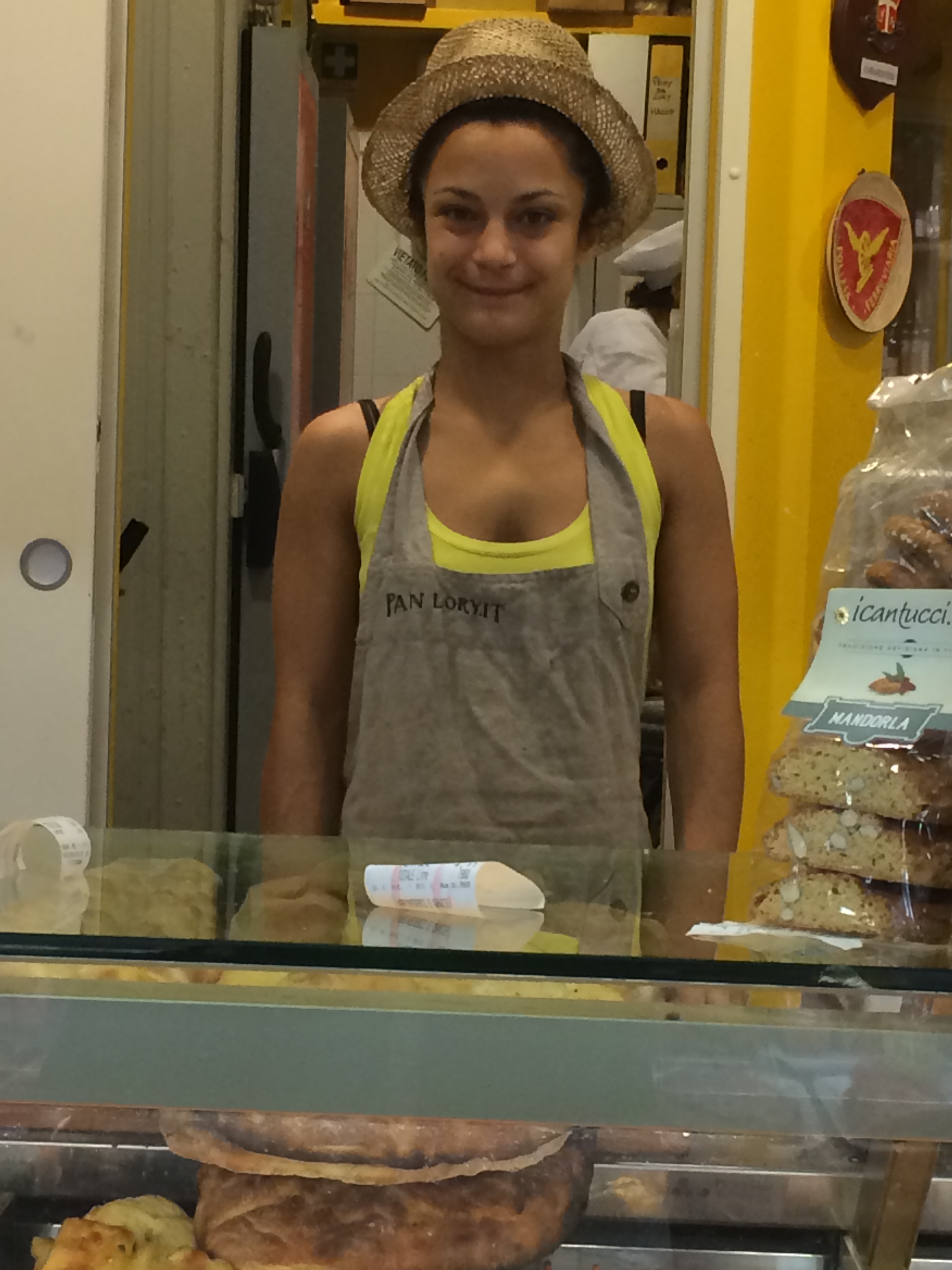
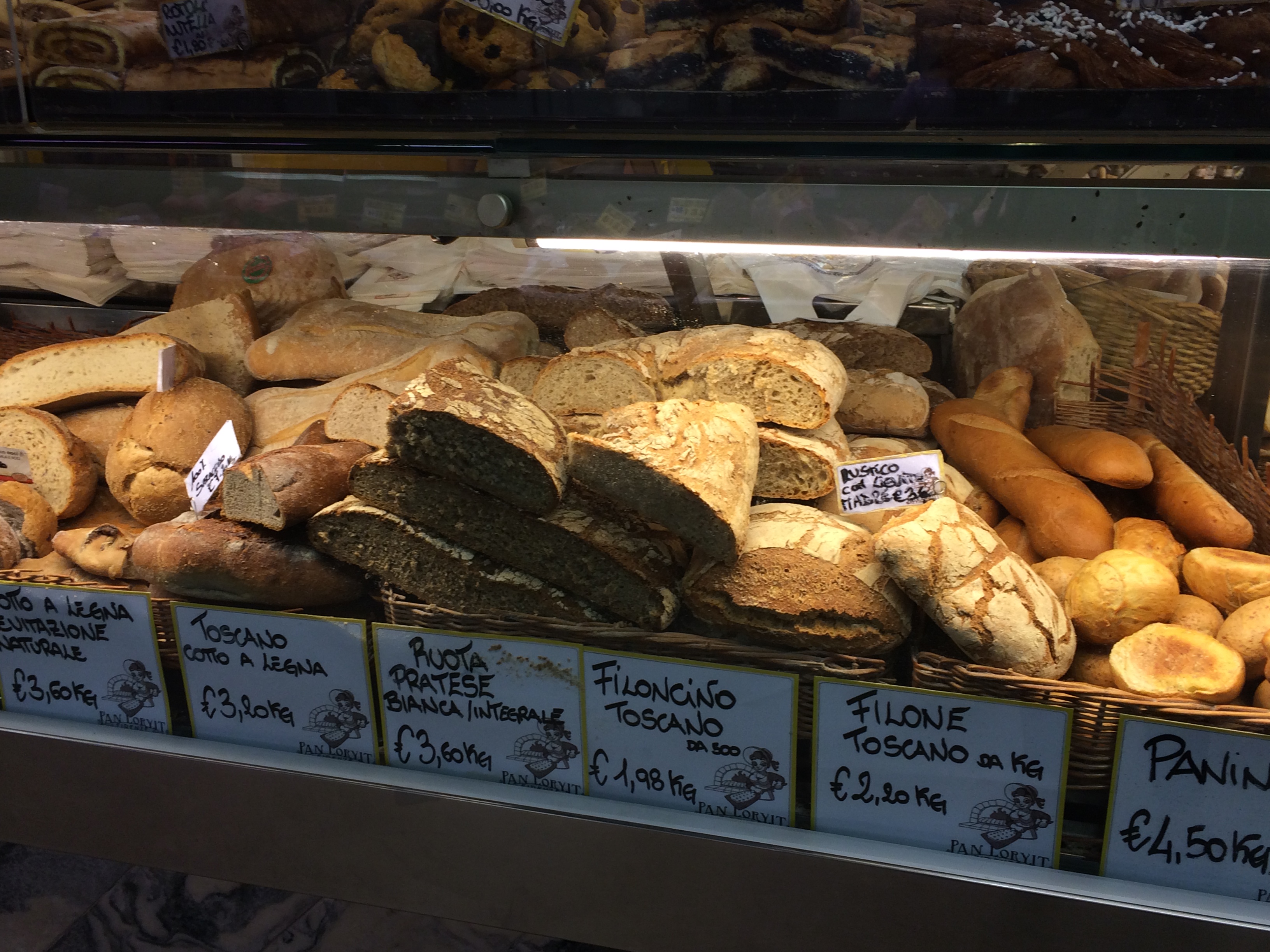
I purchase bread from a young woman who responds with confidence when I ask her what bread she thinks is the most delicious.

766

767

As I am preparing to leave, I am stopped in my tracks by the sweet smell of ripe peaches. My mouth waters and I turn back. A smiling man gestures toward me with a plate filled with juicy peach slices I can’t resist. The peach is warm, soft, juicy, delicious. I buy two. My rule here is to buy only what I can eat in a day or so (also only what I can carry as I walk everywhere and have to be able to schlep it up the hill to my apartment). I am satisfied with my purchases for today. The market is open until 2 pm daily. I will be back.

I head back toward the Duomo in search of a coffee shop where I can enjoy a cappuccino and a crescent. It has started to rain again. Perhaps I will find an indoor café for now.

The Florence Journals: Reflections on Death & Dying – The Beginning of the End of SOB (Sweet Old Bill)

On July 4, 2013, Bill declared his independence. In the early 2000s, he’d had a kidney transplant. Aside from that, he was an extremely healthy 84 year old. As with most older adults, in the United States, though, he was on multiple medications to manage multiple minor chronic issues. That’s really context for our story. Approximately a year and a half earlier, after his wife’s death, a series of minor mishaps, literally missteps, started the journey that would lead to his declaration. He needed to have several toes removed due to poor circulation, causing significant mobility issues. Recovering from this, he contracted a virus that put him to bed for several weeks. When he was well again, he was extremely weak and needed to build strength to walk again. He got to the point where he could use a walker or a cane to haul his 6 foot 6 inch frame around, and ultimately take several steps unaided. However, his strength and vigor did not return. This frustrated Bill, an extremely independent man.

One evening he stepped on something sharp. He couldn’t see or feel what it was, but his foot bled profusely. His neighbor and good friend Dino, who had been his support person, particularly with activities of daily living, would be over the next morning to assist him, so Bill just put on a Depends, wrapped his foot in a towel and went to bed. The following morning, Dino found him this way, blood soaked towel wrapped around his injured foot, soaked Depends, his friend needing assistance. Dino cleaned Bill up as best he could, washing him, slathering his foot with antibiotic ointment, and bandaging his foot. The bleeding had stopped by then. Dino made Bill breakfast. Bill, not being one to lie idly by, fussed and grumbled about not being able to get around, but Dino persuaded him to stay in bed that morning and give his foot a rest.

The next day, Bill was still in pain and couldn’t put weight on his foot; Dino cleaned and re-bandaged it for him. This happened the next day and the next and the next, until the fifth day when Bill awoke with a fever and Dino recognized that Bill’s foot was infected. Dino called an ambulance to take Bill to the hospital.

Whether the toe removal, the virus, the item Bill stepped on that led to the infection, or the spiral of medical issues set in motion at the hospital when Bill arrived for treatment for his foot were singularly or collectively the last straw, for those who knew him, Bill’s July 4 declaration of independence quickly became a predictable conclusion. Bill was a proud man, an independent man. He’d been in the medical corps during the Korean War. He was not comfortable relying on others.

At the hospital, an inexperienced physician disregarded the information that Bill had had a kidney transplant and prescribed an antibiotic that disrupted his kidney functioning. He told Bill he was sorry, but they would need to do minor surgery to repair the damage. Bill took matters into his own hands, requesting a psychiatric consultation. After a 45 minute consultation, Bill asked the psychiatrist if she thought he was competent to make his own medical decisions. She responded “Absolutely!  I have no questions at all about your competence. Why do you ask?” Bill replied, “Because as of today I am taking myself off all my medications. I am also refusing this surgery to repair the damage caused to my kidney by the antibiotics and I don’t want anyone to be able to challenge this decision. Now, please get a piece of paper, we’ll write out each of my medications. I will sign that I refuse to continue them and you will sign that I am competent to do so”. Surprised, the psychiatrist did as Bill requested.

Bill remained calm and resolute as several medical professionals tried to talk him out of this decision. He was done with medical care. With signed paper in hand and fresh advanced directives and against his doctor’s advice, Bill was wheeled out of the hospital. His trusty friend Dino was there to take him home. Bill believed that he would die quickly as he thought that taking himself off the anti-rejection medication for his kidney would lead to his body rejecting the kidney, causing it to shut down. He believed he would die quickly and painlessly. That was not to be the case.

When Bill left the hospital, he believed he was going home to die. His two friends Dino and Kenny disagreed with Bill’s decision and it took him several days to bring them around to at least understanding his way of thinking. Once they were grudgingly on board, Bill called me, his niece, and told me of his decision. I listened quietly. We both shed a few tears. I told him I loved him and would miss him, but that I would fight for his right to decide. Neither of us knew what this would ultimately involve. But our trust and commitment to one another, and to Bill’s right to make this decision, strengthened our resolve to face whatever came next.

Bill got his affairs in and went to bed to wait.

A Love Letter to My Son on the 2nd Anniversary of the Dancing Accident that Broke My Wrists

We wish things for our children before they are born. In my case, I wished that my children would be loving, strong in character, and independent. My son and daughter are all these things in very different ways. This love letter, though, is to my son. Often we don’t get to see the full measure of who our children become. As they grow, they live their lives more and more separate from ours. I got the opportunity to see my son for the man he is. It is an opportunity I will always cherish.
Stefan

On October 13, 2012, our lives changed. Stefan was in Wichita, Kansas visiting me before joining the Navy. He was preparing for boot camp and contemplating signing his final admittance paperwork. I was at my favorite academic conference of the year, the place where I have found both my creative inspiration and my best friends. This year the Organization for the Study of Communication, Language and Gender Conference was held in Tacoma, Washington.

That fateful day was perfect. I walked the city streets exploring and shopping for gifts for family and friends. In the late morning and afternoon, I attended research panels and communed with friends and colleagues. At the awards banquet, I was awarded the prestigious Feminist Teacher / Mentor Award based on letters of support from dozens of colleagues, students, and former students. This is the most treasured honor of my academic career. To top it all off, I was selected to host the induction ceremony of Dr. Bren Ortega Murphy into the Wise Women Council. This day was without question, one of the highpoints of my academic life.

Later that evening, following dinner with some of my best friends, the organization sponsored a dance and karaoke party. I love to sing and dance. Could this day get any better? As fate would have it, my best academic day also became the start of one of the most challenging adventures of my life. On the dance floor that evening, one of my best friends spun me around. I reeled backwards, lost my footing and fell, fracturing my right wrist in 3 places, and my left in 2.

I would be fully immobilized for the next 3 months and slowly and painfully thereafter, learn to use my hands again. My convalescence, during which I needed constant around the clock support, was 6 months. Even after that, there were some things I still couldn’t do, open jars, cut meat, negotiate some articles of clothing, etc.

My motto has long been that you can view any situation as a crisis or an adventure and that not very many things rise to the status of a crisis. These events allowed me to put this belief into action, to try to live it under some of the most challenging circumstances I could imagine. My belief has not changed, but I have learned to recognize the critical role others can play in making it a reality. Because of the love and care of my son, breaking both my wrists, being completely helpless, and learning how to use my hands again was not a crisis. It was an adventure. I have written in earlier posts about the trip back to Wichita, about losing my graduate students and making the trip alone, about the scary woman who thought I needed hot coffee, about my seatmate and later a flight attendant who took care of my hair for me, about the young basketball star, traveling with her parents to Wichita State University to check out the school, who fed me and gave me pain medication.

I have not written about my son, about our adventure. Maybe because it was so big, so all encompassing. It wasn’t time bound like 2 plane flights. It was day-to-day for over 6 months. It was emergent with no set ending that we were aware of. During this time, my insurance company told me on multiple occasions that because I could walk, I was considered too mobile for any in-home nursing support. This, despite the fact that I could not use my hands at all and therefore could not accomplish any activities of daily living on my own. My 24/7 care fell to my son.  There was never really a conversation about his doing this. He just smoothly moved into the role of my nurse and full-time caregiver.

I remember very little about the early days. To manage my excruciating pain, I was in a drug induced haze much of the time. I do remember my son giving me pain medication, brushing my hair, helping me to the bathroom, feeding me, and a myriad of other little things, none of which I could do for myself. I remember him being there when I needed something, often before I realized I needed it. In those early days, we developed a routine and designed our own ways of managing sensitive issues. Taking care of someone completely requires suspending modesty. It requires an unparalleled level of intimacy. It can be a humiliating experience, an embarrassing experience, an uncomfortable experience. Because of his grace, it was never humiliating or embarrassing. and we developed work arounds for the uncomfortable parts.

There’s something you should know about me. While it is easy for me to help others, it has always been hard for me to ask for help. While I never see those I help and support as burdens, for some reason, I believe (believed) that if I needed help I was an inconvenience, a burden. Through his compassion and care, my son showed me that this was not the case. He made it ok that I needed support. He showed me that I was not a burden, an inconvenience. He showed me that he was glad to help me.

Once the drug haze wore off a bit and my pain became more manageable, I could think for several hours at a time between doses of pain medication, and I wanted to get back to work. I was still teaching a class (fortunately I had 4 weeks of guest lecturers lined up prior to the accident) and running the search for our new director at the Elliott School of Communication. Stefan policed me to make sure I didn’t work too hard. We both learned that if I did too much too fast, I would pay in pain and exhaustion. He limited people’s access to me, determining when and for how long my graduate students and friends could come work with me. We identified what he was willing and comfortable doing and what I needed to ask others to do. He didn’t like emails or any work related phone calls, so my graduate students and friends helped with those.

On Thursdays he would get us Buffalo Wild Wings, mango habanero and Asian zing boneless wings that set my mouth on fire. We would eat them propped up on my bed, him feeding me. For a lot of the early months, I was mostly bedridden. Because of my multiple fractures, and to avoid surgery, I was not permitted to move much as my wrists healed. Eventually I was put in casts and I could move around a bit more. During my immobile time, we watched the entire series of Third Rock from the Sun on Hulu+. Sometimes if my pain was too bad, we would watch episodes over and over until I was alert enough to remember them. As I got more alert, it became clear to me that Stefan needed breaks. With some coaxing, he would take some down time when friends would bring meals and stay to chat and feed me. Eventually, he let friends take me to their home for the weekend so he could get some real time off. He was very protective, but we both knew he needed that time.

What I remember most about this time is my son’s presence. He was just there with me. We had few disagreements. The biggest was over his putting mascara on me. “You don’t need it. You’re beautiful without it”, he’d say. “Yes I do. I’d put it on myself if I could”, I’d reply. “I’ll poke your eye out”, he’d say. “No you won’t”, I’d reply. Then he’d help me with mascara.

I don’t believe that Stefan or I are the same people we were before this experience. To be helpless is not easy. To be completely reliant on someone else for everything is not easy. To be completely responsible for another is not easy. To negotiate this type of situation with love and compassion, with presence and commitment, is an incredible gift. To make it an adventure that we grew through together was the most amazing part of this experience, and our relationship will never be the same.

I think that we are both stronger, better prepared to deal with whatever life sends our way. I am easier, more open to asking for help when I need it. He knows his strength and the depth of his compassion. I am more grateful to my son than I can put into words. He made me safe. He loved me. He nurtured me and he treated me with compassion and respect during my helplessness. I learned firsthand that he is compassionate, thoughtful, intuitive, and very kind. He has a calm, peaceful spirit. Not much seems to faze him. He is an incredible man and his strength of character puts me in awe and fills me with joy. He is the most amazing man I have ever known, and I am blessed that he is my son.

Stefan and me 3

Stefan and me 2

The Florence Journals: Reflections on Death and Dying – Who am I in this Conversation?

When I started this writing journey in Florence, Italy, there were things I wanted to write and things I needed to write. This is the first of a series of posts that represent one topic from the latter list. They will deal with my perspective as a health communication scholar on end of life care, focused largely around my uncle’s death in 2013. This first post outlines how I came to this conversation personally and academically. I thought you should know from the outset, who I am in this conversation. For me, there has always been a strong relationship between the personal and the professional as you shall see. The following posts in this series will include academic critiques, personal narratives, and insights on how to negotiate end of life and advocate for self-determination and personal decision-making. 

In 1986, when she was 15 years old, my youngest sister was diagnosed with Acute Lymphoblastic Leukemia. She is a survivor who today is happily married with 4 children. That said, much of my sister’s battle with leukemia illustrated for me what is wrong with the US health care system. I had just developed my participative decision-making model for physicians and patients which would ultimately be published in 1990 (1) and in an expanded version in 1993 (2) when my sister was diagnosed.

As an academic, my first response is always research. So, when I flew to Florida to meet with my sister’s oncologist for the first time following her diagnosis, I was ready with questions about alternative treatments, success rates, the role of nutrition in enhancing her ability to overcome the cancer, treatment side effects, and so on. My first question after my sister’s oncologist outlined what I thought were his treatment recommendations was “What other alternatives do we have?” He replied, “You could leave.” That stopped me short. After a long pause, I replied, “I’m sorry. I don’t think you understood me. I’m asking what other treatment options are available for this type of leukemia.” He repeated, “None that I recommend, so if you don’t want to do what I advise, you are free to seek treatment elsewhere.” I was stunned. So much for collaborative decision-making. It quickly became clear that for my parents, there would be no options, no alternative treatments considered. This doctor was “the best”; they were going to put my sister in his hands.

I spent as much time in Florida with my sister as I could, traveling back and forth from Reno as my teaching schedule allowed. I remember on one trip, my sister asked me to play in the swimming pool with her. I used to be a pretty good diver. Back flips were my specialty. After doing several of those and making her laugh, she asked me to do a front flip. I don’t know why, but front flips have always been more of a challenge for me. I tried repeatedly over what felt like hours to do a front flip, stinging the backs of my legs a bright red. That night after dinner, we were snuggling in her bed and I quipped, “Well, since I clearly can’t do a front flip, what else can I do for you sweetie?” She said “Write about us. You’re the writer in the family. Write our story.” So I did. I interviewed my parents and my sister and I wrote their story. I didn’t include my voice as I wanted to empower theirs. I was “in and out”. I wasn’t part of the day to day. That journey was theirs. I co-authored what became a book chapter with my sister on her story and that of my parents. (3) I also wrote a companion chapter on the disenfranchisement of families coping with adolescent cancer (4).

In late 2001, my father became ill with what was diagnosed as terminal cancer. He was given 6 months to live. He died on June 27, 2002. My family was together for the last 2 weeks of his life and I took on the responsibility of talking with him about his final wishes and making arrangements for him. While not easy conversations, I think he appreciated my willingness to have them, including planning his funeral. The only things he wanted were to be buried in the local cemetery. He’d asked that his lifelong friend Dick be a pallbearer, and he wanted me to sing the Simon and Garfunkel song, Bridge over Troubled Water. Given the circumstances, I told him I knew I wouldn’t be able to sing. I did agree to do the readings at his funeral Mass though, and I was able to work through the church to find a young woman with a lovely voice who agreed to sing. The song was sung, my father’s wishes honored.

During those last two weeks, hospice was also with us around the clock. They were a blessing. They explained the dying process, what we could expect, choices we had to make, like allowing my father to stop eating, pain medications, etc. The only place we strongly disagreed and I could not win was over pain medication. As his condition deteriorated, the pain medications wore off more and more quickly. I spent the last 3 days of his life, until the afternoon of the day he died, on the couch in the living room next to his hospital bed. I dozed there and woke to administer his pain medications every 2 hours. When he dozed, I dozed. When he was restless or awake, I was awake. We talked. We held hands. I brushed his hair. I was there for him. The problem came in that I was not permitted to dose him more frequently than every two hours. Some of those two hour periods were brutal. For me, there was absolutely no reason for my father to feel any pain. I believed his pain medication should be “as needed”. For the hospice workers, the fear that he “might become addicted” held greater weight.

Shortly after my father’s death, I coauthored an article with Joyce Letner about centering families in communication research about cancer, outlining specific premises and strategies to support families in coping with cancer management (5).

You probably see a pattern here. My personal life often informs my academic work in health communication, or vice versa. While many other projects and lines of research over the next 10 years impacted my preparation to support my uncle and advocate for his wishes as he went through the process of dying in the summer of 2013, I was not fully ready. For this experience acting as his advocate, I have learned a great deal about negotiating end of life and health care decision-making which may be useful to others. I will write about those in future entries.

One important thank you. I am indebted to my colleagues at the Nevada Center for Ethics and Health Policy, at its height, a cutting edge think tank where medical, communication, public health, and theological experts brought their insights to bear on promoting advanced planning and quality of life decision-making at end of life. Through their inspiring work over years, I embraced more fully the notions of self-determination in health decision-making, the critical role of communication in health care, and patient empowerment. These insights served me well on this journey. So, I thank the kind, gentle, Reverend Noel Tiano, director of the center, and my insightful, brilliant colleagues who taught me the importance of advocacy, Drs. Barbara Thornton, Greg Hayes, and Craig Klugman.

Bibliography of my relevant publications referenced in the above:

  • Ballard-Reisch, D.S. (Spring, 1990).  A model of participative decision making for physician-patient interaction.  Health Communication.  2(2), 91-104.
  • Ballard-Reisch, D.S.  (1993).  Health care providers and consumers:  Making decisions together.  In B. Thornton and G. Kreps (Eds.).  Perspectives on Health Communication.  (pp. 66-80).  Prospect Heights, Ill: Waveland Press.
  • Ballard-Reisch, D.S. & Price, J. (1996). Separation and oncology: Copying strategies of a family dealing with leukemia. In E. Berlin-Ray (Ed.). Case Studies in Communication and the Disenfranchised. (pp. 75-86). Hillsdale, N.J: Lawrence Erlbaum and Associates, Publishers.
  • Ballard-Reisch, D.S. (1996). Coping with alienation, fear and isolation: The disenfranchisement of adolescents with cancer and their families. In E. Berlin-Ray (Ed.). Communication and the Disenfranchised. (pp. 185-208). Hillsdale, N.J: Lawrence Erlbaum and Associates, Publishers.
  • Ballard-Reisch, D.S. & Letner, J.A. (May, 2003). Centering families in cancer communication research: Acknowledging the impact of support, culture and process on client/provider communication in cancer management. Patient Education and Counseling, 2074, 1-6.

The Florence Journals: On the JT Caffe’ in Florence, My Favorite Hangout

About 2 weeks into my Florence adventure, I met someone I should have known years ago, Bob Blesse, the retired Director of the Black Rock Press and Professor of Art at the University of Nevada, Reno where I taught for 21 years. Bob had heard about a new cafe in Florence and invited me to meet him, along with his wife Vicki Davies, for aperitivo (appetizers and drinks) at what was to become one of my favorite spots in Florence, the JT Caffe’.

Bob Blesse outside the JT Caffe

Bob Blesse enjoying aperitivo at JT Caffe’

Located on Piazza Pitti, directly across from the Palace at numbers 32-33R, the JT Caffe’ opened in April, 2014, the brain child of fashion designer Jennifer Tattanelli, the daughter of an American photographer (some of her photos adorn the walls) and an Italian artisan leather designer. Her delightful boutique CASINI FIRENZE, which started as an expansion of her father’s artisan leather work business and now includes Jennifer’s head to toe designs, is located right next door. http://www.jennifertattanelli.it/.  While Bob, Vicki and I had a delightful time that evening, I had no idea how much I would come to love the JT Caffe’.

The JT Caffe’ was built over the top of a 700 year old street with overlooking terraces. Jennifer incorporated the street, covered by a glass viewing window, and the brick terraces into a very modern fusion of steel, couches, pillows, fireplaces, and delicious food.

inside view with floor and ceiling

fireplace

The front of the house

The delicious food is the product of the loving hands and amazing skill of Chef Marzia. Her specialty is fresh made pasta which she makes from scratch several times throughout the day. Their menu changes regularly based on what is fresh and available and everything I have tried is delicious.

with Chef Marzia and Marco

Chef Marzia, Marco, a waiter who specializes in food and wine pairings, dessert, cappuccino, and me

with Caterina

With the delightful Caterina, waitress extraordinaire, who is expert on the menu and fluent in 4 languages. She always has suggestions for what I might try next.

Whether you come for breakfast, lunch, aperitivo, or full dinner, the food is guaranteed to delight your palate as the friendly and helpful staff make you feel at home.

Some of my favorites:

breakfast crescent and cappucino

For breakfast – Crescent with nutella and fresh fruit and a cappuccino

chicken liver pate

For an appetizer – Chicken liver pate’, cucumber and fennel slices, olives, and spiced olive oil – I did not know I liked chicken liver pate’. I DO! At least theirs.

beef pasta

Spaghetti with beef and spinach

stuffed pasta

Cappellacci stuffed with Gorgonzola cheese and spinach, topped with sage butter

chocolate tart and cappucino

Desserts: Chocolate torte and cappuccino – Chocolate – need I say more – You may have noticed that each cup of cappuccino has a different look. Each person who prepares it here has their own signature style. All are very tasty, but, of course, I’m partial to the one with chocolate laced through it. 

tiramisu

Tiramisu – I should note that I am not generally a fan of tiramisu. I just don’t like the coffee flavor. But Caterina talked me into trying it. Light, a gentle flavor, delicious!

They are also known for their vanilla gelato and balsamic vinegar. I would never have thought to pair vinegar and ice cream. It is amazing! Tart, tangy, sweet, a delight to the tongue.

Should you make it to Florence, the walk to the “Oltrarno” the other side of the Ponte Vecchio (the bridge over the Arno River famous for gold merchants) from the Duomo and Piazza Signoria is well worth your time to visit this Florentine gem. A gentle, flat, 15 minute walk from the Duomo, the JT Caffe’ will not disappoint.