The Florence Journals: Serendipity, Luck and Design in the Cosmos

I wrote this entry on my first full day in Florence, Italy, September 2, 2014.

Serendipity 1: Started before I even left the U.S. for Florence. I stopped by my office briefly, prior to my trip and a casual friend, Amy Geiszler-Jones, stopped in to say hello. As a freelance journalist, she was in the building interviewing one of my colleagues. She had interviewed me several times before and we’d hit it off. I mentioned I was going to Florence for 2 months on a writing retreat as part of my sabbatical. She mentioned that she had a friend in Florence I might like to meet. She put us in touch through Facebook. We made tentative plans to get together.

Serendipity 2: Both of us considered cancelling our meeting, me due to jetlag, Lauren Haas because she had decided to leave for Milan a day early. Both of us decided at the last minute not to do so. Why not meet? We both needed to eat anyway, or so our thinking went. We met at the Ponte Vecchio, the old bridge over the Arno River where goldsmiths and jewelers sold their wares. It is still much the same today. We walked on looking for a place to eat and have coffee. We found a lovely outdoor restaurant, and as it was a mild morning, decided it was the perfect place to stop. Both of us ordered Italian breakfast, which included cappuccino, a crescent, and orange juice. I may fall in love with this breakfast. The cappuccino (for those of you who know me, you know I am not typically a coffee fan) was frothy and bitter. Two packets of sugar later, it tasted like heaven, the perfect blend of sweet and bitter. The crescent was flaky and tasty. The orange juice freshly squeezed and delicious. But, I digress. Lauren and I settled in to get acquainted.

Serendipity 3: Lauren started talking about her world travels. She defined herself as a traveling, freelance journalist, then clarified that where she traveled didn’t necessarily have anything to do with what she wrote. Her stories were fascinating. She had simply jettisoned her life 1- ½ years before, selling everything, to travel the world. She picked up writing gigs where she could get them. Her specialty is travel writing. At one point I asked if she had ever been to Peru. She told me that she acts as a grant writer for a very special orphanage in Cuzco called, Niños del Sol http://www.ninosdelsol.org/(formerly Case de Milagros). I talked about my work with Angels of the Amazon http://angelsoftheamazon.org/in the Tahauyo River Basin, one of the tributaries of the Amazon River. As Lauren talked, it became clear to me that she could benefit from a communication intern to assist with the organization’s website, Facebook page, newsletter, and communication with donors. I told her I had a number of students at Wichita State who would be qualified and would benefit from such an internship. We will continue communicating to “set things up” for this internship.

Serendipity 4: As I mentioned in my prior post, I am using this sabbatical to vision my future. I may enhance what I do in the academy, reduce what I do in the academy over the next several years, or leave the academy all together at some point. I have never “been” anything professionally other than a professor. Lauren’s story of leaving everything behind and becoming a traveling writer fascinated me. She shared a number of sites she’s found helpful in her journey. They include www.copypress.com for writing assignments, trainings and tips, and ww1.helpx.com for volunteer opportunities worldwide.

I don’t know what the future holds for me, but the things Lauren and I have in common make it seem almost destined that we should meet. The serendipities that brought us together and that emerged during out conversation have the potential to lead to lasting collaborations valuable to both of us. She’s also an amazing person I thoroughly enjoyed meeting. Plus, we both like Jason Mraz and Norah Jones. 

Visioning possibilities: The Florence journals

I start this journey through Florence, Italy by thanking my friend, Andrew O’Leske, for my gorgeous journals and my hand-tooled fountain pen. I played with fountain pens a bit during art class in high school, but I have never really written with one.

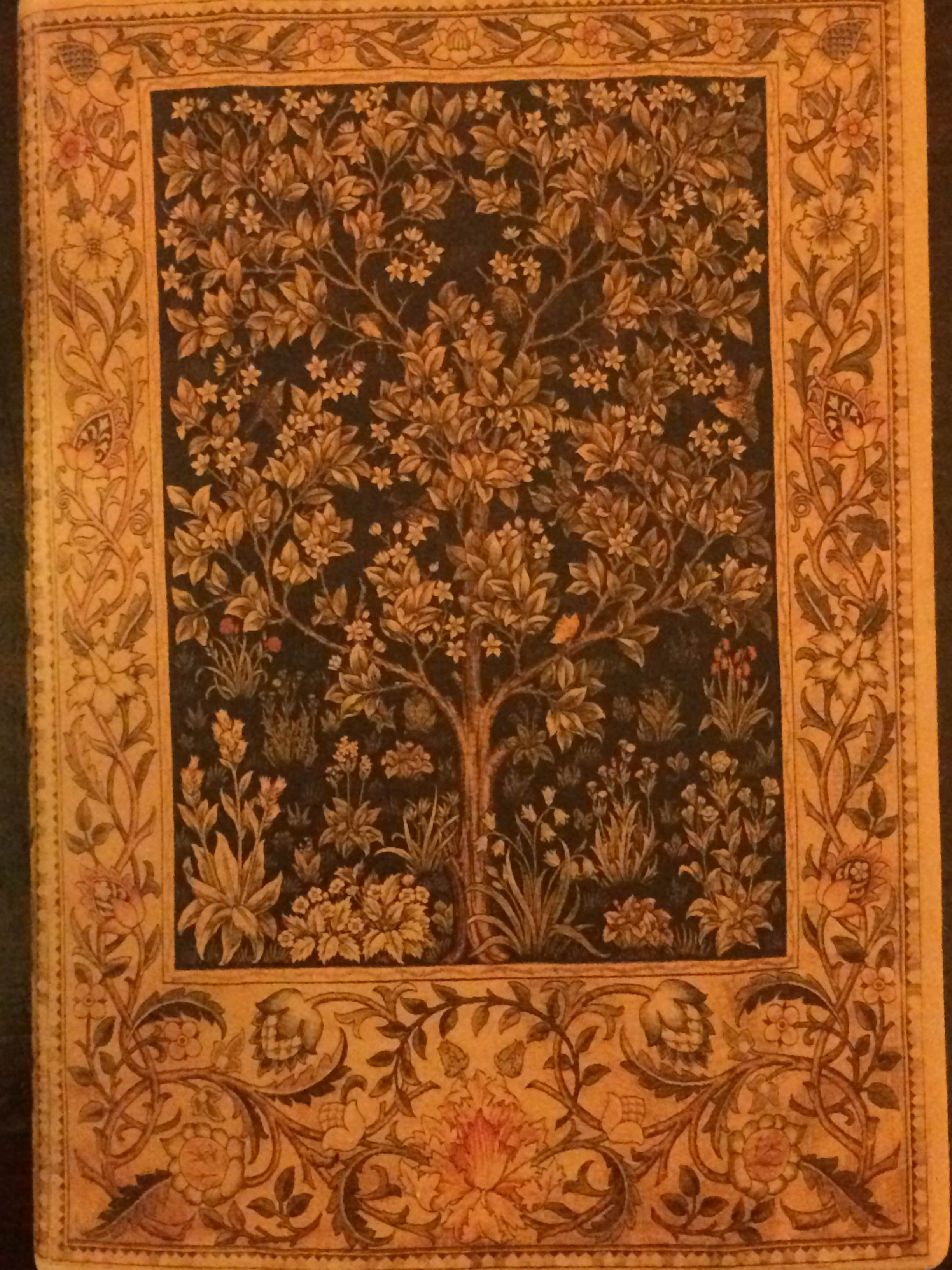
The journals are beautiful and inspiring. The first is leather bound with a detailed tree of life on the front and back covers, and intricate scroll work surrounding them. It was handmade in Italy. How appropriate. When I held it in my hands, it spoke to me of possibility and responsibility. It felt weighty, yet full of potential.

leather journal

The second is hardbound and a reproduction of a journal titled The Rubdiyat of Omar Kkayydm which was created by Francis Sangorski in 1911. The original was encrusted with jewels. It went down with the Titanic in 1912. This exquisite journal spoke of familiarity and confidence. It would be a place where I could easily write.

hardback journal

My lovely pen offered articulate elegance, if I can learn to use it properly. So far, this has turned out to be a more complex task, on all levels, than I anticipated.

Pen

Sabbaticals are about retooling, about visioning possibilities, and about new beginnings. My trip to Florence is the same. This is an interesting moment in my life. My daughter finishes her undergraduate studies in psychology and communication in December. My son is positioning himself for management in a job he loves. I have accomplished everything I have set for myself to this point. I look to the future and delight in the opportunity to consider possibilities for the next phase of my life. This time is for me. How often do we take the chance to sit with the possibilities in a glorious, inspiring place? I know I have never done anything quite like this. I have the gift of time to ponder what will give me joy, fulfillment, purpose. I have the time to reflect on what has given me these things in the past. The answers, in fact, the questions, are not yet clear. I cherish the time to vision, to consider, to contemplate. I look forward to sharing this adventure with you, dear reader.

Conscious Uncoupling and Coparenting: Why Gwyneth Paltrow and Chris Martin Have it Right!

Full disclosure

I am a child of divorce. It was not pretty. It was not healthy. It was not done with grace. I felt I had to choose a parent. I couldn’t have both of them. My siblings and I were too little (6 years, 5 years, 4 years) to do more than go where we were told to go, when we were told to go there, but it was clear to me, early on, that being close to our noncustodial parent was a disloyalty to our custodial parent. My noncustodial parent was ostensibly out of my life by the time I was 8 years old.

I swore I would NEVER get divorced!

My husband was a child of divorce. It was not pretty. It was not healthy. It was not done with grace. The hurt lingered. I will not tell his story.

He swore he would NEVER get divorced.

We swore WE would NEVER get divorced.

We GOT divorced.

Our Conscious Uncoupling

In July, 1998, I broke my promise to myself, to my children, to my husband. When together my husband and I told our 9 year old son we were planning to divorce, he said “wow, I never saw that coming”. His words broke my heart. Our 4 year old daughter didn’t understand. She just wanted to be sure we would both still be her mommy and daddy. We reassured her as best we could.

I knew that I didn’t want the model of divorce I’d inherited to be my children’s experience. My husband and I decided our most important responsibility was to continue to parent our children and that they needed this separation to be as painless and smooth as possible.

We decided to forego attorneys and to do the divorce ourselves. We didn’t want an adversarial break. We wanted to collaborate, decide together what was best for our family. We read Nevada law, child support guidelines, reviewed model divorce decrees, got the Nevada do-it-yourself divorce guide, and set to work. Together my husband and I negotiated everything. We both wanted what was best for one another and for our children. After our divorce, we continued to live in the same house for over a year. For many years, we continued to celebrate holiday together.

So, what is my point?

No couple’s conscious uncoupling will be the same as ours. Each couple needs to find their own way. However, far too many couples do not “uncouple consciously”. Out of social norms that tell us that divorce is wrong, that we have been wronged if a marriage ends, out of anger, loss, fear, hurt, frustration, couples lose sight of the fact that they once loved one another, respected one another,  cared for one another for a period of time. Many still do as they divorce. They lose sight of the fact that their children NEED them to separate as smoothly and painlessly as possible. They lose sight of the fact that they are the role models for their children and how they uncouple will resonate throughout their children’s lives, in their relationships, in their beliefs about commitment.

The dominant cultural narrative has it that divorce means failure, that the marriage was a mistake. We need to change that. Marriages are our commitment to our best selves, the selves we want to share with another. This desire for connection is a basic human drive. For many reasons, this commitment may not last a lifetime, but how we choose to end it, and make no mistake, it is a choice, matters.

Divorce doesn’t make a marriage a mistake!

It was not a mistake to marry my husband. We loved one another dearly. We were wonderful together for a long time. However, we started to grow apart. We started to desire different things. Being together quit nurturing us. To have the lives we wanted and needed to live, to have the lives we desired for one another, we could no longer do it together. It was as right for us to divorce as it was for us to marry in the first place. To divorce consciously was a gift to ourselves and our children. That doesn’t mean that there weren’t disagreements, animosities, frustrations. It means we worked through them with the knowledge that we would be co-parents for our lifetimes, that we had made that commitment to our children.

On Chris and Gwyneth

While tabloids speculate on the sins Chris and Gwyneth’s conscious uncoupling is designed to hide, the point is that it is the right way to separate, the good way to separate, the healthy way to separate. I hope they will be able to maintain this commitment in the face of social pressure that prescribes that divorces be ugly, petty, painful. I hope they refrain from airing any dirty laundry, and none of us is perfect, for the amusement of others. Divorces do not need to be that way. We are better than that. For our children, we NEED to be better than that!


Sidelined by broken wrists – Part 2 OR Why I LOVE Frontier Airlines! – October 14, 2012:

For background to this point, please read Sidelined by broken wrists – Part 1 I became aware that my friends were whispering to one another in the van to the airport and wondered vaguely why, but at this point, my pain meds (second dose) were kicking in, and I felt pleasantly fuzzy, so I really didn’t care about anything much. When we got to the airport, Frontier Airlines had a wheel chair waiting for me. They took care of my luggage, gathered my boarding passes, and we headed to security. At security, the TSA agent asked me if I could take my arms out of my slings for pat down. I laughed hysterically. My friend said, “Are you kidding? How could she take them off? Both arms are in slings! Her wrists are broken!”. The TSA agent stepped back abashed and called her supervisor, clueless about how to proceed. Even though it was their wheelchair, I and the entire chair were swabbed for bio-hazardous materials. Then the Frontier agent and my friend wheeled me to my gate. I finally noticed that my graduate students were nowhere in sight.  I asked my friend if she’d seen them. “No, no one has been able to find them or even talk with them since last night. We’ve left about 30 messages with no response. We have no idea where they are.” “Don’t worry”, I said, “They’ll be here”. The Kindness (and weirdness) of Strangers: As time to board the plane approached, it became clear that my students would not make the plane. My friend started to panic. She didn’t want to leave me alone on the plane. I told her not to worry that Frontier would take care of me and that I’d ask for help if I needed it. That wasn’t good enough for her. I had noticed a woman in the boarding gate who kept staring at me. My friend approached her and told her I was flying to Wichita. She was as well and promised to keep an eye on me. Fortunately, as will become clear later, the airline moved me to the first row of the plane just behind the bulkhead, so they could keep an eye on me, and she was seated elsewhere. The flight attendants, and my seatmates, were very attentive from the outset. The flight attendant asked the gentleman in the aisle seat if he would be willing to help me during the flight if I needed it. He agreed and asked from some water for me, holding the glass while I sipped through a straw. I leaned into the plane wall to sleep. As the plane door was about to close, a final passenger entered and claimed the seat in the middle of our row. The gentleman on the aisle quickly explained my condition and asked the newcomer if he was prepared to help me. He said “certainly” and settled in. He looked to me as the plane was taking off and asked if I needed anything. “No”, I said. He looked at me quizzically and said, “You don’t look comfortable”. I then asked if he’d take the hair tie out of my hair. He said he had 3 daughters and would be pleased to help. After the plane lifted off, he helped me put my seat back and I fell asleep. He woke me gently as we landed and asked me if I would like my hair back up. I said yes, and he put it back up. I was the last person off the plane and we weren’t at a gate, so they had to figure out how to get me off the plane. The airline found this cool wheelchair that fit into the guardrail down from the plane. At the bottom of the stairs was the woman my friend had asked to assist me. I didn’t know why, but she made me nervous. The flight attendant rolled me into the terminal and to a spot by a window to await my next flight, placed my carryon luggage around me, asked me if I needed anything, and then left me. The woman from the plane approached me with a cup of coffee. “You don’t like cream, do you”, she asked. “I don’t (drink coffee)”, I started to say, but without waiting for me to finish, she shoved the coffee cup against my mouth and my choice was to drink (it was scalding) or have her dump it all over me. After the first gulp, I coughed and she pushed it on me again. “It’s hot isn’t it”, she asked, pressing her face into mine. “No more, please”, I managed to say. She pushed the coffee into my mouth again. Thankfully, at that point, a Frontier representative walked up and asked me if I knew this woman. I said “No!” and he said “excuse me” while pushing past her, collected my luggage and wheeled me to a Frontier gate counter where a number of Frontier representatives were preparing for flights. “Can you watch her”, he asked. “She can’t do anything and I watched this woman pour coffee down her throat.” One Frontier employee walked up to me and asked how I got my hair up. I shared the story about the gentleman on the plane. She laughed and asked if she could help me. “That bad”, I asked. She raised her eyebrows and nodded, so I invited her to brush my hair and put it back up. She stayed with me until my second flight. On the second plane, the flight attendants again seated me by the window in the bulkhead. They explained the situation to the young woman who was my seatmate and asked if she would be willing to help me. She said yes, but appeared apprehensive. Her parents were with her and she was on a recruitment trip to Wichita State for basketball. Immediately after takeoff, the flight attendant told her it was almost time for me to take my next dose of pain pills, but that I needed to eat first. She paused to let this sink in. “You want me to feed her?”, the young woman asked. “If you’d be willing, if not, I’ll do it”, the flight attendant replied. “No, I can do it”, the young woman replied. The flight attendant brought her hummus, crackers, almonds and olives. She made me tiny crackers topped with hummus and maybe an olive or an almond and fed them slowly to me, offering me water in between bites. I ate a bit as we talked, and then she gave me my pain pill and reclined my seat for me. I fell instantly asleep, but at one point heard the flight attendant ask the young woman how I was doing. “Sleeping peacefully. She ate, drank some water, and took her pill”, she replied. “Thank you for taking care of her” the flight attendant replied. “No problem”, the young woman said. I felt myself smile and slept until they woke me when the plane landed. I was again last off the plane, my friend waiting for me in the terminal.  I sighed with relief, happy to be home.

Sidelined by Broken Wrists – Part 1

Sidelined by broken wrists – Part 1

October 13, 2012:

I was at the annual Organization for the Study of Communication, Language and Gender Conference in Tacoma, WA, October 13, 2012. Earlier that day, I had been awarded the OSCLG Teacher/Mentor Award (to be honest, an award I had coveted my entire professional career). The evening event for our conference was a dance and karaoke party on the University of Puget Sound’s campus. I had purchased and shipped glass for family and friends that day at the glass museum and had dinner with wonderful friends.

At the dance party, I was in line to sing karaoke and dancing to a Madonna song with some friends. A friend came up and decided to spin me. At the height of the spin when I was backwards, she pulled her hand from mine and I went sailing backward, off the small dance floor, went airborne and put my hands behind me to catch myself as I fell. (It seemed like a good idea at the time.)

When I landed, it hurt, a lot, but I wasn’t thinking about my wrists. My first comment to my friend as she apologized and pulled me up by my hands from the floor was “Oh my God! I fell on my ass in front of the Foss sisters!” (top scholars in my discipline). Then I realized that I was really hurt. I turned white and my friend helped me to a chair. I had never felt pain like the pain that was emanating from my hands (that was how I identified it at that point).

I laid my head on the table and asked for ice. My friend got me a large pack of ice and I rested my wrists and hands on it. The pain was getting worse. I asked for more ice to put on top of my hands.  She brought me a smaller bag and I cried as she put it on my hands. It was excruciating. She knelt down next to me and asked, “Do we need to get you to the emergency room?”  I nodded yes and said “But there’s no way I can walk”.

Another friend got a van and 4 friends lifted the chair I was in to carry me to the van. I adopted what was to become a familiar pose over the next several months, my hands pointing upward and across my chest. At the hospital, the nurse who met our van at the emergency room asked, “Was there alcohol involved?” I quipped, “Clearly not enough”. She said, “Good, you have a sense of humor.”

As we sat in the waiting room, my two friends and I, I kept joking about hurting my wrists dancing. That became a pretty popular story that evening in the ER. Through the pain, there was a lot of laughter. When we were finally led back to the examination room, I realized that my fingers were swelling. “Oh my gosh! We have to get my rings off”, I exclaimed. “I’ll cry if they have to cut them off”. All of my rings have stories and are very meaningful to me. My friend took them off and put them in her purse. It was an evening full of waiting, but I was fully present. My friends and I talked and laughed and then one of them would disappear for a while to call and update our friends at the conference about my progress. I don’t know why, but I kept making people laugh. I don’t normally think I’m especially funny, but that night, I guess I was. One of my friends told me the next year at the conference that the nurses told her: “Your mom is a hoot!” She thought I might be offended the nurse thought I was her mom. I’m wasn’t, of course, she’s tall, gorgeous and looks like a model.  I was far from offended. 🙂

We spent from roughly 9:30 p.m. until 3 a.m. in the emergency room. The verdict, a bilateral fracture of my left wrist, a trilateral fracture of my right wrist. After they gave me major pain pills, which they held off on doing until they were sure I didn’t need surgery, they splinted my wrists and put me in slings, my arms across my chest. We went back to the hotel so I could rest a bit before my flight.

My friends tried to get ahold of my graduate students. I was at the conference with 2 of them. We were to leave the next morning for home and had to be at the airport by 6 a.m. for our flight. My friend wanted me to stay with her in Tacoma, but I knew I’d rest better at home, so I declined. After all, I had 2 students with me to assist. What could go wrong?!

IMG952012113095184259

SAMSUNG

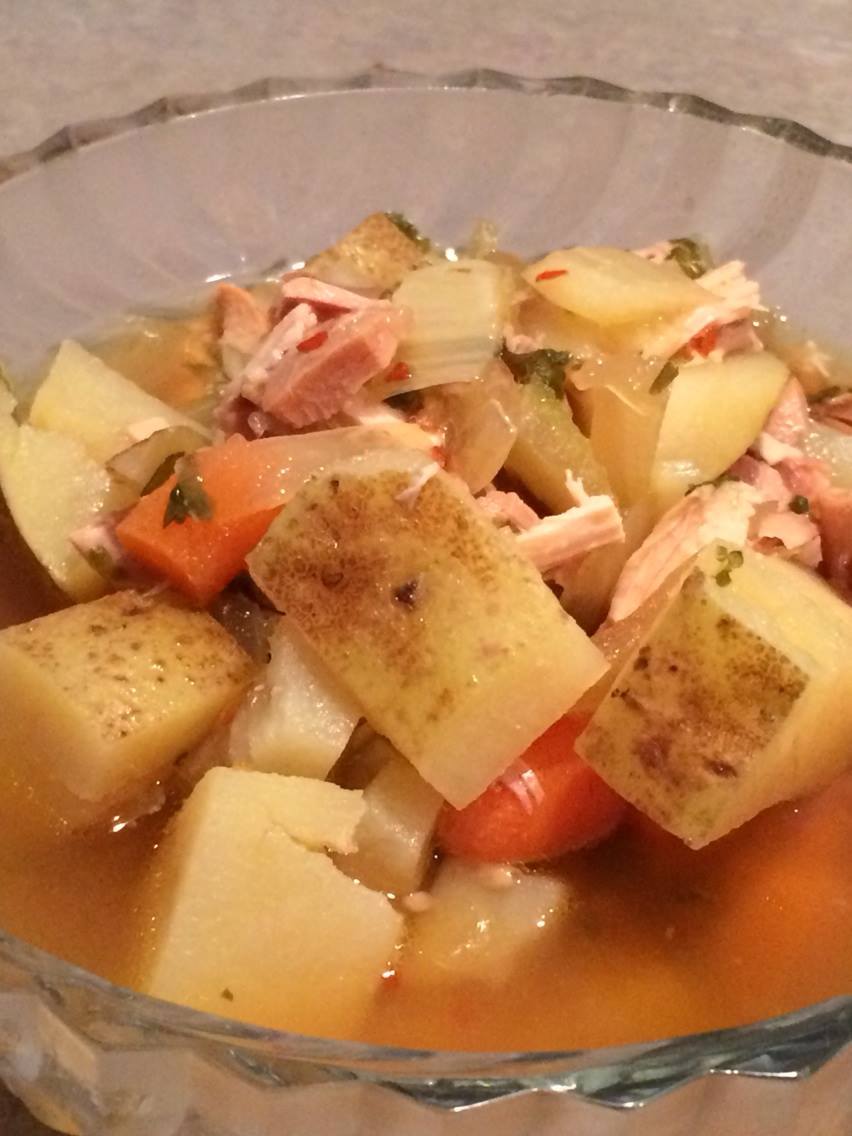
Yummy chicken soup and a cookbook recipe call!

Chicken soup for the soul, or how to make a quick and easy chicken soup that feeds 5 for under $15

Total cost: $13.89 with leftover food in most categories for a second batch

Necessary tools:

To me, the most indispensable item to have in your kitchen to help college students (and families) to eat well with minimal prep time is a crockpot or other slow cooker. One warning: you cannot keep a soup in the crockpot for 3 weeks and then think it will still be good. My daughter learned this the hard way and the stench that wafted through her small apartment when she took the lid off the crockpot should guarantee that she doesn’t make that mistake again. It is best to eat the first helping of whatever you make and store the rest in the frig in serving sized containers for later consumption. If you know you will eat it within a day, keeping the crockpot on warm should keep the food hot enough to stay safe. My goal when my son and daughter are home is to always have hot food available for them to graze on, so we tend to clear out a crockpot of soup or stew in one day.

Staples:

I buy chicken or beef broth whenever it is on sale. I usually have 10 cans on hand at any given time. My favorite time to buy is when the store has 10 for $10 (or less) specials.

Spices you like: For us, salt, pepper – we save the red pepper flakes and parmesan cheese packets that come with pizzas, parsley, garlic, etc. My family loves McCormick Montreal Steak Seasoning – $5.60 for 7 ounces.

Buy potatoes, carrots, celery and onions in bulk. They last pretty well and are typically cheaper that way.

Here’s my quick and easy (and delicious) chicken soup recipe:

1 rotisserie chicken – I got a ready made one from Dillons. Walmart, Sam’s, Costco, many grocery chains cook these fresh daily. The price seems to be pretty standard $4.99 to $5.99 for a smaller one (which I use – mine was $5.99), $7.99 to $8.99 for a large one. I chop my veggies in larger chunks, as I like to make a more hearty soup. Everything below can easily be upsized to feed a larger group.

3 stalks of celery (a bunch of celery should last you 3 batches of soup) – 1 bunch – $1.49

3 large carrots (a pound bag of carrots should make 2 batches of soup) I DO peel my carrots! – 2 lb bag – $2.50

2 large or 4 small potatoes (a 5 lb bag of potatoes should last your for 3 batches of soup) I DON’T peel my potatoes. I like the more rustic variation! – $3.49

¾ to 1 large white onion – $.99

2 – 32 oz packages of Swanson’s chicken broth (or 4 cans) – $3.96

Seasonings to taste: I use parsley, garlic, red pepper flakes, salt, pepper, to taste. I like the jars of chopped garlic in water – fresh garlic is also awesome). One small jar of garlic can last me for 2-3 pots of soup.

Here’s what I do:

1)      Take the chicken (I chose “savory” for this soup; you can use lemon pepper, garlic, original, or whatever variety you like), place it and any juices in the bag in the crockpot, top with ½ chopped onion, parsley, salt, pepper, garlic, and ½ of a 32 oz package of chicken broth, simmer for hours (whatever time you have available works, but I do it for at least 2 hours). I simmer the chicken in the crockpot before boning it as I want to get all the flavor I can from it into my broth.

2)      Remove chicken from broth, skin, bone and cut up meat into chunks. Set aside.

3)      Add chopped potatoes, carrots, celery and ¼ to ½ of the remaining onion to the broth. Add the rest of the broth from the package and ½ of another package to the crockpot.

4)      Return chicken to the crockpot

5)      Add seasonings to taste. I add red pepper at this point and taste the broth to see if it needs anything else.

6)      Cook until veggies are tender. This takes a couple hours.

I often do this over the course of two days, put the chicken in the crockpot and simmer all night, cut up veggies and bag them, clean the chicken in the morning, add veggies and chicken into the broth, cook on low all day while I’m at school, and we’re greeted when we get home by a mouthwatering smell and a delicious dinner. We often bake crescent rolls to eat with the soup.  $1.89 for 8.

Enjoy! If you try this, please let me know what you think.

Invitation!

So, help us out! The WSU Hunger Awareness team is trying to build a quick and easy cookbook of affordable meals for 2-5 people that college students and families can use to eat healthy. Please share you recipes here or on our facebook page: https://www.facebook.com/WSUHungerAwareness?ref=hl or on our website: wsuhunger.wordpress.com.

Image

Reflections on ending the week eating on $4.50 a day

Ok, it happened! Day 6, I hit the wall! I couldn’t face any of the food I had purchased for the week. So, I changed my strategy for Days 6 and 7.  I figured out how much value remained in the food I had left and I shifted my focus to purchasing food by the day for Day 6 and Day 7. I had saved enough food to actually allow myself $4.50 a day and to keep 1 pear ($.25) and 2 eggs ($.18) from my weekly purchases, just in case.

Day 6: After midnight on Day 6, a friend invited me to IHOP. The idea of food I hadn’t been eating for 5 days was exciting! We agreed to share a meal. My friend ordered pumpkin pancakes, bacon, eggs and hash browns ($5.99 special). I ate several bites of everything and one whole pumpkin pancake. It was absolutely delicious! I didn’t eat the rest of Saturday, except for half of my pear, as I decided our shared meal counted against my $4.50. So for dinner on Saturday I had a $1.25 cheeseburger from Bionic Burger (which was so thin I could have read through it had I held it up to the light) and a handful of fries. Lettuce and tomato cost $. 30 extra each, so I didn’t get any. The burger and fries also tasted incredibly yummy!

Observation: Day 6, I had more “filler food” than nutritious food. Except my half a pear, I didn’t eat any fruits or veggies and almost no lean protein. L

Day 7: I typically have brunch with friends on Sunday mornings. When I arrived at our favorite place I told my friends that I didn’t plan to eat that day as I was going to make it on $4.50 for the whole day. One of my friends stated, “Then you can’t eat out!”… Crickets… After an awkward pause, another friend replied… “Well, that’s not fair. Anyone should be able to eat out at least occasionally”… The first friend replied, “Not on $4.50 a day, you can’t!” “That’s why I just came to hang out with you today”, I said. “I don’t intend to eat. I’m just here to visit”. Another friend said, “Well, then I’m not going to eat either. If they can’t find something you can afford, I’m not going to eat in front of you.” “Ok”, I said! “We’ll ask!” I tried to explain to our server that I was eating on $4.50 for the day and asked what 2 scrambled eggs and toast would cost. She replied, “I don’t know.” She checked with the manager who stated, “We can make you a breakfast for $4.50”. I reaffirmed, “No, $4.50 is for the whole day. I’m trying to find out if there are any low cost items I can purchase.” By this point, I had thoroughly confused the restaurant staff, so I just ordered toast and jam for $1.75. I found it interesting that my friends were much more comfortable with me eating something rather than nothing. They also understood that I would not share food with them. We ended up having a very enjoyable brunch. When I got home, I scrambled my eggs and ate the rest of my pear.

Sunday night, a friend was having a birthday party, so I went. We had pasta with homemade sauce, salad, Italian bread, and birthday cake. I ate a little of everything.

Observation: Day 7, it is really tough to eat out on $4.50 a day – unless your friends have a party!

Insights:

  • It is so much cheaper to eat low quality, minimally nutritious food on $4.50 a day. Healthy food is much more expensive. As a friend noted, “I can get a huge bag of chips for $1 or pay $3.50 for a container of fruit. On $4.50 a day, I’d go for the chips every time. A full stomach is better than an empty one”.
  •  Doing this challenge with someone else might have been easier as together we could have purchased more variety in our food. Food fatigue was one of my worst issues. I simply got tired of eating the food limited food options I’d purchased.
  • Families who use SNAP probably build staples like flour, sugar, salt, pepper, seasonings, etc. over time. We didn’t allow ourselves to count much of that in our efforts.
  • Families who use SNAP are probably better bargain food shoppers than I am and probably have longer term strategies than 1 week which allow them to build more variety in their diets.
  • It’s hard to get enough healthy calories on $4.50 a day.
  • In addition to purchasing inadequate calories, I also ended up having a problem eating the bulk of food I needed to eat each day. What I had to eat to get 1044 calories a day was simply too much food, so I averaged 750-900 calories a day. This was a very different food issue than I had anticipated.
  • Grazing, a couple bites here and there throughout the day, rather than eating meals was a great hunger abatement strategy. I carried my allotment of dried cherries and raw almonds with me and ate them, 2 or 3 at a time, throughout the day (20 of each).

Conclusion:

When I do this again (and I will), I will do it differently. I will try to make meal plans for each day rather than a week plan and work for more food variety. I will also spend more time shopping for the best deals. I did that by focusing on managers’ specials and sale items, but was unable to wait for some things to go on sale.

As I was approaching this effort, I was nervous. I had never tried to do anything like this before. I wanted to eat healthy food AND I needed the food I purchased to last the whole week. This has been an extremely insightful experience. Eating on this kind of budget is not easy. Eating healthy on this kind of budget is even more difficult.

Final thought:

I encourage anyone who wants to recognize the importance of SNAP programs and the minimal level at which they are already funded to try to eat on $4.50 a day. It makes me wonder about the links between low cost/low nutrition food, obesity, and type 2 diabetes. My hunch is that there is a link and that food insecurity likely contributes to these critical public health problems in the most vulnerable Americans.

Hunger is a public health problem – Kansas Public Health Association, Virginia Lockhart Health Education Award, 9/19/13

Dr. Deborah Ballard-Reisch’s remarks upon receipt of the Virginia Lockhart Health Education Award from the Kansas Public Health Association, September 19, 2013

 I NEED TO BEGIN BY SAYING THANK YOU

1) I wish to thank Pamela O’Neal a former student, constant friend and support, and public health cliff jumper for nominating me for this award

2) I am thankful to the KPHA for honoring me with an award named after a true KS public health pioneer, Virginia Pence Lockhart

3) I am eternally grateful to the Kansas Health Foundation for endowing Wichita State University and the Elliott School of Communication with the gift that funded the Kansas Health Foundation Distinguished Chair in Strategic Communication which I have been honored to hold since August 2007. This position has allowed me to follow my passions in support of community-based approaches to research & health promotion 

4) I would like to thank my students, friends and family who both jump off cliffs with me and show me other cliffs to conquer

5) I would like to especially thank my son Stefan who is with me today and my daughter Alyssa who is a junior at UNLV for their constant love, support, and adventurous spirits. 

 WHAT IS MY PERSPECTIVE ON PUBLIC HEALTH?

 I would like to build on the perspective of Virginia Pence Lockhart – who stated in 1965 “Health cannot be given to the people, it demands their participation – beneficial action follows self education”. From my perspective, individuals and communities need to educate themselves on public health issues, while public health educators need to educate themselves on communities. Effective public health initiatives must be appropriately tailored to contexts.

 WHO AM I IN PUBLIC HEALTH?

 In the words of Rick McNary, founder of Numana Inc. of El Dorado, KS, I am in the hunger space. 

1) It gives me PAUSE that in 2012, 14.5% of US households were food insecure – 72% of them families with children. Food insecurity impacts more than 49 million Americans.

2) It gives me PAUSE that the US House of Representatives is considering a proposal to cut the SNAP program while millions of Americans are struggling to find good jobs and to afford healthy food for their families.

In public health, we talk about obesity epidemics – 1/3 of adults and 17% of children – 25.5% of the total U.S. population are obese – that’s 79 million people.

We talk about a diabetes epidemic – 8.3% of the U.S. population, 25.8 million people have type 2 diabetes.

However, it gives me PAUSE that we often overlook the potential role food insecurity may play as an underlying contributor to these problems.

 While these issues give me pause, 

1) I am INSPIRED that there are legislators who “get it”. More than 30 legislators took the SNAP Challenge to eat on $4.50 a day during August. I am grateful for the insights they gained.

Congresswoman Robin Kelly  IL stated – “You can’t get the healthiest foods because they’re too expensive”. 

Congressman Jim McGovern MA concluded – “People in this country should have a right to food, to have enough to eat, to have access to nutritious food. 

2) I am INSPIRED by Numana, Inc. and Stop Hunger Now and their food packaging efforts that allow people to “get their hands dirty” to “feed the starving” people around the globe. Empowering people leads to sustainable change.

3) I am INSPIRED by my students who even today are planning what has morphed from a WSU Hunger Awareness Day in 2010 to a month long campus-wide collaboration.

4) I am INSPIRED by our community and university partners around the world who have shared their experiences with us and invited us to speak on their campuses using our experiences as a model to help them form their own initiatives.

SO, WHAT CAN WE AS PUBLIC HEALTH PROVIDERS DO?

 1) We can educate ourselves:

Join the Wichita State University Hunger Awareness team and me. Take the SNAP Challenge and live on $4.50 a day for food! We’ll be doing this over the next two weeks. We want your blog posts, facebook posts, tweets, emails.  We understand people best when we can walk in their shoes.

2) We can take steps in our daily lives to make a difference:

Shop the Feed USA Target/ Feeding America collection sponsored by Lauren Bush at local Target stores.

Take part in the No Kid Hungry Campaign – You eat at their restaurants; they donate. Participating restaurants in the Wichita area taking part are Arby’s, Orange Leaf Frozen Yogurt, Cici’s Pizza.

Join me for the 4th Kansas Hunger Dialogue – which will be held at the Hyatt Regency in Wichita on February 26, 2014. Join university and community partners to discuss strategies to wipe out hunger here in Kansas and talk about model programs we have already developed.

Lobby Congressional representatives! Critical decisions that impact the most vulnerable Americans are under consideration now. We must make our voices heard.

In closing, I would like to quote Bob Dole & Tom Daschle in their LA Times article published September 19, 2013. “As a nation blessed with a bounty of food, we are a nation with a duty to fight hunger”.  

Food insecurity is a public health problem.  

Food insecurity is a public health problem that impacts many other public health problems.

ImageEducated, we’ve got the power to end hunger and food insecurity, perhaps not by 2015 as the UN Millennium Goals outlined, but in our lifetimes. 

Thank you again for bestowing this prestigious award on me. 

Eating on $4.50 a day – Ooops! Not enough calories!

Day 2

Ooops! I didn’t consider calories as I bought my food for the week yesterday. With a focus on trying to afford healthy food, I lost track of calorie requirements. The total calories in the food I purchased yesterday was 7311. That’s an average of 1044 calories a day. A healthy weight loss diet, based on my basal metabolic rate (BMR) would be around 1458 calories per day which would lead to a 1-2 pound weight loss per week. So, the food I have for this week isn’t a decent weight loss diet for my body, and it’s absolutely not a health sustaining eating plan. To maintain a healthy weight, I’d need 1700 to 2200 calories a day. I have a feeling I might get cranky later this week.

I decided to do some research on calorie needs to maintain health. In perspective, the average 5 year old needs about 1800 calories a day to maintain healthy growth. Of course, the average will vary by child depending on growth rate and activity level. A healthy average diet for an adult is considered around 1800-2000 calories a day. While calorie needs vary depending on sex, age and activity level, women from 19-30 typically need 2,000 and 2,400 calories daily; women 31 to 50 need 1,800 and 2,200 calories per day, and women over 50 need 1,600 and 2,200 calories a day. Men 19 to 30 years old need 2,400 to 3,000 calories a day; men 31 to 50 need between 2,200 and 3,000 calories daily and men over 50 need 2,000 to 2,800 calories a day.

The calories in the food I bought aren’t enough for anyone! 

On another note, I have a sensitivity to wheat and dairy, so I didn’t include them in my shopping list. A loaf of gluten free bread and ½ gallon of lactose free milk were over $3.50 each, too large a chunk of my budget.

To recap – what I ate on day 1: Grazing worked! If I felt hungry, I ate several almonds and dried berries.

Almonds & dried berries – 150 calories
2 tbsp peanut butter – 190 calories
1 piece celery – 2 calories (probably my worst food choice was celery – no calories, minimal 1 nutrients. It’s a great vehicle to hold my peanut butter, and it offers food texture, but not much else)
20 grapes – 68 calories
1 oz chuck roast – 70 calories (I didn’t want to eat too much of the meat outside the soup, but needed some protein and it was DELICIOUS!!! I highly recommend McCormick’s montreal steak seasoning!)
1 carrot – 30 calories
2 hard-boiled eggs – 120 calories

I also had a sip of wine my friend Jessica shared with me and a sip of framboise my friend Pam shared with me and 2 free samples of macaroons ( ½ a cherry limeade macaroon, ½ a carmel sea salt macaroon at Cocoa Dolce – DELICIOUS indulgence). I have a feeling free samples will be how I treat myself this week.

Total calories: 630


I’m beginning to understand the need for high calorie, low nutrition fillers. There aren’t a lot of calories in fruits and vegetables. Chuck roast has a higher fat percentage than some meats, a plus for this eating plan, protein and fat content.

Food day 2:

My morning eating plan for day 2 included – 1/3rd of my soup allotment for the day, 1 hard-boiled egg and 1/5th of a pear, 6 almonds and 6 dried berries. My pears aren’t ripe, so I’m going to leave them out for a couple days to ripen more fully. Crispy pears aren’t bad in terms of texture, but they aren’t very tasty.

The next thing I’m going to look at is the percentage of calories I’m getting from protein, carbs and fats in what I’m eating this week.

Is it a SNAP to eat on $4.50 a day?

Day 1 –

I literally started shaking at Aldi this morning as I approached the aisles of tasty food and not a lot of money in my pocket.

I have to admit that I’m beginning this exercise in eating on a budget of $4.50 a day (the average budget for a person relying on the SNAP program) with some real fear—no joke! Not since my daughter Alyssa decided we should go “raw food only” in 2010 have I been so overwhelmed thinking about food. I have never tried to eat on a specific daily budget, and trying to purchase enough food to make it through an entire week on such little money is simply terrifying.

I purchased food for the week in one trip. I wanted to be mindful to purchase healthy, nutritious food. I avoided cheap, processed food as much as possible. I didn’t have time to calculate calories to make certain that I’m getting adequate nutrition. I’ll try to do that as I go.

I decided salt, pepper and spices won’t count against my food fund. I did cheat a bit – if food I assumed was cheaper one place when it was actually cheaper in another, I repurchased and traded. This is something I obviously would not have been able to do if I was actually limited to $4.50 a day.

Thanks for my friend Sandy Kramer, I am approaching this week with a grazing strategy, so my approach to shopping was to get as much protein, fresh veggies and fresh fruit as I could buy with an eye toward portioning everything by the day.

I shopped at both Aldi and Dillons Grocery stores. I went to Aldi first; as I couldn’t get everything I wanted there, I went to Dillons. As it turned out, some food was cheaper at Dillions than Aldi. Because I had not anticipated this and because this is my first time trying to budget food in this manner, I also didn’t try to use coupons (I don’t typically collect them and didn’t have any). Were I to try to do this for the long term, I would certainly collect coupons, although I learned today that those on SNAP who use coupons have to pay taxes on them.

So, what did I purchase?

I decided the foundation of my eating this week was going to be a beef veggie soup I make that my family loves. While they’re not taking part in this journey with me, I know (hope) I can make this soup stretch as a foundation for my eating efforts this week. This soup cost $13.89

Ingredients:

1.61 lbs of chuck steak – $6.42 (I got this on sale)

2lbs frozen vegetables (corn, peas, carrots, green beans) – $2.99 (gulp! These were much more expensive than I anticipated.)

2 cans diced, spiced tomatoes (basil, oregano, onion) – $2.00

½ Vadallia onion – $.59

1 container beef broth – $1.89

Instructions:

Slow cook the meat in a crockpot (4-6 hours), top with ½ diced onion, salt and pepper and montreal steak seasoning (I couldn’t help myself. It’s just delicious!)

When the meat is done, remove from crockpot, shred, remove fat, put back in crockpot

Add canned tomatoes

Add beef broth

Cook until broth is hot. Adjust seasoning as desired.

Add 1 lb frozen veggies (We prefer carrots, peas, corn and green beans). The frozen veggies retain consistency for several days.

Cook through. Enjoy!

I’m not sure how many servings this makes. When my son Stefan is eating, he can clear the whole crockpot in a little more than a day. It takes Alyssa two days. J Mine will last 7!

Other food I purchased to flesh out the week: $17.22

1 lb grapes – $1.59

1 pomegranate – $.99

1 lb celery – $1.29

2 lbs carrots – $.99

Raw almonds – $3.70

Dried fruit – (mixed berries)  $2.49

Peanut butter – $3.49

Eggs – $1.69

4 pears – $.99

Total food bill (minus tax – SNAP participants don’t pay tax on food) – $31.11

Today so far, I ate 3 almonds and 3 dried fruit berries – 9 a.m.

3 almonds, 3 dried fruit berries – 11 a.m.

½ stalk celery, 1 tsp peanut butter and 5 grapes – 1:30 p.m.

3 almonds, 3 dried fruit berries – 3:00 p.m.

I’ve decided to carry almonds and dried fruit with me throughout the day. About to have 3 more of each.

It’s now 4:30 p.m., and I’m heading out with my friends Jessica and Pam to watch them each enjoy a glass of wine. Pretty sure I’m not going to enjoy watching, but their company will be well worth it. I’ll keep you posted on how this goes.

So, here’s an invitation! Would you like to join us on this adventure? The WSU Hunger Awareness team is taking this challenge during the next two weeks. We’re each doing 1 week solid, beginning and ending when it works best with our schedules. I chose to start today! Follow us on Facebook Hunger Awareness at Wichita State University, Twitter @WSUHunger, #WSUHunger or check out our webpage WSUHunger.wordpress.com.